On this final day of June, I want to acknowledge that I’ve had my ExoSyms for two years. Well, I’ve owned them for two years this month, but as we know, I’ve worn them for much, much less time than that.
When I was first fitted for and trained to use my ExoSyms, I was told to expect to get the full benefit from them after two years of dedicated work with them. In June 2020, I was unable to imagine what two years down the road would look and feel like. I began documenting “Day 15,” “Day 50,” “Day 100” and taking weekly videos of my progress. Eventually, I stopped counting the days.
So here’s to us. Here’s to all of us who try something new. Who invest hope and time, and perhaps many thousands of dollars into something that might make our lives better. Who have family that supports us, driving us to appointments and holding our hands.
Here’s to us who have to acknowledge and adjust when our new adventure doesn’t go the way we thought and hoped it would. When injuries and illnesses interrupt and disrupt our vision of what our life would be.
On February 16th, I had my new patient appointment at the UCLA Center for Cerebral Palsy. They hold a “lifespan clinic” every Wednesday at their location in Santa Monica, during which they see adults in addition to children.
If you fill out their appointment request form, don’t expect them to get back to you, even though it states right there on the page that they will. If you have your doctor send a referral, don’t expect them to get back to you. Because you’re not already a patient within the UCLA health system, there’s no file for your referral to get put into. That’s what I was told, when I finally made the phone calls and sat through the menu options and spoke to a person. I am in the privileged position of having good insurance, so I didn’t even need a referral, it turns out. I don’t know how long it would have taken for someone to contact me, or if anyone ever would have.
Once I had the correct person on the phone and they confirmed my very good insurance, it was no problem to make an appointment. They were only booked a few weeks out. So, after knowing for several years that a place six hours from me specifically sees adults with cerebral palsy, I was finally going.
I had been told that my appointment would be the typical fifteen minutes. Thankfully, the person who told me that had no idea what he was talking about. We were there for an hour and a half. After the initial intake guy, a doctor came in to take my history, which he would then present to the main doctor. (I don’t know if this was an intern or what, because he introduced himself so fast.) When I say he took my history, I mean he started with my birth. Needless to say, I wasn’t very helpful in this area. I imagine these appointments are usually with the mother answering questions about her toddler with CP. I was premature and I had a cerebral hemorrhage. That’s the extent of my knowledge. I have lots of faded, early 80s, barely readable records in a box somewhere.
The history probably took an hour. When was I diagnosed? What was the doctor’s name? (I don’t know, but since I’m forty-one, there’s a fair probability that the doctor is now dead.) Did you meet your milestones on time? What kind of mobility devices did you use and when did you stop/start each one? When did you start/stop AFOs? How far could you walk as a child? Was it hard for you? Uh…? Thankfully, I have written down my two surgeries and bring the paper with me to appointments now, because I haven’t successfully memorized the 4-in-1 one from 1989. Then, what have you tried for the pain? How much physical therapy did you do? How much Tylenol did you take? (I could not remember everything I’ve tried, so I’ve just now updated that list and will take it with me to my next appointment.)
On the intake form, I had to write down “the reason for today’s visit.” I put right hip pain/labral tear and FAI. So naturally, once we’d covered my history and did a little strength assessment, we focused on the right hip. I would have liked for him to remark on the images of the front and back of a person where I was asked to color in my pain. I would have liked to mention that while the right side is our primary focus, the left side doesn’t feel great either. I told him about the ExoSyms, acquired June 2020, and the very audible pop and tear of my labrum, acquired May 2021. About the discovery of the hip impingement after the arthrogram in June last year. The steroid injection that did nothing but cause pain in August. The refused referral to UC Davis orthopedics.
He went and presented all this info to Dr. Solberg. Finally, the man himself entered the tiny room. He did some physical assessment. His goal was to “recreate the pain,” in order to ascertain what and where the pain is. But pain does not cooperate that way. If my hip/groin pain is already flared, then there’s very little that can be done to increase or decrease it. It is there. Still there. Still there. Then perhaps five minutes after we are done I can tell you that it is, in fact, slightly different, but I do not know what made it that way. Sometimes a movement or a pressure can make it a little worse in the moment, and I’m quite relieved to be able to provide that feedback.
Dr. Solberg seemed very surprised that the steroid injection had not helped. “Not even right after?” No. He seemed a little dismissive of the labral tear and FAI because I also had lumbar pain, pain down the IT band, etc. He said FAI pain is usually just in one spot.
I had hoped that we would somehow move forward with treatment of the tear and impingement. That was my goal. I had done some googling regarding FAI and found this fascinating information from the Nirschl Orthopaedic Center:
The symptoms can be chronic and achy, or sharp and mechanical with certain motions. In some cases, the patients may also have referred pain to the buttocks or down the thigh.
What other diagnoses might be confused with FAI?
Hip Dysplasia (Adult Form)
Lumbar Spine Pain (Low Back Pain)
Lumbar Radiculopathy (Low Back Pinched Nerve, Low Back Facet Disease)
Sacroiliitis (SI Pain/Dysfunction, back of pelvis)
Trochanteric Bursitis (Outside/Lateral Hip Pain)
Piriformis Syndrome (Back of Hip Pain)
Psychosomatic Pain Disorder (Stress Related Illness)
While the cause is not well understood, patients with FAI often complain of low back pain. This pain is often localized to the SI (sacroiliac joint on back of pelvis), the buttock, or greater trochanter (side of hip). The hip joint and the low back frequently “play off each other,” and compensation for a hip issue can frequently cause increased pressure on the low back, causing back symptoms, and vice versa.
I have bolded the other pain I have from the above list. Imagine if all of that could be improved with the arthroscopic surgery! But here was Dr. Solberg, telling me that my torn labrum and the bone-on-bone inside my hip was not the cause of my pain (or at least not all of it).
“We have to figure out where your pain is coming from,” he said.
I wanted to scream: “We DO know where most of it is coming from! And fixing it could improve a whole lot of the rest!” I wanted there to be a fixable thing. An answer. A clear plan.
But he said I could have a pinched nerve in my back, tendonitis at the front of the hip, bursitis. There’s a lot that could be going on and interacting, and we just don’t know yet. Dr. Solberg is a doctor of osteopathic medicine, a DO, and I think the first one I’ve seen. DOs have a “whole-person approach” and “look beyond symptoms.” I appreciate that this doctor didn’t just move me forward with surgery, since I know that cerebral palsy complicates everything. Very different from the orthopedic surgeon who was ready to go right ahead. Confirms the stereotype that to a surgeon, everything looks surgical.
That same orthopedic surgeon, who did the injection, said I probably have trochanteric bursitis, but as that’s not what I was there for that day, nothing more was said or done. And so, grumpily, I recognize that while other conditions can be confused with FAI, it’s also possible that I have those other conditions and FAI.
Because I am not local to Santa Monica, Dr. Solberg has referred me back to UC Davis in Sacramento. To sports medicine instead of orthopedics this time. Once I’m there, I can be more easily referred to physical medicine and rehabilitation (PM&R or “PMR”) or ortho as needed. To be fair, after the injection, the orthopedic surgeon did also refer me to PM&R last fall, but it was at his same location 40 minutes away without good transit options, and I haven’t pursued it.
The goal, according to Dr. Solberg, before going directly to surgery, is to pinpoint the pain and calm it down, to know its source. I can get on board with that. The problem I have is this: it means more injections. It means trying the hip injection again, maybe using x-ray this time (regarding ultrasound vs x-ray, different sources say different things). Trying an injection in my lumbar, in the bursae of the hip. I tried to explain how both the injection of lidocaine and dye in my hip for the arthrogram and the steroid injection later were rather painful and didn’t help at all.
“It’s not supposed to be traumatic. But we all experience pain differently,” he said. “Maybe for you it’s painful because of tight muscles and scar tissue in the area.” Yes, that could be. Maybe it doesn’t help that my entire leg goes into a spasm during the procedure. You think?
I don’t think it’s uncommon for lidocaine-steroid injections not to work. That’s why people end up having surgery. So–how many of these am I going to have to endure? And if they do help at all, for how long? Don’t steroid injections seem rather Band-Aid-ish?
Just last night, someone in a cerebral palsy facebook group said she’d been diagnosed with hip bursitis. Someone else posted a video about how massage can help, and that video led me to this one:
According to the physical therapist in this video, the hip has nine bursae, though it can vary by individual. Most images I can find online show six. A bursa is a fluid-filled sac in a joint that’s meant to reduce friction. They can become inflamed and painful. The image below is not great because it’s a screen capture from the video, but the point is that each green blob is a bursa.
When I got the diagnosis of a labral tear and mixed-type FAI, I was happy because my pain had a name and a reason and a solution. Now I’m looking at all these green blobs and thinking, well, crap. I wouldn’t be surprised if these were all causing pain too. Watch the video. Watch the video with the knowledge that I have positive Trendelenburg and a turned in knee. Two “habits” that I need to stop if I’m to heal my bursitis. Then watch the treatment options section. Exercise to strengthen the muscles around the hip, but carefully because exercising can worsen bursitis. Tight muscles can exacerbate bursitis, but don’t stretch because stretching can also exacerbate bursitis.
All these years that I’ve gone to PT to strengthen my weak hip muscles and stretch my tight muscles, all these things I’ve been given to do, when I report back and say I haven’t really been doing them at home because they hurt… I mean, where does that leave me? It seems to me that my type of CP basically guarantees bursitis and also guarantees that I can’t treat it properly.
And here I am headed to a sports medicine referral. They’ll probably give me a referral to physical therapy. Ha. So, yes, go ahead. Shoot me up with all the lidocaine. I wish I could believe it could provide relief instead of trauma. I hesitate to use the word trauma, because trauma is so weighty. But the facts are that the two times that lidocaine has been injected into my hip have been stressful, painful, and ineffective.
I need to get my history straight for the next doctor, all the pain management I’ve tried. All my issues on the right side began in January of 2010 with SI joint pain (which could have been from something else, of course). We’re in year thirteen now. I would like to remove my leg from its socket and go to sleep.
I think I need to find a mental health therapist who specializes in chronic pain and disability and anxiety.
Although life is pain (“Anyone who says differently is selling something.”), it is also joy. For my birthday earlier this month, my husband took me to a lovely place in Guerneville. We walked a beautiful, accessible trail in the Armstrong State Redwoods Natural Reserve, native land of the Kashaya Pomo people. I am grateful for time among the trees.
Somehow, summer is almost gone. I have continued PT and some myofascial release, and I have spent lots of time resting and reading (and, let’s be honest, wasting time online). After postponing my June trip to the Hanger Clinic, I’d entertained the idea of going in August, but that’s not happening.
Week after week I went to PT without much change. But I’ve realized it’s not as bad as it was in the beginning because I can stand and chop vegetables now without needing to rest immediately. Somehow, I’ve incorporated this new pain into my life like all the others, and it’s mostly fine. Fine and simultaneously completely dysfunctional. My physical therapist encouraged me to have the arthrogram-MRI done so that I could have a consultation with an orthopedic surgeon and get their opinion regarding surgical repair. Another option is having injections into the hip for pain. That sounds awful, but better than surgery, if it’s effective, maybe…?
I was able to schedule the procedure for June 24th. I had assumed they’d be booked for weeks, but I knew it was good to get it done and move forward with treatment.
It felt weird, with my husband back in the office four days a week, to take the bus and go to the hospital alone. After my first MRI in May, I never wanted to have another, and there I was just six weeks later, doing it again.
But first, the arthrogram. I had to undress from the waist down and put on a giant gown and climb up on a table and get my feet bound together in the optimum position. It was only after my hip was bared and I was lying there pantsless that the doctor came in and explained the procedure and the risks (infection) and got my consent. Does anyone climb off the table and say no thanks, never mind, at that point?
I was very nervous, anxiety running high. When the doctor asked how I was doing, I told him, and he chuckled. They sterilized the area with cold purple stuff, put down the blue paper with a hole in it over my right hip joint. He pointed to where the injection would be and my whole right leg spasmed.
“I haven’t even done anything yet,” he said.
“I know, but–spasticity,” I answered.
The first injection was just lidocaine to numb the area. I’ll not rehash everything, but it did hurt, and I got extra lidocaine (Did you know they charge you for each dose?), and I didn’t look at the giant needle when the dye was going in. I remember, I think, that the doctor remarked about having to go around some bone. And I remember that he didn’t say anything to me before he left.
The woman assisting very nicely helped me off the table and back to the bathroom where my clothes and walking poles were. She said I could change or keep the gown on for the upcoming MRI, but that I’d be given a gown when I got there. Of course I said I’d keep the gown on, and she gave me another to cover the open back before escorting me to the MRI room. What a strange feeling, walking through the halls of a hospital in a gown, no pants, just like on TV. Stranger still to step outside, walk down a path, and enter the neighboring building.
This time, it wasn’t Jasper by himself at night in an empty hospital, but a whole different team of people who greeted me with smiles and grumbled that the previous people hadn’t already had me fill out the metal-object questionnaire. Time was of the essence with dye coursing through my hip.
I requested the headphones at the very start. I knew I would be going feet first into the tube, that the top of my head would stick out, and that I would have only one MRI instead of two back to back, this time. I knew my feet would be bound together, and I knew I’d have equipment on my legs, weighting me down. I knew I’d get through it. The tech was encouraging and kept up communication throughout the process, and I was grateful.
I counted the tiny holes in the small circle of plastic on the top of the MRI tube right above my face. I counted the nine holes over and over again in different patterns, exes and pie pieces and lines. I counted the scuff marks. I breathed and I survived.
When I was helped down off the slidy bed, I realized how sore my hip was, how I could barely walk. I got my clothes back on, my glasses and mask and sunhat and purse and poles. I slowly made my way out of the building, through parking lots, down the road, and to the bus stop. I was not prepared for the pain and stiffness and inability to move. But luckily, the bus arrived within minutes and took me almost to my front door. So grateful for that.
No one had warned me that recovery from an arthrogram could be painful. No one warned me that there would be any recovery. It turns out that having a giant needle put deep into your hip and then immediately holding as still as you can for a half hour can cause some lasting pain. It took about a week, I think, for the pain to subside to normal levels.
Results came back very quickly. I have a small anterosuperior labral tear and “mild osseous hypertrophy along the anterolateral femoral head-neck junction with decreased offset. Correlate with symptoms of femoroacetabular impingement [FAI].” Following some googling, I discovered that impingement commonly results in a labral tear. Lots of people have this condition. This condition that causes hip pain and dysfunction. Able-bodied people. It’s a little funny, right? All this time that I’ve been thinking that my right side hurts so much because of a lifetime of compensating for the left side. All this time I’ve been thinking, “Wow, I didn’t expect aging with cerebral palsy to be so far downhill so quickly.” And I have a condition that’s not even CP-related! Knowing that there’s a diagnosable, visible reason for pain is really nice, mentally.
Now, I imagine it’s possible that my CP might have contributed to the FAI in some way, which then led to the labral tear. Looking back, I think the aggressive stretching I was doing in PT might not have been a good idea, as the tear happened following that. Perhaps, I was unknowingly pushing my body too far.
But both labral tears and FAI can be surgically repaired with good results. In fact, if you fix a labral tear and don’t address the impingement, you’re likely to tear again. (I’ve read an article or two about it, so now I’m an expert.) However, there is a need for revision in a portion of the population, and revision is significantly higher for females. Hmmm. Of course, I didn’t want surgery. But surgical outcomes are better than PT alone. The prospect that, after a long recovery (and like a year or more of working up to full results), I might actually be in less pain and more functional–that my life doesn’t have to be this hard? That’s an amazing idea.
Before I jump ahead to surgery though, I need to remember that my diagnosis is a “small” tear and “mild” FAI. I imagine that diagnosis, along with my pre-existing condition would make me not a good candidate for surgery. So I have to be prepared for that. Part of me would be relieved to be told no surgery. But the other part of me really wants to know what my hip could feel like after it’s repaired.
August 18th
I’ve returned from today’s appointment with the orthopedic surgeon. The appointment was 40 minutes away, and I’m so glad my husband was able to take off work and come with me.
After we were led to our room, they came back and said I was supposed to have had x-rays, which I’d had no idea about. For a moment, I thought I was going to have to reschedule my appointment. Thankfully, imaging was on the same floor and I was able to go right in. X-rays took just a few minutes and we went back to our room that had a giant, adjustable, multi-part chair rather than a table.
The doctor pulled up the x-ray images and we could see the difference in my hip bones. My left hip is a typically shaped ball and socket. My right hip has “a very deep socket,” so that the head of the femur is hitting bone as it moves (This is the impingement, FAI). Isn’t that something? The shape of the bone itself is causing pain. Not cerebral palsy. I mean, sure, my left hip, the typical one, doesn’t always feel fabulous, but compared to the right, it’s like a 1 on the pain scale.
The impingement has been there at least since I’ve had my adult-sized body, which is just about when chronic pain and fatigue began. Common with CP, yes. I know that I’ll still have CP-related pain. But this labral tear and this FAI can be fixed. It’s a straight-forward, arthroscopic procedure. This doctor has done around six hundred, he said.
“Ever on someone with CP?” I asked.
“Nope.”
He doesn’t anticipate that there would be any problem. There is a slight chance that because of my increased tone and prior surgery in the area, he wouldn’t be able to get at what he needs to reach arthroscopically. (He might not be able to “distract” my hip.) He thinks it would be fine, as the muscle tone is coming from the brain and once I’m under anesthesia, there shouldn’t be increased tone. But there’s a small chance that he’d start the surgery and then have to stop. He could refer me to a (pediatric) orthopedic surgeon who does both the arthroscopic and open techniques, so that if arthroscopic didn’t work, he could open and do it that way. Just hearing “open,” makes my stomach sink. (More pain, longer recovery, etc.)
I think this doctor does have a good understanding of cerebral palsy. But it was still weird. You know, I start on my whole spiel, the history, the major 4-in-1 type surgery at eight, a mention of the ExoSyms, which he’s not heard of. He’s typing away. Then he comes over and moves my left leg this way and that. Moves my right leg this way and that to compare. I try to hold my leg up into his hand. That’s the whole of his physical assessment. I know he can get a lot of information out of that, and a lot out of all the images. Still, he doesn’t know me, hasn’t seen me move. He doesn’t know my abilities or capacity, what I was like two years ago compared to today. How I have literally almost no balance. And he talks about recovery time: in six weeks, I should be walking around like before. Right. Mentally, I double that, at least. He talks about being on crutches. Yeah. Mentally, I change that to wheelchair and walker. He may have noticed my eyes widen above my mask, because he did amend that perhaps my recovery may be a little different. I would have liked for him to watch my videos, pre- and during ExoSym time. I didn’t feel rushed, but I didn’t go into all that, either.
There isn’t any literature to be found on cerebral palsy and FAI. He said more than once that I was rare. But what I kept thinking is this: Cerebral palsy is a very common disability. FAI with labral tear is a very common condition as well. I’m guessing the middle of the Venn diagram is bigger than he thinks. Hip pain is such a common condition with CP, that I think many assume, as I did, that the pain must be CP related. How many of us are out there living with multiple painful conditions, when one, at least, is treatable? I know of a couple people with CP, actually, who were not candidates for surgery because of their CP. So–I was a little surprised at there only being slight hesitation on this doctor’s part. Maybe it was because my CP is mild and I seem healthy overall.
The surgeon that he could refer me to works with children with CP, so he’s more familiar with it, at least. I was pretty ready to say, “Sounds good; let’s do it.” The possibility of less pain is enough enticement to go ahead.
But I so, so dread the recovery. My only two experiences with surgery were to go in with no pain and come out with lots, and months and months of pain to follow. Logically, I know this procedure is different. I also know there will be pain and swelling, and I’m in such a bad state right now that I don’t know how I’ll be able to handle it. (I’m referring in part to the pain in my thumbs/hands/forearms, parts of my body that I’ll need to rely on in order to function.)
The other option discussed was to get injections in my hip, for pain. The procedure, he said, was similar to the arthrogram, when I had the dye injected. He said this like it was no big deal, and I let him know that it was really unpleasant, actually. I’m willing to try one, see if it helps/how long it lasts. (Could be six weeks; could be a year, apparently.) But getting injections for pain isn’t going to help the shape of my bones. Further, the older I get, the harder the recovery from surgery will be.
So. Surgery is in my future, I think. But not too soon. I’ve got to prepare, mentally and physically. Prepare my home environment. I’m already looking at toilet safety rails, shower chairs, and walkers with seats.
The doctor says in the meantime to keep up with my stretching and activity, that I won’t make the tear worse. (It seems like that’s possible, no?) Little does he know how little stretching and activity I’ve actually been doing. I like how he gave me so much credit for daily stretching. (I did not correct him.) There was a time not so long ago that I was keeping up with it.
I also need time to address the other side of my health, and I am looking into mold testing for the house and detoxing for me and trying to find reputable sources. How lovely it would be if I could feel awake again. If I could have a throat without pain again. These processes can take so much time. I feel like I need to be as strong and healthy as I can be before tackling surgery and recovery, but I also don’t want to wait months or years.
In my last post, I wrote about how busy April was. But I left out one of the biggest things. Last month I contacted the Hanger Clinic in Gig Harbor and asked if I could come for a couple days of additional training in June. I’ve been feeling so much stronger and have been so consistent with my practice that I feel like I can really get more out of training with an ExoSym expert now. I was excited to nail down the dates, plan an excursion to Olympic National Forest (because I hike now), and visit family in Oregon and Washington. My husband and I looked at a map and a calendar, made various reservations, and planned a two-week road trip. Yes–a trip! With travel! Outside the house! To a place where it rains!
So stoked. So excited to visit the Pacific Northwest again, and get more ExoSym training, and be in the trees, and eat food that we didn’t make. To relax and kick off the summer.
May started off well. I continued my daily stretching and strengthening and ExoSym practice. I went to a myofascial release appointment and to a physical therapy appointment. When I arrived at PT on the 5th, I heard the voice of my long-absent therapist, C, whom I hadn’t seen since November because she was recovering from surgery. This was my final appointment with my sub. He did the stretches that I can’t do alone and I showed off how much better I’ve gotten at the side leg lifts, just in the two weeks since he’d seen me last. He sent me off with excitement and encouragement, assuring me he’d talk to my original therapist–fill her in on our change in tactics and on my progress–before I transitioned back to her at my next appointment.
May 3rd. With back support.
April 19th vs May 3rd
Saturday, May 8th was a good day. We ran a couple errands and then spent the rest of the day reading on the couch. What a relief–a quiet Saturday, just as it’s supposed to be. I moved off the couch and onto the rug for a change of position. I read for 10-15 minutes with my e-reader on the floor in front of me, leaning over my folded legs, kind of like child’s pose. But I probably changed position often because I can’t last on the floor very long in any one way.
When it was time to get up, I moved from side sitting to up on all fours. POP! I felt and heard something in my right groin. And it hurt. When the pain lingered and it was difficult (more difficult than usual) to get up off the floor, I thought, oh, I actually hurt myself. It stayed the rest of that day. I used a cold pack and rested and tried not to worry.
Sunday, when I woke up and got out of bed, I immediately realized that, not only was the pain still there, it was worse. I knew that I would be breaking my ExoSym streak that day, after 52 consecutive days of practice. I knew that I would break it eventually, and that it was okay if I did, so again I rested and tried not to worry.
When Monday came with no change, I made a doctor’s appointment for 8am on Thursday, May 13th. I figured she would say, “You strained something in your groin. Heat/ice/pain meds/rest. Good luck.” But because of the upcoming road trip that we had just finalized, I needed to get it checked out. There was no way it was a good idea to use my ExoSyms in this condition. All the muscles on my right side, glutes, hamstrings, quads, the IT band, everything was gripping painfully to try to help the sharp, constant pain in my groin.
Yes, indeed, the gist of the conversation went as expected after the exam. (“Is there tenderness there?” Yes. “Here?” Yes. “Here?” Yep.) My doctor presented options and then asked what I would like to do. One option was to be sent to a specialist whose first appointment was probably months down the road. Another was to do some imaging. I picked the MRI and asked if my lumbar spine would be visible on it as well. It’s hurt 100% of the time since November and I’ve been wearing the brace every waking moment since March. It’s clearly something more than arthritis, and if there’s anything that can actually be done about it, I’d like to know.
She said, no, that she’d have to put in an order for a separate MRI for the lumbar spine, and would I like her to do that? I said yes. Then I waited all of Thursday and into Friday to hear from the MRI people.
Friday afternoon, when I got the call, she asked if I could come in that night at 7:30. “When’s your next available appointment after that?” I wondered. June 7th. The day I’m supposed to be at the Hanger Clinic. “Yes, I can make it at seven thirty.”
She then proceeded to ask me lots of questions, like if I’d ever had anything metal stuck in my eyeball. “Are you claustrophobic?” Uh…no? This is one of those questions where the answer is 100% dependent on the situation. If the space is small enough, sure, I’d panic. I hope I never discover what size that space is. She told me to remove all metal and wear clothes that are easy to take off because I will be putting on a gown. After we hung up, anxiety twisted my stomach and I watched a couple videos about what it’s like to get an MRI. If I start to feel upset, I should do square breathing and take a “wait and see approach” before pressing the panic button. Then I did a long meditation for anxiety. (I have neglected my meditation practice and it’s only occasional at the moment.)
It’s strange, but not unpleasant, to be in a nearly empty hospital. The MRI tech, Jasper, tells me that I’m dressed like I’ve done this a lot. I tell him that this is my first MRI (but I add in my head that I do understand what it means to not wear metal). It turns out that I do not have to change into a gown. While I am happy to hear that, I am very concerned that I am wearing shoes and that Jasper is not concerned about that.
He rips open a packet of foam earplugs and I stuff them into my ears. I climb onto the slidy bed and Jasper hands me “the uh-oh button,” which is actually a cord with a bulb on the end, as on a blood pressure cuff.
He says I should be as still as I can. I ask him if I’m allowed to do deep breathing wherein my belly would move up and down. He tells me to just close my eyes and breathe normally. I wonder if he’s ever felt anxious in his life.
I’m loaded headfirst into the tube. There’s a speaker near my face and Jasper asks if I can hear him. So I’ve got my uh-oh button in my hand, and I can talk to Jasper if I need to. I close my eyes and try to relax.
People with cerebral palsy often retain the startle reflex that babies come equipped with. The startle often turns into a spasm.
When the first noise comes, everything in my body clenches, and I mumble, “Holy crap. Okay.” It’s loud like a fire drill. There’s knocking and banging and beeping that constantly changes. Maybe there’s a rhythm for a while, then silence, and then more nearly unbearable cacophony.
It’s not great for my startle reflex and I really, really do not like this, but I try to breathe (not too deep) and relax. I close my eyes and attempt to focus on a song. I summon Art Garfunkel’s voice to my mind:
When you’re weary
Feelin’ small
When tears are in your eyes
I will dry them all
I’m on your side
My mind jumps ahead, garbling the lyrics.
Sail on, silver girl
Sail on by
Your time has come to shine
All your dreams are on their way
The blackness beneath my eyelids seems to be moving and I wonder if Jasper is adjusting my slidy bed. Am I moving? I can’t tell. I’m disoriented. I suddenly understand the phrase “it feels like the walls are closing in on me.” I’m really scared to open my eyes. I don’t want to know how close my face is to the plastic tube surrounding me. What if it’s too close for me to handle and I find out that this space is the space that sets off claustrophobia?
I force my eyes open. Oh, there’s more space than I remembered. It’s not so bad. I am not moving. Light is better than darkness now. Eyes open is better. Breathe.
See how they shine
Oh, if you need a friend
I’m sailing right behind
Like a bridge over troubled water
I will ease your mind
Each time the noise stops, I brace myself in the quiet for the next assault. I know it’s coming, but I don’t know when or in what manner. Each time it comes, my legs jerk. I’m trying to be still. I’m trying.
Hello darkness my old friend
I’ve come to talk with you again
Because a vision softly-ee creeping
Left its seeds while I wa-as sleeping
I grasp at any lyrics I can remember to stay focused on something.
I turn my collar to the cold and damp
When my eyes were stabbed by the flash of a neon light
I don’t know how much longer I can do this. But I cannot press the uh-oh button because that means we will stop and I will not get the images. It’s not the tube that’s the problem. It’s that I must hold still and be surrounded by all this horrible noise.
Jasper tells me we have seven minutes left. They are very long minutes. And then he says that one of the images is blurry and needs to be redone. Of course it is. How could it not be?
Finally, we are done. With the first one. Jasper sets up the slidy bed for the hip one now. He says, “Your earplugs don’t look like they are in very well. Was that really loud?”
Yes, of course it was. You told me it was going to be really loud.
He grabs a pair of headphones and puts them on over my earplugs. Well, that’s much quieter. Jasper then wraps that stretchy stuff they put on your arm after donating blood around my shoes. Yes, now my feet are bound together. Hmm. . . will this cue more panic or less? Lastly, he puts a plastic shell-type thing over my legs. More panic or less? Less. The weight is good; my body wants to relax under it rather than fight against it.
This time, I enter the giant tube feet first and stop with my head at the entrance. If I look up and back I can see a bit of the panel over the fluorescent light that is clouds and blue sky.
Here we go again. The noises are loud but not deafening now. I count the marks and scuffs I can see in the plastic. I think about all the people who have gone into this tube, scared and in pain. I think about those who squeezed the uh-oh button. I count the marks again and breathe. I am here. I am okay. I am relaxed. I am here. I am okay. I am relaxed.
My mind bounces around Beatles songs. I jump to the opening of Ragtime: “In 1902, Father built a house at the crest of Broadview Avenue hill in New Rochelle, New York. And it seemed, for some years thereafter, that all the family’s days would be warm and fair.” Now “Wheels of a Dream.” Joan Baez tries to sing “No Woman, No Cry,” to me, but I can’t focus. What if I run out of songs? You are not going to run out of songs. I can’t do this. How much longer? I am here. I am okay. I am relaxed.
I try the grounding technique of focusing on five things I can see and five things I can feel. I count the scuff marks again. I want to be done. I want to be done. I want to be done.
I do survive it and I do not press the uh-oh button. I hope that I never have to have another MRI in my life.
When I come outside to where my husband has been waiting for me, it is after 9pm. It’s just a handful of minutes later that I am safely home, in bed, where I should be on a Friday night. And it feels already like that was someone else’s life.
The results are in by Sunday, the 16th. I will be unsurprised if it says, “Everything looks good.” I will be equally unsurprised if it says, “You need a hip replacement.”
Possible anterior labral tear. Now this is ironic. I had just discovered what a labral tear is the week before. With all the chronic pain I’ve got going on with my right hip, I wouldn’t be surprised if I have that, I thought. Boom. I don’t think I’m doing “manifest your life” right. To properly diagnose the tear, I could have an arthrogram, where they inject dye into my hip and put me through the MRI again. Oh, no thank you. Let’s not if we can help it.
So PT it is, for now, with possible arthrogram and possible surgery down the line. I am sad and frustrated. I know that it’s the right call and that it’s okay to postpone the trip to the Hanger Clinic. I don’t want to go on a road trip to a forest if I can’t walk around in it.
Right now, the pain is constant, sharp. It hurts more to do any weight bearing. I need to rest after I chop vegetables. With each new pain, I think this is the one that’s too much. Too much for me to be a functional, pleasant person. That’s what I thought with my back. (Which, by the way, has some moderate degeneration. Which is a bummer but sounds about right.) This time, I think so again. This is the one that’s too much. I am tired. I would like to be put in a medically induced coma and pumped full of pain meds and sleep for a week. Then you can wake me up and we’ll reassess.
I am not in agony. I am not near an 8 or 9 or 10. Or even a 7 mostly. It’s just that it’s All. The. Time. I’ve haven’t talked about it recently, but my throat has hurt every minute of every day since September. My back every minute since November. The tightness in my neck and shoulders every minute for years. And so many other things, too. It’s exhausting.
I am not in agony. But I am also not functional. And that’s hard. I’m feeling down about it. I’m also trying to be rational and not wallow. This is where I am right now. We’ll do what we can.
Wednesday the 19th I went to PT, back with my original therapist, C. Carefully, and trying not to become overwhelmed, I related what’s happened since my last, oh-so-positive session. It didn’t seem like my two PTs had spoken about the way we’d dialed back the ExoSym practice. I hate how you have to tell everything that’s happened over months while they question you and type and you know they’re not really understanding the full picture. I told C I was getting up off the floor when my groin popped, and she mimed getting up from one bent leg and explained how that can cause hip strain. Uh, no, that’s not how I was getting up! I know it’s been six months since you’ve been here, but don’t you remember how I’ve never in my life had the ability to do that? Of course I’m not really mad at her, just sad and frustrated.
So. A labral tear does not heal on its own. Physical therapy just strengthens everything around it. I have already spent years trying to strengthen everything around it, and because I have CP, those muscles will always be weaker than an able-bodied person’s. It doesn’t look good.
I think I am at the pain management stage in my life. Give me the prescription drugs. It’s tough because pain is in your head. An amputated foot cannot hurt, for example, but phantom pain is very real and very horrible. I think my brain is doing odd things with pain signals. I don’t think my back has degenerated much more over the last six months (the condition has been there a long while), but it was only after an acute injury in November (that healed) that my brain decided to do a constant pain signal. Same thing with the throat. There is no reason we have determined that there would be chronic pain there. Hence, the desire for a coma-break. The equivalent of turning the computer off and back on again. Perhaps a chronic pain meditation retreat?
It seems like an overwhelming task to rewire the brain.
April has been so busy and so much has not yet been documented. This blog comes to you in several parts. First, let’s back up.
ExoSym Costs
My ExoSyms were paid off in February. For two Exos with two knee sections, the grand total was $21,408.00 USD. All the patient’s responsibility (no insurance), we were told. We paid half up front ($10,704). This half was for one Exo and one knee section, two separate accounts (though I didn’t realize that at the time).
At the clinic, when we handed over the first half, we (read: my dad) asked if the clinic would bill insurance for the knee sections, just to see. They did, and our insurance did cover those. So the portion of our half-up-front payment that was meant for one knee section was applied to the second Exo.
We opted for the nine-month “in-house payment plan” to pay the rest in installments. There is nothing official about the in-house payment plan, however, so I still received a general Hanger Clinic bill for the remaining amount with no mention of installments. The bill itself was very confusing to me, as it was only for the two Exos ($18,000), and stated that we’d paid $9,000, with no explanation regarding the knee sections (because of the different accounts, see?). Later, I tried to match up my insurance statement with my Hanger bill and make various seemingly random figures have meaning. The bottom line is, rather than paying another $10,704 over nine months, I paid $7,842. And by “I paid,” I mean that my parents then insisted on reimbursing me. Thank you, parents.
I am vaccinated!
As someone who works in education, I received my first dose of the COVID-19 vaccine on February 19th. My second was March 19th. I had the Moderna, and did not have any reaction other than a very sore arm. While I waited for the dreaded chills, etc. that did not come, I began to wonder whether my immune system is terrible or whether the vaccine was faulty. It turns out that a large portion of the population doesn’t have a strong reaction and everything is most likely fine.
ExoSym Practice
I have put on my Exosyms and completed a short practice session outside with back brace and poles every day since March 18th. That’s 44 consecutive days counting today. I am both proud of that and surprised by it. Some days feel good, and some days are harder. Usually, I need to recover from making it from my front door out to the sidewalk. That sounds silly, but there’s a section of incline in our path, and inclines are really hard with no ankle flexion. Some days, I can reach the sidewalk and keep walking. Do my three up-and-backs. I like to stop in between though, check my posture (using my shadow since I don’t have a mirror), do a moment of mountain pose, practice standing without weight on my poles. Some days it’s a chore, and some days it’s an exercise in curiosity. Can I feel my glutes today? Is my pelvis under me? Am I able to speed up? Reduce the strain on my forearms? Does it feel better if I try it this way or that?
April 5th
One morning my usual stretch of sidewalk was not available, so I went out to the bike path instead. In the early days, I walked this bike path toward my PT office, with the goal of eventually being able to make it all the way there and then do PT in the Exos. (Ha!) It has been many months since I’ve worn Exos on this path. The bumpy blacktop undulates up and over tree roots. Navigating such an uneven surface creates a “wobbly colt” response in me. I think it’s the lack of ankle flexion again, and the unpredictability. My body just doesn’t know what it’s doing anymore. I have been feeling so much stronger that I didn’t expect that wobbly feeling again, but there it was. It wasn’t as bad as before, but I was still a little surprised and disappointed. Not much I can do about it, though. Except keep practicing, of course.
It’s hard to tell, but the bike path on the right is a lot bumpier than the sidewalk on the left.
Back Pain
The reason I stopped wearing my Exos back in November was the back injury (from picking up something off the floor weirdly, Exos on) that turned into constant pain. An x-ray revealed mild arthritis, but that was obviously there before. I did not feel safe walking, and I knew I couldn’t add the weight and bulk of Exos to that. Bought a back support in March and have worn it almost every waking moment since. It’s great; I actually feel supported in it, and that’s a good feeling. However. When I take it off at night, I’m in more pain than I was before I started wearing it. I was afraid to put my Exos on because they would make my back hurt more. That has turned out to be true. My physical therapist figures it’s because I’m more active and suggests ice. Great. The way I roll over in bed is not helping (rolling over for this cerebral palsian is kinda twisty and archy). I tried sleeping in the brace once. It may have helped some, but I don’t like the idea of wearing it twenty-four hours a day.
I Hiked Again
On April 10th, my husband and I went to Reinhardt Redwood Regional Park in the East Bay. It was a busy spot, but a lovely day. Cool in the shade and warm in the sun. Our path was rockier than was enjoyable for good stretches of time, but mostly flat, and we did see more redwoods. I completed one mile, from our car to another lot. Then my husband went back to the car and picked me up.
Rocky, see?
April 19th
Side by side comparison
Myofascial Release Therapy
As soon as I knew the date of my second dose, I calculated the days until full efficacy and scheduled my first-ever myofascial release session for soon after. It turns out my neighbor is a physical therapist who is certified in MFR techniques, and she’s worked with many people who have cerebral palsy. I’m choosing to believe that the fact that we’ve lived next door to each other for almost eight years and I didn’t know this until I saw a flyer confirms only that I’m an introvert and not that I’m truly anti-social.
Here’s why fascia is important, courtesy of Johns Hopkins:
Fascia is a thin casing of connective tissue that surrounds and holds every organ, blood vessel, bone, nerve fiber, and muscle in place. The tissue does more than provide internal structure; fascia has nerves that make it almost as sensitive as skin. When stressed, it tightens up.
Although fascia looks like one sheet of tissue, it’s actually made up of multiple layers with liquid in between called hyaluronan. It’s designed to stretch as you move. But there are certain things that cause fascia to thicken and become sticky. When it dries up and tightens around muscles, it can limit mobility and cause painful knots to develop.
I’m pretty sure my fascia is a thickened, dried up and/or sticky, tightened mess.
I’ve had three sessions so far. My neighbor, A, doesn’t use any of those metal scraping tools that break capillaries. The release technique that she uses is gentle, skin-to-skin, sustained manual pressure. She’ll find a spot that’s tender and stay on it for five minutes or more. Five minutes. Any kind of stretching or trigger point work I’ve had so far has stayed on one place for 30, 60, or 90 seconds. She stays on a knot without forcing it, waiting to feel it release; the fascia and muscles tell her what to do and where to go next.
She’s worked on my hips, psoas, quads, and arms. Is it weird to lie in the semi-darkness while someone sits with you, hands not moving but simply firmly on a muscle for minutes and minutes? No. It’s rather nice. I am busy deep breathing, trying to relax and stay that way, and she is busy concentrating on the fascia.
The muscles of my lower body don’t want to relax. If pressure is applied, they tend to contract against that pressure in response (without my consent). During the session, sometimes I feel a muscle start to let go and then a spasm will sweep through. I hesitated to use the word spasm because I tend to think of those as painful, and this isn’t. But Merriam-Webster tells me that a spasm is “an involuntary muscular contraction,” and that is exactly what happens. The muscles do this: “Relax. Relax. Relaaax. Rela–CONTRACT!” It’s like they can’t handle it, can’t let themselves unclench. Like we have to trick them into thinking it’s safe to let go.
Sometimes I’m able to hold a contraction at bay. I can feel it wanting to take over against the gentle-firm pressure. It’s such an odd feeling. Sometimes I’ll try to stave it off, and just one leg will clench instead of both.
So my neighbor sits with me and my fascia and my contracting muscles, and she doesn’t force anything. She exists with me and my body in that time and that space and she accepts what is and coaxes small changes. And that is worth a lot.
She is also very good at trying to address my specific trouble spots. I would really like to regain my full grip strength and not have so much pain in my thumb and forearm. (I’ve been attributing this to pole use, because what else?)
Last June, I went to my first hand therapy appointment and that OT massaged the underside of my forearm and taped my thumb/wrist/forearm. I didn’t feel any different and went home without expectation of any improvement. Soon after, my neck started to tingle, and my extreme neck and shoulder tension was vastly reduced, for about a week. It felt like a near-miracle. I told A this story, and she’s worked on my forearm and taped my wrist twice, with no changes. Sigh. I think my brain must just refuse to relinquish the feedback loop: “You tricked me into relaxing once, but I know your ways now and I shall not surrender! Mwah ha ha!”
Does Anyone Know What Day It Is?
During the month of April I was busy every single weekend. Just so we’re clear, even without a pandemic, my preferred weekend activity is not having one. Along with my part-time job as a reading paraeducator, I’m also a freelance copyeditor. Sometimes, I actually get an editing job. Last summer, I became the editor for a newsletter that comes out three times a year. I’m not yet clear on its publication schedule, so when I get an email with a dozen articles attached that says, “It’s time for another issue,” I’m surprised. That happened, and then a friend of a friend contacted me to edit a dissertation, with a week turnaround time. Yikes! I said yes and then I worked before work and after work and through a weekend to finish it early and go back to the newsletter.
What’s more, my husband has recently gone back to his office two days a week instead of just on Wednesdays. So every Tuesday when he’s not at home, it feels like Wednesday. With changes at my day job, tutoring, PT, myofascial release, achieving daily ExoSym practice, TWO editing projects, AND a husband who keeps leaving the house, well, I’ve been a little out of it.
The Glute Evolution
In November 2019, I was introduced to my gluteus medius when I tried out the ExoSym test devices. In August 2020, I started to feel them really come alive. Now, I can feel my glutes working more than ever before.
My physical therapist continues to be impressed by my progress. At my last session on April 14th, he did some pretty “aggressive” stretching. When I got up from the table, I felt a bit wet-noodly. Like I really might need to sit down. That’s never happened before. But I couldn’t sit down because I needed to walk home and edit.
The combination of the stretching, the yoga, and maybe even the myofascial release already–it’s all doing something. I feel like the bit more range of motion I’ve achieved in my hips (and the added stability with the back brace) is giving me an actual stride rather than an always-bent-at-hip-and-knee clomp, clomp, clomp.
I’m using my glutes, you see. I can feel them contracting together. My backside and I have a whole new relationship. When I’m standing at the kitchen counter washing dishes, chopping vegetables, pouring something–anything that uses two hands–I am leaning my belly into the counter to hold myself up. This posture is obviously not great for several reasons. Now, I remind myself that my body can hold itself up without the counter’s assistance. I stand there and I chop up carrots and I feel my muscles holding me up. I remind myself not to cheat by resting my wrist against the counter. It takes a lot of concentration and effort to stand up tall and not cut off the tip of my finger, so it’s not an all-the-time thing yet.
But the weirdest thing is this: I didn’t realize the muscles weren’t working before. I’ve tried to articulate it previously, and I’ll do it again. My PT puts me in a modified plank and tells me to squeeze my buns together. I do, and I feel it. I’m doing the thing. But it’s like the volume was on low and I didn’t know it.
Those of you who have full use of your hands: it’s like if someone told you to lift your hands, palms down. On a continuum, A is to do it with your fingers relaxed. Z is to do it with energy through your fingers, stretched out taut. If the goal is to do Z, you do your darndest and still only make it to about G, but you think you’re at an N or an M. You have no idea what an N or M feels like, let alone Z. It’s inconceivable that Z even exists.
I know my glutes are still at the beginning of the alphabet, but it’s astonishing to discover the world of D, E, and F. I was doing yoga the other day, in my modified warrior one pose (holding on to the back of a chair). The muscles down the back of my bent leg were firing away. And I said, “Oh my god, my glutes!” so loud that my husband wondered if I was okay. Yes, just amazed.
Warrior One
The other morning I was doing my PT on the living room rug (as I have done for the last 44 days!). I was doing my side leg lifts with bent knees. These are hard. My glutes immediately start burning very strongly, and it takes a while for the burn to dissipate. In the beginning I was supposed to aim to get about a fist of space between my knees, and that was extremely challenging. It felt like an invisible thick rubber band was around my knees and I was fighting against it.
I’ve realized lately that the burn isn’t so strong, nor so immediate. And as I’ve said, my glutes are actually squeezing together. I know I’ve been getting better at these.
So I lift my leg, and it just keeps going up. I’m shocked. I stare at the space between my knees, space that I’m creating (and maintaining!) under my own power. And this is my left leg (the weaker one). I had to call my husband over to come see. My hips really are loosening up. And maybe there really is something to tight and dried up fascia limiting mobility. I was lifting my leg up higher than ever before (at least in the last two or three decades) and it felt easy enough that I didn’t realize I was doing it. Like it kept going up all by itself, without strain. Do you know how weird that feels?
My glutes are evolving, but I don’t know if my core is. All this ExoSym work is supposed to come from the glutes and the core. So far, I’m not great at coordinating all this within a step cycle, but I do try to “squish” with each step. I don’t know if my core is getting stronger but it’s just not as obvious because I’ve always had a little more control over/awareness of my core than my glutes. Or if I still have a 2019 core instead of a 2021 core.
There is still so much work to be done, so much tiredness, and a constant ebb and flow of pain from various sources. But continue to work I shall, with curiosity and gratitude.
And just so that last bit doesn’t sound too eye-rolly, know that there will be a fair bit of moaning and groaning, too.
On my fourteenth birthday, my mother asked if I felt like I was fourteen. “I feel like I’m forty,” I intoned. Teenangerhood is such a joyous time.
1995. Note the plastic spider on the corner of the cake. Yes, I did crop my brothers out of this photo.
Now that I am forty, I can say, like everyone else who’s made it this far, that it doesn’t feel as old as you imagine it will as a kid. Sort of. It’s that whole “the days are long, but the years are short” thing.
I remember having energy once. It was a Wednesday. It must have been over a year ago because I was working outside of my house. I felt so different from my usual self. More awake. More alive. I was functioning on another level of existence. I was more patient with my students. And it felt easy to be patient, not like I had to stop and reword my response into something that didn’t sound short or exasperated. I enjoyed my students more. I smiled more because I felt happy. Wow, I thought, some people feel like this most days. The ones who are excited to wake up and go to work in the morning. Who seem so genuinely happy. I don’t dislike my job. It’s a good fit for me, and there are moments I truly enjoy. But no one would ever say that I am energetic or enthusiastic. I make it through my day.
But that one day. That day I got a tiny glimpse into what life could be like. People who have drive must feel like that. People who work so much and sleep so little. People who ACCOMPLISH THINGS, who dedicate their lives to their calling. Booker T. Washington. Ruth Bader Ginsburg. So many people. They must be people who have energy. They operate on another level.
I don’t know what was different about that day. Did I just get really good sleep? Have some kind of spike in the good hormones? Whatever it was, it was an amazing experience.
Now it’s over a year later, and I’ve become one of those patients. One of those patients who says it hurts, but no one can find anything wrong, so they send me back where I came from. On my video call with the GI doctor, he wanted me to tell him an exact number of times I’d had heartburn over two weeks. I didn’t have that number, but it wasn’t my main issue. I told him it’s improved with diet changes. He says my endoscopy results from October look normal. (Even though it says reactive gastropathy with mild chronic stomach inflammation right in my records. I guess mild inflammation is just fine.) He says it doesn’t sound like reflux. I started tracking my food and my symptoms so I can give the next doctor a flippin number. I’ve eaten chocolate and other acidic foods and had heartburn about half the time, so I stopped again. My eyes are glazing over even as I type this. The point is, he sent me back to ENT, a different one this time, because I don’t have any symptoms of a GI issue that would cause throat pain, so maybe it’s a sinus issue. She prescribed a bunch of antihistamine type stuff to try even though she couldn’t find much of a problem.
On the cerebral palsy front, my physical therapist doesn’t know what to do with me either. In January, I brought in my TENS unit so he could show me how to use it on my back. I’ve had it for a long time, but I don’t like the feeling of the sticky pads and it seemed like a lot of hassle for not much. Plus electricity scares me. After trying it out and reporting back (it maybe kind of worked if I meditated and used the heat pack all at the same time), he suggested I look into the facet block shot in the spine that my GP mentioned. Then he said I could take a break from appointments and get a new referral in six months, or see him in another month if I wanted to keep it going. Basically, “I don’t know what to do to help you. Your call.” I made an appointment for a month later.
For the last three months, I’ve stayed out of my ExoSyms and tried to give my back “a chance to heal.” After the initial injury improved a little, my back has stayed the same. As I’ve said before, the pain isn’t bad, but whatever is going on is decreasing my function quite a bit, so it doesn’t feel safe for me to use my ExoSyms. But it’s been so long, this might be my new normal. I’ve got to just work with where I am right now.
So I put them on and I stood in a doorway for ten minutes. The next day, I did it again. Stood there. For ten minutes. I am taking short walks outside without Exos, slowly and carefully with my poles. Trying to engage the core. Feeling so far from what I did before the pandemic. Still a little bewildered with where I find myself.
I’m ready to go back to a functional medicine approach. Silly me to think that some antibiotics for strep in 2019 or some reflux meds in 2020 would help me feel better. I’m ready to look at other modalities for CP as well. Chiropractic work scares me. Maybe some myofascial release? I’d really like to have the vaccine before I commit to one-on-one bodywork though. So who knows when that will be.
Here’s what my birthday looks like this year. I’m also getting some super nice socks, but I’m waiting until the actual day on Tuesday to open those.
On December 7th, I had a doctor’s appointment for my back. My doctor asked me to get up on the table, but then she offered to do the exam while I remained seated in the regular chair. Gratefully, I agreed. I can climb up onto those exam tables, but getting down is even trickier.
She felt and prodded down my spine and the surrounding muscles, up to mid-back and down around my hips. Whenever she asked if there was tenderness, I said yes. Usually, I say something like, “Yes, but that’s always tight and sore.” No longer do I say “Not really.” I don’t try to downplay my pain or be “tough” as we are trained to do. In daily life, yes I function with pain and it’s a normal part of my life. But when I’m at an appointment for pain, I own it. Why yes, actually, since you ask, my whole body is tight and painful.
She put in an order for an x-ray and we moved on to my throat issues. I haven’t followed up since the upper endoscopy in October led to the diagnosis of reactive gastropathy. Again she gave me the same options as before: new ENT referral, referral to integrative medicine, and imaging of the throat (like for a tumor or something else external and not visible from inside the throat). I do have my original GI video appointment in January, which was scheduled before I was able to get in for the “urgent” endoscopy. Since the diet changes and the stopping of all NSAIDs haven’t seemed to improve the gastropathy, I’m interested to see what the GI will suggest. It’s funny, now that I have the diagnosis of an inflamed stomach lining (which didn’t seem to match what I was feeling), I am making connections I didn’t before. Symptoms of reactive gastropathy include feeling full too soon, loss of appetite, and weight loss. Those are definitely not me. But other symptoms are nausea and pain/discomfort in the upper abdomen. And those definitely are me; I’ve just been attributing those to other things. I’ve not found anything connecting gastropathy and throat pain per se, which is the symptom that started this whole thing.
Anyway, I went over to have the lumbar x-ray right after my doctor’s appointment. It’s only the second x-ray I’ve had in my adult life. I was asked to get into several positions on the table, and then had several more taken standing.
The results revealed that I do not have a compression fracture or narrowing of the disc space that would cause bulging discs.
I do have mild arthritis at the facet joints of the lumbar spine.
Truthfully, it felt like a bit of a blow. I’ve known since I was a child that doctors predicted arthritis for me by age 40. But to have it confirmed, and in a part of my body that I don’t even think of as one of my main trouble spots, well, it was emotionally rough for a day or so. Because it’s not going away; it’s only going to get worse.
My dad reminded me that the skeletal system peaks at 30, and that anyone who makes it into their 30s will therefore not have a perfect spine. What’s more, when my physical therapist looked at the x-rays, he said that I was “blessed with beautiful spaces” between each vertebra. So really, at 39 with CP, I could infer from this information that I’m doing pretty well.
So I have arthritis. Obviously, it was there before November 1st when I injured my back. The arthritis isn’t the culprit in this situation. I could, if I wanted, start looking at treatment like a facet block, a nerve block injection in my spine. But the pain isn’t the problem. The added pain–I’ll say usually a three on the highly subjective pain scale–fits right in with all my other threes/fours/fives and isn’t something that I find overwhelming right now. It’s the decrease in function. I don’t trust my body to get me where I’m going. I mean, I trust it even less than I did before. It’s gotten better, yes. But I’m not where I was pre-November. And it’s possible this is my new normal. If this is my new normal, where does that leave the ExoSyms?
At my last PT appointment, on December 16th, my back was already flared upon arrival because of the walk there. Once it’s flared, that’s it. Nothing’s making it better, but some things could make it worse. So all of the “Let’s try it this way–does that help? How about this way?” All those attempts result in, “No, no better.” Frustrating for the therapist, but normal for me. So we are still at the very beginning. My gait produces a side-to-side motion that hurts my back. I need to strengthen my core and glutes to try to combat the side-to-sideness. But it’s always going to be there to some degree: that’s what having CP is. We don’t want to move too fast and reinjure it, or keep it constantly flared. So I’ve been given the same exercises with variations I’ve been given by various therapists over the years. My PT says maybe just we keep working on my back. And don’t do the exercises every day. Try every other day to start. How nice it was to not have the “three times a day” expectation put on me. To be told to take it slow. Maybe it’ll be a few more months. I can’t deny I felt relief being given “permission” to stay out of the ExoSyms.
I’m afraid to put my Exos back on. That’s the truth. The longer I go without them, the harder it feels to start again. I don’t want to put them on and hurt my back again, or fall on my tailbone again. Even if I don’t full-out hurt myself anew, I know my back will hurt.
I knew it would be a long, slow process. But I didn’t really contemplate injuries or months-long setbacks, which is a good thing. It’s been six months now since my trip to Hanger. This is day 200 that I’ve owned my ExoSyms. The first day, Ryan said, “You’ll use poles in the beginning, maybe for the first six months.” I knew this was an estimate. I knew that everyone’s journey is different. I’m fine if, years in the future, I’m doing well and look back on my first six months as a bit of a wash.
But sometimes this crosses my mind: What if the ExoSyms aren’t right for me? What if they’re just too much for my aging body to handle? It’s entirely possible. I can’t deny it. There are no guarantees. This whole thing was an experiment from the start. Then I remind myself, give it a couple more years.
On this final day of 2020, this is where I am. Mentally and physically tired, full of doubt, lacking motivation. Eating lots of cookies. I want my montage song to start, where I face my fears and strap my Exos back on and end triumphant. I want my montage song and I want a nap. I’m not making resolutions or forcing myself to recommit to a list of goals. I don’t know what will happen in 2021. No one can know. There’s comfort in that. Possibility.
Since childhood, August has been a time of anxiety. That first back-to-school commercial used to make my stomach clench with dread. Now that I’m an adult working for the school district, I still have summer breaks and back-to-school anxiety.
My relationship with Netflix began the summer before I entered graduate school. I chose the cheapest plan: one DVD at a time with unlimited streaming. I waited for my red envelope and I watched a lot of documentaries. My deeply conflicted feelings about attending grad school grabbed hold of me in the form of a permanent stomach ache. That summer was also the first time I threw up because of neck tension, and I don’t think it’s a coincidence. Looking back at my goodreads account from 2008, I see that I read twenty-two books from June to August. Mostly young adult books, fast and easy. Then, from mid-August through September, as my first quarter loomed closer, I did not finish any books. (For the record, I didn’t finish graduate school, either.) I can tell you what I was doing. I was employing my annual, less-than-healthy coping strategy that I have since dubbed “Doing nothing as hard as I can.” Introverts already excel at staying in and reading and watching Netflix. But this coping strategy takes it to another level.
Every August, I can’t concentrate enough to finish a book. It’s too hot to go outside, even if I wanted to. I stay in and I watch things. Time moves slower if I don’t move, right? I can hold the future off if I just stay put, right here, on this bed. With snacks. Rational me knows what I could be doing instead that may indeed help me feel better. Emotional me refuses. So I do nothing. As hard as I can.
This year, well this year is 2020, and I don’t need to tell anyone what it’s been doing to our levels of stress and anxiety. Today is Sunday, and the last time I left the house was on Monday for OT and PT, for which I walked through unhealthy air under an orange sky.
Typically, I tend not to put on my ExoSyms on Saturdays because you can’t lie in bed all day and comfortably watch Netflix / hulu / whatever with ExoSyms on. Even if I wanted to keep them on for lounging, it’s impossible to walk in them unless I have shoes on with the heel lifts in them, and I’m not lying on my bed with shoes on.
Now that days of the week have lost their meaning, stress levels are high, and it really is annual August doldrums time, every day is a lounge day. I let myself not put on my Exos for consecutive days. My physical therapy journal has blank spots for days at time, because I don’t want to document that I didn’t put them on, that I barely did any stretching or strengthening. I feel equal parts defiantly fine that I’m going easy on myself and frustrated that I’m not pulling myself together. One part says, “For pete’s sake, get up and walk around the house in your ExoSyms at least.” The other part answers, “Nope. I will get up. But only to make more brownie batter.” Have I crossed the line between self-care and self-indulgence? Maybe.
Distance learning isn’t helping. My school officially started on August 26th. But because I didn’t have to get up and go anywhere, I didn’t. I don’t have to be dressed and out the door with a lunch packed, walk a mile, and arrive at work on time. I am still in my house, still feeling like I’m deep in my August doldrums.
I am nowhere near ready to wear my Exos to in-person school, had that been happening this year, even just around the campus. Never mind getting there and home, be it via walking or busing. Here’s the most recent video documentation, from August 28th. I haven’t even filmed an update these past two weeks.
I know that I’d have made more progress had internal and external factors been different. But there are always bumps in the road. Progress is never a given. Bad days are. Life is not a montage.
I would love for this part of my ExoSym journey to be a montage. From first steps to triumphant striding around without poles in the space of one upbeat song. Instead, this anxious introvert with a preference for a sedentary lifestyle even in the best of circumstances is having a tough time.
Back in June, during training week at Hanger, I felt like I needed to experience a fall in my Exos, know what it’s like, get it over with. It was just a matter of time, an unknown certainty. Well, I had my first fall on September 2nd. I gotta say–it wasn’t good.
Anyone who falls regularly will tell you it’s infinitely preferable to fall forward than it is to fall backward. You can see where you’re going. You’ve got four points on which to distribute the impact (hands and knees), even if it’s not always evenly executed. And you usually have time to lean away from objects to protect your face/head. At least that’s been my experience. Falling backward, on the other hand, is just scary. You don’t know where you’re going to land, what you might hit. And your backside has to take the full brunt of the impact.
My first ExoSym fall, was, unfortunately, backward. I walked into my bedroom, closed the door, picked up my phone, and as I was turning back into the room, I lost my balance. Simple as that, with a near-simultaneous thud-crack of my body hitting the floor and my head making contact with the hard furniture behind me. Using the foot of the bed, I hauled myself to standing. I knew my bottom would have a bruise, and I was more worried about my head. It’s not an irrational fear of subdural hematomas when there are many stories like Natasha Richardson’s out there. I tied a cold pack around my head using a Theraband so I could still have my hands free to work. I was, technically, at work right then, even though it was already 11am, and I was only finally going to get started at that moment.
No subdural hematoma, but I guess I should have paid more attention to my backside. I’ve never injured my tailbone before now, but apparently that’s what I’ve done. It’s unpleasant. I wondered if having the ExoSyms on made the fall worse in some way. There’s no way of knowing, of course. Maybe it would have been worse without them. So take a guess, am I doing all my stretching and exercising, and putting on my ExoSyms to get weight shifting and walking practice in? No, no I am not. Do I at least feel like it’s getting better and I’ll be able to get back to it soon? No. It’s been eleven days and my tailbone still feels deeply bruised. My head still hurts if I press the injured spot.
What’s more, in the middle of writing this, I fell backward again. No Exos this time. I took a break from writing for a snack, got something out of the cupboard, turned, and lost my balance. Had enough time as I was trying to correct and regain balance to say, “Not again,” as I was going down. I did not hit my head on the cabinets, but I did land on my tailbone.
There’s a pattern here. I can remember one other fall like these two, and another one that was pretty similar. Each time, I was both turning and holding something in my right hand. Usually I would reach out and steady myself with my right hand, and turning means I’m already off balance, or the momentum is taking me off balance. Or I have my weight shifted back instead of forward. Or something. I feel like I should be able to make a learning experience out of this.
Maybe today’s twice-bruised tailbone is the universe’s way of telling me to put my damn ExoSyms back on; it wasn’t because of them. I will. Later.
On Monday, August 3rd, I notice more low back pain than usual. Enough that walking is pretty painful. The pain in my left upper hip/torso is easing, so it’s kind of like the pain just moved around back. As I’ve said, I won’t be surprised by any new pain that arises during this process. But it does make me feel like I’m not being very successful at increasing core strength. My back should be hurting less as I become stronger, not more.
Since Thursday the 6th of August, I can feel my glutes in a new way. What I mean is, I feel as though there are muscles in there that weren’t there before. It’s very odd, because I didn’t know that I wasn’t feeling them–you know? I thought I was. The clamshell, the bridge, even planking. All of these are exercises I’ve been doing for years. When Jared at Hanger and C, my physical therapist, tell me, “Squeeze your buns together,” by gosh I do it. Usually, I lose whatever core engagement I had, but I do feel that I’m squeezing my buns.
But this is what happens on Thursday the 6th of August. I am doing my side lying leg lift on the left, with my knees bent. I am supposed to hold the lift with my knees at 90 degrees, then move my knees away from my body, still bent, lift and hold again, etcetera, for a total of one minute. This has been very challenging. But this day, when I lift my left leg and hold, yes the burning starts right away, but eventually there is also just more. More squeezing, more engagement. I can feel the muscle contracting inside my body. Once that engagement happens, it’s easier to hold my leg up, to lift it higher, to keep my core engaged. There’s less IT band burning and less upper body compensation. It’s another moment of “Oh, this is what it’s supposed to have felt like all this time.”
Imagine that someone hands you a heavy box. You hold it in your hands, fingers, wrists, and arms straining. Suddenly, another hand joins yours and helps you lift the box. So much better, right? Now imagine that the helping hand is actually your own. You thought you were using both, but you’d only been using one. That’s the best way I can think to describe it.
So why has it taken so long, when I’ve been given these same exercises over and over all my life? It’s the ExoSyms. Spending two hours in the test devices last November introduced me to my glutes medius. These muscles that I’d never felt before were sore simply from walking in the devices, without any conscious effort to engage my glutes.
Now the conscious ability is there. I can squeeze my buns lying down. Standing up while brushing my teeth. Sitting here at the laptop. I can contract one and then the other. When I’m doing my leg lift and I engage them both, it feels so different than it did before. So much more draws together inside. I have ample enough padding that I don’t think I’d be able to see or feel the movement from the outside, but it’s there. My bottom, backside, tush, derriere, the muscles in there–they’re alive! Do I have absolute command over them now? Nope. It still takes a few tries, a little delay before they do my bidding most times. But when you’ve never felt anything different–and you don’t know that there is something different to feel–when a change happens, it’s really something.
Friday the 7th of August I veto the walking video update because of the back pain.
I am in San Francisco visiting family for a while, and I have a reprieve from schlepping back and forth to PT and OT for the next few weeks.
Saturday I feel like my back might be improving, so I add the standing modified plank/squish back in.
Sunday it feels like the left upper side pain is returning so I take the plank back out. I do about an hour of weight-shifting and walking practice and my new butt muscles are tired.
By Monday the 10th of August, I feel like my back has recovered to its normal levels of stiffness/soreness. One week of back issues is much better than several weeks of the side pain.
On Tuesday, I try doing five or six short sessions throughout the day again. (Notice how I don’t succeed in increasing the number of sessions.) I do lots of SLOW walking practice, trying to focus on the left glute/no hip drop. That leads to me putting added pressure on my right pole, and my forearm and thumb, and they are burning by evening.
Wednesday, I lay off the poles to give my arms a break, except for one short walk outside. I do wear my Exos around the house for most of the day.
Thursday I don’t use the poles either, but I do try several trips up and down some carpeted stairs. That’s exhausting, and not great on my knees. Most of the day I’m sitting at a desk with my Exos on. My right wrist is much more crunchy than usual and my forearm still burns.
Saturday the 15th of August, I do another short walk outside in the morning. It’s heatwave time in California now, so when I make it back inside, off come the ExoSyms and the sweat-soaked knee sleeves, and they don’t go back on after that.
We did manage a short video update after skipping one the week before. Without much outside practice, there’s probably not a marked improvement from the last one. Suddenly, I’m entering my third month of life in ExoSyms.
Day 62
And here’s a side-by-side comparison at month one and month two. Doesn’t look or feel like a big difference for me.
No great revelations or fantastic progress lately.
On Tuesday, July 21st, I try breaking up my walking practice into smaller chunks throughout the day to see if I can keep the quality up instead of wearing myself out doing an hour at once. The idea is to add in more chunks, so that I’m doing higher quality walking, and more of it overall.
Turns out, I really dislike being on a schedule like that. I tried walking for ten minutes every hour. It’s ideal, really, to get up and walk around at regular intervals. I know this. But I don’t like it. I think I only did an hour total anyway. Was it better quality than doing an hour at once? Not sure.
Wednesday I have my sixth PT session. We add an exercise to my home program where I lie on my right side, legs bent at 90 degrees and lift the left leg up, keeping the foot level with the knee. This is a variation of the hated clamshell that targets the glutes. Then I move my knees farther away from my body with each one, still keeping them bent. I am supposed to hold it 5–10 seconds at a time, for a minute total. I find this exercise, while better than the clamshell, still incredibly difficult. The muscles from hip to knee on my outer thigh begin to burn almost instantly, and I barely feel it in my glutes, which is where I’m supposed to feel it the most. I am nowhere near being able to do a minute total yet. We also add a tailbone lift onto the pelvic tilts to work back toward a bridge.
The dreaded clamshell.Leg lift. My bottom leg is also bent. I’m supposed to maintain at least a fist of space between my knees. This is nearly impossible.
I also have my second ever OT session for my wrists. The woman who worked magic with cocoa butter in June has moved to another office. The new guy uses a plastic tool, like a scraper, to massage my forearms. He gives me a series of isometric exercises to do. I am hopeful for the improvement in my neck and shoulders that I felt last time, but it does not happen.
This is what I write in my physical therapy journal after returning from PT, doing my home program (mat work), and putting my Exos back on: “So deeply tired. Any walking practice would end with me on my face.”
On Friday, July 24th, I send my fifth update video to Ryan. He is encouraging, telling me that I look good, that the pain on my left side that I’ve experienced all week should lessen as I become stronger.
Day 40.
I notice as I practice walking and “marching,” that the marching is becoming easier. This is something I was assigned at my first PT session on July 8th, standing with my poles and lifting up one leg and then the other (while trying not to let the hip drop). The poles did not give me enough stability to lift my knees high. Now I can do it.
Monday July 27th, I have my seventh PT session. I remove my Exos and we go over ways to improve my left leg lift to target the glute rather than the whole outer quad. I also strain my neck and shoulders with the effort. C suggests I do a different exercise when I feel my neck and shoulder tense. I try to explain that my neck and shoulders engage regardless of the exercise I’m doing. She explains that we want to undo that pattern. I understand that, but is that achievable? I feel stuck.
I notice that when I’m on my knees (as when I’m getting up from the mat after exercises at home), that’s when I can really feel my glutes engage. I also have a wider base for balance. I ask C whether it’s a good idea to do weight shifting practice on my knees. She says sure and we try some stuff out. I’m glad that sometimes I bring in ideas that she may not have thought about.
On Tuesday, I manage to put my Exos on nice and early and go for a walk outside. “Outside” has begun to loom large in my mind, and I need to make sure I practice walking both in- and outdoors. Is it that I’m in “public”? Is it that I’m alone, depending on passing strangers if I fall? Why does it feel so different? Partly mental, partly physical. I do twenty minutes, and, yup, it feels stiff and lopsided like always.
Wednesday is my eighth PT session. I put on my Exos early and go for another twenty minute walk outside first. Then my husband drives me to PT, so I already have my Exos on when I get there! A one-minute ride feels extravagant, but it’s really nice. We work on my “turn out.” I try putting my foot on a pillowcase on the smooth floor and sliding the toes outward. Go slow, and hold it there with energy. No thirty reps like with Jared during training week. It’s very apparent when I’m standing in my natural state that my toes point outward and my knee points inward. The consensus is that toes out is better than toes in (my childhood gait, pre-surgery), and that we’d like to get the knee to track better with the toes.
I don’t know how to make my knee go out there. On the right, it’s much less profound, and I can press into my Exos and move my own knee. But on the left? Nope. Another complete brain blank. How bizarre it is to be able to understand and execute something challenging on the right, and have nothing there on the left. Even within my own body, I’m unable to translate a movement from one side to the other (so far?). As you might imagine, the wonky alignment on the left puts significant pressure on my knee, which leads to some tweaking and pulling and pain. So there’s that.
In my next OT appointment, the therapist sets aside the idea that my wrist and thumb issues developed from trekking pole use and takes another tack. After I reiterate my trouble with opening jars he thinks maybe I have thumb arthritis. He tells me to use proper tools instead of straining the muscles, and gives me some “theraputty” exercises. I don’t think I have arthritis, but I’m game to work on hand strength.
I am free of PT for a couple weeks while my therapist is away, and I have graduated to once-a-week sessions when we resume.
It’s been two weeks of left upper hip/torso pain, but it is improving. Left knee tweaky. SI joints are a bit off. Practice continues.
Somehow, it’s August, and I send my sixth walking update to Ryan.



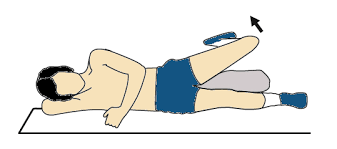

 What Happened to Your Legs?