Something’s Afoot

November and December have been busy, and in very tiring, healthcare-type ways.

I now have my own gastroenterologist, following the spike in my tTG number earlier this year. To recap, it started out at >250 in 2018 when I was diagnosed with celiac disease. In January 2021, it was 156. The next time I was tested, April 2022?, it was 221. I was shocked, and referred to GI. 

The GI doctor wanted to do another endoscopy, and I really didn’t want to do that. I got the celiac panel done again (September?) and my tTG was 98. Under 100! Hooray. (It’s supposed to be under 15.) We can hold off on another endoscopy. I did get referred to their dietician because the ONLY POSSIBLE ANSWER is that I’m still being exposed to gluten somewhere. I recently had that appointment, and I talked to the dietician for an HOUR. She also took my info to her celiac group and asked for their input. I came away with these three things: double bag anything containing gluten that my husband eats, don’t eat “modified food starch,” as that can be from wheat, and …stop eating certified gluten free oats. Oats have a protein in them similar to gluten that a very small percentage of people with celiac react to. So, I will stop eating oats and get tested again in April 2023. We’ll see if the number comes down. She said that the 221 result must have happened right after I was accidentally exposed to gluten, and then the number came down again. I want the number to be under 15, of course, but I also don’t want to eliminate oats from my diet. If you don’t eat gluten, oats are often used for pancakes, baking, etc. They’re not just a breakfast food. Sigh.

I also had my six-month follow-up with the rheumatologist. He didn’t find any evidence of another autoimmune disease in June, and he didn’t this month either. But because I have a positive ANA and a positive centromere antibody, I get to check in with him every six months in case I develop lupus or scleroderma. He had referred me to a neurologist in June, and that appointment is coming up in February. At least I like this rheumatologist. He is not condescending, and he seems sincere when he wishes me well.

Furthermore, I got up to a 600mg 3x/day dose of gabapentin before deciding to come off of it. It wasn’t doing anything good, and I think I was experiencing a couple side effects (though it’s hard to know for sure). I wanted to come off gabapentin before trying duloxetine (or a gelatin-free alternative?). So, I had a follow-up appointment with the pain management doctor, but he couldn’t tell me much except that I’d have to talk to the compounding pharmacy to see if I could get an animal-free one, or if I could just remove it from the capsule and ingest the contents. My insurance doesn’t cover compounding pharmacies, so I’m wary of the cost. And I still haven’t been given their contact info, so no progress has been made on that front. I was also referred to physical medicine and rehabilitation, who can help me go in another direction (like oral baclofen), months from now, if duloxetine doesn’t end up helping. 

And finally, something else is afoot. My right foot. In August, it had begun to hurt with no known precipitating factor. Except that I spent the summer in bare feet or slippers rather than snug footwear with lots of support. My feet will periodically “give out” or “collapse” and be really painful and then it will go away. Sometimes I can’t put weight on it, but it eventually works itself out. This time, it did not. There was no fracture or sprain. But there was a small, painful bulge that did not go away with cold or elevation. Hmm. I now wear “inside shoes” in the house, and I don’t like it, but I need to. 

I was referred to an orthopedist. He did not know what the bulge was, and I was sent away with a lace up ankle brace, a PT referral, and a follow up appointment. Sometimes I could walk on it without much pain at all, and sometimes it was extremely painful and I could bear no weight at all. PT did not help much. I went to my follow up appointment with a new tactic. This time, I drew a map of the pain on my foot and ankle. You can see the swollen part–it’s the squiggle rather than the straight lines. Just below all the blue on the side is the scar/indentation from my 1992 calcaneal neck osteotomy with lengthening. This area has for years periodically produced a sharp pain, and I’ve wondered about the integrity of the bones following the procedure.

Sorry if feet gross you out; pictures coming:

The doctor didn’t blink at the marker on my foot, nor did it seem to elucidate anything for him. I felt frustrated going to a follow up when nothing had changed or improved. He suggested that the next step would be an articulated (hinged) AFO. That’s a little funny, but fine with me, if it will actually help. Funny in that I had lots of different AFOs as a kid, and then tried to use two ExoSyms with knee sections as an adult. And now we’re here. 

I wanted to know why I have a seemingly permanent bulge on my foot, and I wanted this doctor to be able to tell me what it was. As in, my foot felt fine, and now it doesn’t and I actually have something visibly different/wrong. Help, please? He said he could order an MRI if I wanted. 

I had an MRI (My fourth now, but at least the top half of my body was out and the ceiling was pretty.) I went to see the orthopedist for the third time to discuss the results. He had me take off my shoe and point to where it hurt, again. I wanted to bring up the marker picture and show it to him, again. 

“It’s the swollen area,” I said, pointing to but not touching the bulge.

“Here?” he asked, touching a bony protrusion that’s been there for years and is not the new mysteriously swollen area that I’ve seen him for twice already.

When I touched the correct spot he said sometimes people get fat deposits, “though you have a pretty thin foot.” Yeah, it’s not a fat deposit. I wouldn’t think those would be painful to the touch and render you unable to bear weight. 

I know he’s got loads of patients and he’s doing his job and he’s trying to figure it out and be thorough. But I am still frustrated by the whole thing. The MRI didn’t seem to help him with anything. Well, it ruled some things out. It showed I do have arthritis. In case anyone is keeping track, I have arthritis everywhere we’ve looked so far: lumbar spine, hip, foot. So the prediction of arthritis by 40 with CP is spot on. It was probably there at 30.

We’re still proceeding with the AFO, just as we would have done without the MRI. I asked him, “Is this just for the right foot?”

He seemed surprised that I’d want anything on my left foot. I explained that usually, whatever happens on the right side of my body happens on the left eventually. And my left side is more affected and usually needs more support than the right. He did ask me to walk like three steps in our first appointment, and he asked me to take off my left shoe and sock and stand right then. “Yeah, that’s pretty flat.” And also, “Wow, your calf is really tight.” Yes, yes it is. Yes, I stretch it. No, that doesn’t do much of anything.

I tried to impress upon him that I do NOT want to wait until I have chronic, horrible pain on the left side too before we do anything for that side. I would like to PREVENT if possible. And I do sometimes feel twinges on that side that I’m trying to just let be whatever they are and not worry. I try to see my future with a walker or a wheelchair and see that future as absolutely okay. Because that may be where I’m headed, sooner than I’m prepared for. Thousands of people use different mobility devices and aids for different situations. I use poles now, and they won’t be enough if this foot thing progresses. So. AFOs coming up next month, at least for my right foot, with possibly some other kind of insert for my left. It would be lovely if they actually helped.

I have continued working with The Gupta Program. I have not had any other spectacular breakthroughs like the one in October. I still love meditating, and I do often have tingles and sensations on my jaw and neck and shoulders. But no big releases and no change in my throat. And I’m really tired. I’m supposed to just have faith that I’m on the right path and let all the fear go. Because “what you resist, persists.” I am supposed to accept and surrender and then my nervous system will calm down. It’s a lovely idea and it makes a lot of sense, but I am struggling with it.

I’m finding a central idea of the whole thing fascinating and quite the tangle. I said before that doing The Gupta Program feels a little like doing therapy on yourself. Because what you’re doing is calming your mind (or attempting to) whenever a worry or fear comes up. 

Probably anyone who’s taken psychology or been to therapy already knows this, but if I ever learned, I don’t remember it. Apparently, humans have the core fear of Separation or Abandonment (from parents or the tribe). This then leads to fear of rejection (being unlovable) and fear of failure (not being good enough)

So, even though I had a pretty darn secure and loving childhood, there’s still this subconscious fear there. I mean, at some point as a kid I heard that long ago sickly babies were just left out in the elements to die. That stuck with me. Then I learned that Hitler first experimented with poison gas on the mentally and physically disabled. That stuck with me, too. And of course, it’s not just literal abandonment; it’s fear of failure. That, I totally get–I was absolutely afraid of making mistakes and doing something “wrong” as a kid, and that perfectionism has stuck with me. 

My question is this: if it’s part of the human condition to have these deep, unconscious fears, even if we haven’t been abandoned or abused by a caregiver, then how are we supposed to truly convince our subconscious to let them go? 

I keep telling my worried inner self that I’m safe (I can do that without lots of mental gymnastics now), that I’m loved, and that I’m good enough just the way I am (just like Mister Rogers said). But I don’t think my inner self believes me yet. I mean, consciously, I know those things. Apparently, though, I haven’t convinced my nervous system. It makes me really sad, actually, to look around and imagine each one of us carrying around these fears and worries. Being human is such a struggle. 

May 2023 be a better year for all of us. May it be full of moments of peace and contentment, love and joy.

“Watershed Moment”

March 31, 2021

When I arrived at my physical therapy appointment on March 31st, I had completed a short practice session with my back support and ExoSyms every day for two weeks straight. Wearing my ExoSyms for any amount of time on fourteen consecutive days was definitely a record.

When my PT called me back and I walked toward him (with back support and poles), he remarked that I was walking much straighter, my stride longer. Happy that he could see it, I explained that I could feel a difference after getting the front of the hip stretched, and that I’d been trying to maintain the looseness and incorporate the bit of longer stride into my regular gait. I also told him that I went hiking. And that I can feel my hamstrings more. One night I was sitting in bed and they were aching and seriously buzzing. Like, “Oh, hello, hamstrings. Where have you been? How nice of you to show up after forty years.”

He did the regular stretches and had me get up and walk again, with poles. “Wow,” he said. “This is a watershed moment.” Then he reassigned an exercise I’d been given and abandoned last year and enthusiastically extended my care plan until June. (It was up in March. You have to show progress or something in order to “earn” more sessions. With cerebral palsy, that is ridiculous. That’s our healthcare system for you.)

I’ve been doing my Yoga for the Rest of Us, and I think I’m actually improving. This reads as though it’s a natural outcome. I’m doing something and getting better at it. But that hasn’t felt true for me before.

I always hear how much stronger and flexible people become once they get into a yoga practice. How much better they feel. That’s the whole point, right? Those are the things that yoga is supposed to do for you. Not me. Somewhere around 2007, I remember using this DVD on a regular basis, but I never felt that the poses were becoming better, or that I was getting much of anything out of it at all. I figured that’s just par for the CP course. 

But getting a good stretch at physical therapy, feeling that openness at the front of the hip, feeling that longer stride, and then doing yoga while I still feel it, it’s really helping it stay. Recently I was doing my modified sun salutations, with the seat of a chair acting as a raised floor, and I was in that lunge where you’re supposed to have your back straight and look up. Instead of, you know, being hunched over the chair trying to sorta do a lunge. And I changed one thing, I’m not even sure what, and felt this oh moment. “Oh. I think that’s what it’s supposed to feel like. I think I actually did it that time.” I DO feel stronger. My hips DO feel more flexible. The poses ARE getting better. So, when I say I’ve been doing yoga and I think I’m actually improving, it’s really more like, “I have been doing yoga and I’m actually IMPROVING!?@$#!” It’s really weird. And awesome.


When I do my PT at home, and I tighten my core (on back, knees bent), sometimes my glutes and hamstrings join in all by themselves. More on the right, but sometimes even the left side does it. It was almost startling the first time I felt it happen. Like, woah, what’s going on in there? When I’m walking with my back brace and poles, and I really succeed at engaging the core and getting my pelvis under me, I can feel my glutes and hamstrings working. I can feel my shoulders lift up and back. For a few steps at a time, it feels so different and so much better. To be both upright and moving forward at once. It’s so functional.

Life with ExoSyms: Take Two

8 February–24 March, 2021

I’ve mentally composed bits and pieces of a blog entry so many times that it seems as though I must have already written it. But I haven’t, so here we are, as I finally buckle down to write during my second spring break of the pandemic.

When I first got my ExoSyms, I was told it would take one to two years before I was using them to their full potential. I liked the idea of marking time, tracking that progression, until I could say, “It’s been two years and look at me now!” But I’m nine months in, and I don’t feel like marking time anymore. I’m no longer going to put the number of days in the titles of my posts. Progress is not linear, and there’s no endpoint. I keep thinking, What if they’re not for me? What if I just don’t progress beyond walking on a flat surface with poles? Maybe my body truly cannot use them to their full potential and it’s a case of too much, too late

I’m part of a Facebook group for women with cerebral palsy. Recently, someone wrote about how she used to walk independently and now she needs a walker. She fights the feeling that she just needs to “try harder,” that she shouldn’t take twice as long to clean the house and use twice as much energy doing it as she used to. Others chimed in, feeling the same. The decline is real. And it’s making itself known to me in very real ways. If ExoSyms had been available to me when I was twenty or twenty-five, before all the chronic pain and decline really took hold, maybe I could have really used them then, and extended my peak quality of life. But now? I just don’t know if I can do it.

The pandemic certainly hasn’t helped. It’s had a physical and mental effect on all of us. Maybe there’s a small group who were really able to use the time at home to cook well and do yoga and take up running. For the majority of us, our physical activity has plummeted and our time in front of screens has skyrocketed. Of course it’s not good. I’m not sure that I can ever achieve my pre-pandemic level of activity again. In 2019, when I first started using trekking poles, I was delighted with how they helped me, what a great option they were for longer distances. Now? Now I need them. I have gone from walking independently to using a mobility aid, just like so many others with cerebral palsy.

With PT, I had left off with my therapist at a loss and ready to let me go for six months. Instead, I decided to keep going. When I returned mid-February after a month away, not having pursued more x-rays or the facet block shot as he suggested, I said that I think consistent therapy is a worthwhile thing. My cerebral palsy is not going anywhere, and I can get stretched with a therapist in a way that I simply cannot replicate at home. That session was the first time this therapist had ever really explored my increased tone and decreased range of motion, I think. (He has taken over from C, who is recovering from surgery, and we had been focusing on core and glute strength and lumbar issues.) So this was for him an introduction to how my body works. He realized that, yes, actually, I can benefit from passive stretching. There was a “wow” moment, as in “whoooa, that’s tight.” Yes, I thought, now you understand.

He did stretches that I can’t do alone and encouraged me to try them with assistance from my husband. So, I’m back to going every two weeks. We’ve even done a couple ultrasound sessions on my right piriformis, which is more often painful than not.

Also in February, I finally made myself get in touch with Ryan at the Hanger Clinic and let him know what’s been going on with my back, and that I hadn’t walked in my ExoSyms for more than three months.

“So you’re really starting over then. That’s okay,” he said. It’s not entirely true, as I’ve tried hard to keep up with strengthening my glutes and core, and I hope I’ll have at least maintained what strength I had in the fall. Ryan suggested some back support and told me to practice walking fifty feet five times at a stretch and then take the Exos off. (Rather than trying to wear them for hours at a time, navigating around furniture, etc.) He sent me four brace options. I sent those on to my physical therapist, and ordered the winner.

My new brace arrived on March 8th. This is the second time that I’ve made an assumption about physical aids and been proven wrong. The first was about the poles, and how I thought they wouldn’t help and just be a tripping hazard. With this brace, I had wondered before if back support would help, so I was open to trying it right away. I still figured it was likely that it would just be uncomfortable and not do much.

I have to lie on the floor, bend my knees, and make sure my back is flat before I strap myself into it. The first time I did it, and got myself back to a standing position, I said, “Whoa.”

This thing holds me up. It holds me in. It’s there, supporting me. Hugging me so firmly. It doesn’t let me take steps the way I usually do. It’s amazing to realize how much my lack of trunk control must be affecting my gait, my alignment, my whole body. Because I don’t really feel like I do lack core stability. It’s another “Oh” moment. How can I know what stability feels like if I’ve never felt it? This little bit of stability afforded to me is like a glimpse into another world.

 The worry, of course, is that my core will become weaker as I rely on the brace. I don’t think this will happen. It’s more like it’s giving me a continuous awareness of my core. Like when a therapist or instructor touches your abdomen and says, “Tighten here.” It’s easier to do it when you know where to focus, or when you have something to tighten against. The brace feels similar to the super-tight belt and pole combination, used during Hanger training week to teach me how to “squish” with each step. I think for me the belt did more than the pole. As soon as Jared took it off, I didn’t feel my core as well, couldn’t tell whether I was really squishing. 

I may be feeling a further benefit as well. It’s a little like having my own personal weighted blanket on me at all times. I’ve never tried a weighted vest, used with kids on the autism spectrum, but I’m guessing this is similar. It’s the firm hug that calms the nervous system. It’s Temple Grandin’s squeeze machine. I’m not saying I’m completely calm now, but I can say that I like wearing this. If you have anxiety, it’s an inexpensive option to experiment with. Yes, it can be uncomfortable. Yes, it tends to ride up and need readjusting throughout the day. Yes, it makes wearing clothes interesting. And yes, it’s going to be way too hot in another week or two. But–I like it.

I’m tired of letting the pandemic get the best of me, and with the stability for my back that I needed, I’m trying, once again, to increase my physical activity. I returned to three seated workouts I like on YouTube. I find these extremely challenging once they get going, and have started again with only fifteen minutes. The only time I’ve made it through an entire workout (several years ago), it took me and my husband months to work up to it! All three of these workouts are truly gems. Along with some schnazzy workout gear, they all feature people of different sizes and races and abilities. Two of the workouts have real, live people with cerebral palsy. It’s truly an awesome sight to behold. As I feared, however, these arm workouts are really, really hard on my tight neck and shoulders, so they are not for every day. 

Inclusive Exercise Playlist

As such, I’ve also returned to my trusty Yoga for the Rest of Us DVD that I’ve used intermittently since 2006ish. I’ve been doing it before work. This is not as impressive as it sounds, since I no longer have to be out the door at 7:30 am, but still. 

I’ve also been taking more walks in my brace and with my poles. Instead of twenty slow, careful, cautious minutes worrying about my back and trying to engage my core, I can now do 60+ slow, careful minutes engaging my core.

A week after getting my brace, Monday, March 15, I put on my ExoSyms to try my first true practice session since November 1st. I no longer walk across the house without poles, instead making sure my poles are right there when I need to walk to the front door. Day 1 was hard. My right hip was so sore and tired. The “Is progress even possible?” thoughts resumed. I did my three up-and-backs along the sidewalk and made my way back to my front door, ready to take them off. The next day, I did it again. The third day, I reported back to my physical therapist and got stretched. Thursday and Friday, I put them on again. It felt like a good week. At least I was doing something with them on. I had this realization: I need to practice on Saturday too. No more giving myself the “day off.” I don’t need a whole “rest day” after only ten minutes of dedicated practice. After all, I’m not pushing myself or taking risks or hurting my back now; I’m slowly building endurance. This is something that needs to happen every day. That’s all there is to it. 

Saturday morning came, and I fully and absolutely did not want to strap myself into my four pieces of heavy carbon fiber and take myself outside. Not for the first time, some of the most relatable lines from Leonard Bernstein’s MASS came to mind, from “I Don’t Know”: 

Why I drift off to sleep

With pledges of deep resolve again, 

Then along comes the day

And suddenly they dissolve again.

I don’t know…

So many pledges of deep resolve we make, only to let them go when we simply would rather not do the thing. My husband said, “You just have to do it anyway. Even as you’re telling yourself you don’t want to, put them on.” He was right, of course. So I put them on anyway on Saturday. And on Sunday. And on Monday, the 22nd, something happened. It’s always hard to know if I’m using my core and squeezing my glutes and “loading the devices” all correctly, all with the right timing for each step cycle. I try it different ways, not knowing which way is right. I remember Jared telling me to kind of lead with my pelvis, but how do I do that and lean into the knee cuffs properly (load the device)? Also, when I’m stretched well in PT, I can actually feel a little looser at the front of my hip for a while. Which means that I have more range of motion in my step. I can actually straighten the knee before the foot comes off the ground to swing through, rather than keeping my knee slightly bent throughout. At least, that’s what it feels like. I don’t know if that’s what’s actually happening. 

So, right now I have a smidge longer stride that I have to figure out how to coordinate with the Exos. Do you know how weird it is to suddenly have a longer stride? It throws everything off if you actually try to use it. But looser hips and a longer stride are very good things, so now I’m trying to see if I can keep it going until my next professional stretching session on the 31st. I’m out there in my back support and my Exos, practicing, trying to incorporate this new stride and coordinate everything. And suddenly I’m walking faster. It’s a week after I’ve started walking in them again, and I’m startled to realize I seem to already be going the same speed I’d built up to last fall. Maybe even faster? 

It felt like I was just walking. It felt really good. There’s no way I can know where I’ll go from here. If or when I’ll progress beyond using poles on a flat ground. All I can do is keep practicing. 

Here’s video from March 23rd, and a side-by-side with the last video we took before the back injury last fall. Any difference? Hard to tell.

Life with Exosyms Days 134–175: November or One Step Forward, Many Steps Back

26 October–6 December

Here’s how I was walking on Friday, October 30th. This is the last walking update we recorded. 

Sounds ominous, but it’s nothing terrible, really. On Monday the first of November, I had on my Exos and I bent over to pick up the end of my charging cable. Sat down, charged my computer, and thought nothing of it until I stood up again. I had tweaked my lower back and made that muscle on my left upper hip / side body unhappy again. I went for a small walk after work that day, and by the time I made it back to my front door, I realized this wasn’t a small tweak and that things hurt quite a bit. Off came the Exos, and I haven’t put them on since.

For the first few days, I had trouble reaching my toes to put on my socks. (I do this while seated with the ankle over opposite knee.) It’s that sort of back pain/spasm that makes you hold your breath. I hobbled around from furniture to furniture, and spent lots of time resting with the heating pad. “Lots of time” became a month. I can put my socks on now, but I still cannot walk normally (my version of normally). 

It’s a little startling how easy it is to go from someone who walks forty minutes a day to someone who doesn’t leave the house. I didn’t leave the house for a long time, and it felt just fine. How is that possible? I mean, my back hurts, and my throat hurts, but snuggling up in bed with a book or my laptop is the thing I enjoy the most, even when I’m feeling pretty good. So that’s where I’ve been. In my bed. Or at work, in the chair at the end of my bed. My husband goes out for groceries, and PT has been interrupted by my therapist canceling and Thanksgiving. I truly have not needed to go anywhere at all. 

Even though I’m at least minimally functional, I do not feel that putting on my Exos is a safe move. My lower back already feels under strain when I wear them, try as I might to use my core. And if I’m not walking well on my own, adding six pounds of bulky equipment just isn’t a good idea. I’ve come to realize my current strength and ability level isn’t quite ready to handle the Exos. It’s like giving a child a fifty-pound pack to hike with. You can tell them, “This is the perfect pack for you in one to two years.” But expecting them to function safely in it immediately isn’t realistic. Unfortunately, the only way to learn to function properly in my ExoSyms is to wear them.

I just need to approach my Exos differently. If I’m going to use them safely, I must continue to strengthen my glutes and my core. But I can do that without the Exos on. Additionally, instead of wearing my Exos all day, or several hours a day, I need to back up and start more incrementally. Twenty minutes of good, conscious effort, then take them off. It’s better if I don’t put pressure on myself to wear them all the time, or feel guilty if I don’t wear them. Yes, I’ve just lost over a month of potential progress. And yeah, it’s disappointing. But it’s also okay. These are mine now for many years to come.

Before wearing my Exos again, I need to figure out what’s going on with my back, as I’ve never had such an ongoing issue before. Injuries happen. Recovery happens, too. I have had moments of “please don’t let this be a new chronic pain,” and I finally did make a doctor’s appointment, which is tomorrow. I’m crossing my fingers that it’s something I will recover from sooner rather than later.

I still have a reasonable amount of hope that I will reach a time when the Exos make my quality of life better. Until then, I will keep meditating. And I will try to keep getting stronger. And to leave the house.       

Life with ExoSyms Days 92–112: My Throat Takes Over

14 September–4 October

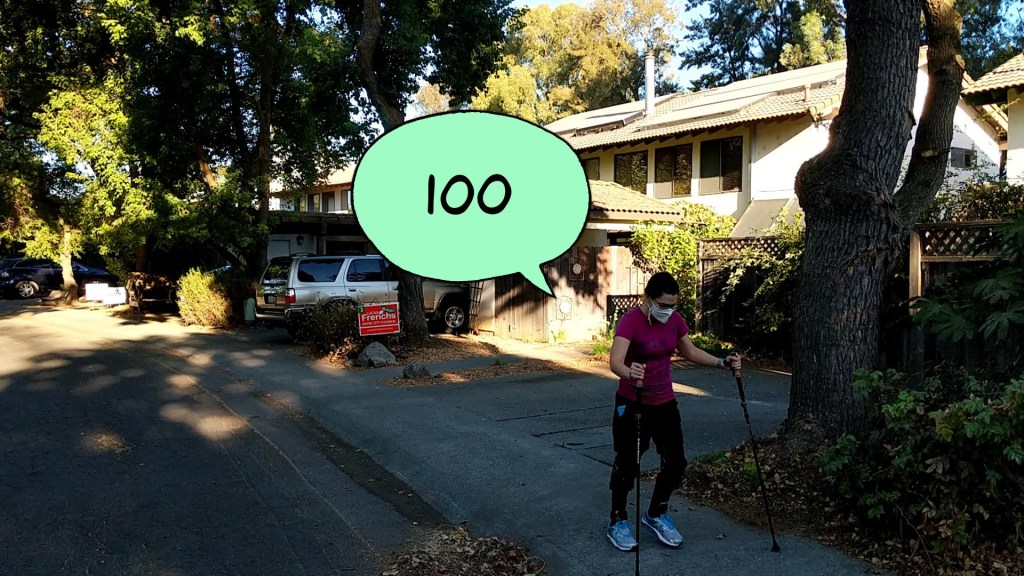
In the last three weeks, I have reached and surpassed the 100 day mark. In June, when I came home from the Hanger Clinic and marked the one hundredth day on my calendar, it felt very far away. I didn’t hope for any specific achievement, as I could not imagine what my progress would be by then. I did take a short walk outside on day 100. But it wasn’t particularly triumphant or celebratory. My husband could see that I was swinging my left leg from my hip, rather than really using my glutes and core to step.

If I were to be honest, I would also admit that, while I have technically owned my ExoSyms for more than one hundred days, I have used them for much fewer. Eighty, seventy-five days out of one hundred? That’s what the gaps signify in the “actual progress” graph below. There are periods of time where nothing happens on the ExoSym front at all.

I know, objectively, that progress is not a steady, uninterrupted line. But I didn’t truly know it until this journey.

Looking back at my notes, I see that these past three weeks haven’t all been stagnation. On September 17th and 18th, I made myself take a walk outside, that same twenty-minute loop I’ve done before, working up to walking to PT with my ExoSyms on my legs instead of on my back in a backpack. There were moments during those walks where I felt like I was reaching my regular walking speed, actually walking rather than think-stepping. That feeling of increased speed–was I finally engaging the struts properly and experiencing the energy return these ExoSyms were designed to provide? It was thrilling, for a moment. Until I stepped on a bump in the sidewalk and was thrown off so much that I nearly fell. How practical are these things going to be if I can only get them to work on perfectly flat, perfectly smooth surfaces?

I don’t have a Day 100 video, but here’s what I looked like on day 96, September 18th. I’m trying to show off my (occasionally) increased speed and my Ida B. Wells t-shirt:

Here’s the side-by-side comparison for two months and three months:

On the 23rd, I had my twelfth physical therapy appointment with ExoSyms. I told C about my falls and we discussed my pattern of losing my balance when turning, especially if I’m holding something. She gave me a new exercise to do, the clock. We have been concentrating on strengthening my weaker left side to combat the hip drop, and to encourage it to hold up my body long enough to allow my right leg to get a good step in. When I’m standing on my left foot and stepping through with my right, the right usually comes down early without a proper heel-toe because my left side isn’t doing its job.

The falls, then, are not surprising because I am again standing on my left foot, stepping with right, turning the upper body, etc. The left side needs to be able to hold me up while the rest of me functions, basically. The new exercise has me standing on the left and moving my right foot to different hours on an imaginary floor clock. I am one hundred percent holding on to furniture while I do this. For reference, I have never had the ability to stand on one foot, and if I were ever going to try to work up to it, the right would have to be my standing leg, not the left.

The whole situation is a little funny because as soon as C watched me attempt to point to twelve o’clock with my right foot, without ankle flexion and the added weight of the ExoSym, she realized that what we needed was the stability the Exo gives my on the left, but not the complication of the Exo on my right. Rather than actually taking off the right Exo and being lopsided, we kept going.

The following day, a Thursday, I did my exercises and I did my small loop outside. And that was really the last time I did much. I actually overdid it, I think, and felt sore (tailbone) and tired the next day.

Monday morning, the 28th, I was going to make myself put my Exos on after three days without them. As I did, I saw that the small metal piece screwed to the front of the right knee cuff was missing. This one has actually fallen off a few times, and I haven’t been diligent about checking and tightening the screw that holds it on. This metal piece is what the knee section locks on to to stay in place. Usually, it’s right on the floor at my feet, but this time it was nowhere to be found. I thought I could just get another one at the hardware store, but when I sent Ryan a picture and asked what it was called, he said it’s not at the hardware store and that he would send me one that day. It didn’t arrive until Friday. Could I have worn the Exos without the knee sections? Yeah. Could I have practiced the clock with just the left one on, just to see what it was like? Yeah. Did I? No. (For the record, I have in the past worn my Exos without the knee sections, and it was a fascinating combination of way less bulky and heavy but also way more unstable.)

So my Exos were all back together by Friday. Today is Sunday. I did wear them yesterday, and I even did the clock a few times. But my ExoSym life has been derailed by the rest of my life. 

Whatever we’ve got going on healthwise, stress and anxiety make it worse. Health issues can also cause stress and anxiety. So we are in a circle that is difficult to get out of. This is an ExoSym and cerebral palsy blog, and no one’s really interested in your ailments as much as you are, I know. And I’ll never know if you stop reading now.

I’ve had a low-grade sore throat for a year-and-a-half to two years-ish. It was always worse on Mondays when I had to return to work and use my teacher voice. Eventually, it got bad enough that it felt sharp, like something viral. It ended up being mild strep that time, May 2019. Months later, when the soreness hadn’t gone away, I got tested again and it wasn’t strep, so I was sent to an ENT (further months later, of course).

He could see inflammation and diagnosed me with laryngopharyngeal reflux (LPR). Since my diet is already pretty good and I don’t smoke, the best he could do was “bring down the spicy food from hot to medium,” and he got to check off that he discussed diet and lifestyle changes. Gave me a prescription for three months of reflux medication and sent me on my way. I was skeptical about this whole process because reflux can be caused by low stomach acid as well as high, and I didn’t like being put on a medication to lower it when we didn’t know what was causing the reflux in the first place. At my follow up (many months later, postponed because of COVID), the inflammation was gone, but my pain wasn’t. Because the inflammation had healed, it looked like the doctor had made the right choice, but since the pain hadn’t improved, he referred me to a gastroenterologist. I wasn’t looking forward to seeing another specialist, who probably wouldn’t find anything, so I put off making the appointment.

Then it was mid-September, and it was time for me to start teaching my groups through distance learning. I noticed a dramatic increase in my pain. Had my reflux flared? Is it strep again? It’s nearly unbearable. Anyone else get that thing where when the pain is bad enough, a headache and a touch of nausea show up, so you just feel downright ill? Sometimes I do actually vomit, as with the neck tension. I made the appointment with the GI doctor (months away, of course).

What’s funny to me is that I feel like I’m handling distance learning so much better this time around. I’ve always been an anxious person, and there’s oh-so-much to be anxious about right now, but I thought I was taking everything in stride, so to speak.

Last weekend, I read up on LPR again and cut out spicy food and acidic food, citrus, tomato products, garlic, fatty foods, chocolate. As a vegan with celiac disease who loves coconut curry and salsa, I have little enjoyment in what is left. I sleep propped up. I try over-the-counter antacids. I attempt to implement a more regular meditation practice, because, of course, along with cutting out everything with flavor, reflux sufferers should reduce stress.

Today will be the seventh consecutive day I’ve meditated, which is new for me. Thursday and Friday I managed to meditate before work, after work, and before bed. I’ve certainly never meditated more than once a day before. I’m fortunate to have the time and space to do this, and it might be exactly what I need. With yoga, pilates, meditation, and every other de-stress/mindful practice, it’s so hard for me to really believe in “the power of the breath.” I mean, it sounds pretty woo-woo. We breathe all the time. Does taking mindful breaths really change things all that much? 

I feel like I already have compassion for myself and my body, but doing all these compassionate body scans and “affectionate breathing” has been really interesting. It was a bit of a revelation to have a moment of understanding that I am not my body. I myself am separate from it. It is the vessel that I have, but it isn’t me. Of course, the reverse is also simultaneously true. Existence is complicated. 

One body scan starts with the left toes. By the time we reached my left hip, I was crying. Another started with the crown of the head, and by the time we reached the forehead, I was crying. I think we all need to lie down in the quiet darkness, take a deep breath, and listen to a gentle, calm, compassionate person guide us through our own bodies. We, all of us, need gentle, calm compassion.

I first tried mindful breathing about thirteen years ago during the relaxation section of Yoga for the Rest of Us. It’s taken me until now, with more regular practice, to actually feel the physical and mental effects, and now only sometimes. So, if you try it and think it isn’t for you, try it again.

I thought I’d leave a few of the meditations I’ve really come to enjoy down below. Some have a more professional quality than others. All have helped me.

Life with ExoSyms Day 36: You Can Put ExoSyms on the CP, but…

20 July

Throughout my physical therapy career, people have been telling me I sink into my hip, or drop the hip. When they demonstrate, I have this moment of recognition: “Oh, hello, me. There you are.” It’s a little bit amazing to see myself reflected in them, and to know that I am seen and understood enough to be replicated.

It happened throughout training week, and it’s been happening throughout PT since I’ve been home as well: “We want to get from this”–demonstrates uneven pelvis–“to this”–magically evens out pelvis.

I see it. I understand it. I know I do the first one. I cannot make my body do the second one.

We practice shifting weight from one leg to the other while keeping the core and glutes strong. When I am on my left foot, my right hip sinks. I cannot really feel this. 

“Try to bring that hip up. Press into my hand.”

My brain is a complete blank. It has nothing to communicate to the right hip. My brain does not know how to bring the right hip up.

“How do I do that?” I ask. “Which muscles am I supposed to be using to do that?” I ask more specifically.

It’s the left glute medius that’s supposed to be doing it. The one that I’m using to stand on, already engaging it as much as I can.

I have these two truths, and I don’t know how to balance them:

  1. I am only one month in, and I will get stronger.
  2. I have cerebral palsy. We are working on exactly the same stuff I’ve always worked on, but with giant braces and poles added to the mix. Sometimes I want to say, “Hey, I still have CP under these things, you know!” You can put ExoSyms on the CP, but you can’t take the CP out of the ExoSym wearer. Or something.

The good thing about my physical therapy is that it’s connected to my hospital system. That means I have access to the after visit summary and notes for each session just as if it were a doctor’s appointment. Still taken aback by my experience of utter nothingness when asked to perform an action, I click on the notes for that morning’s therapy session.

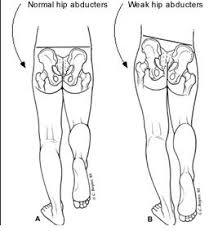
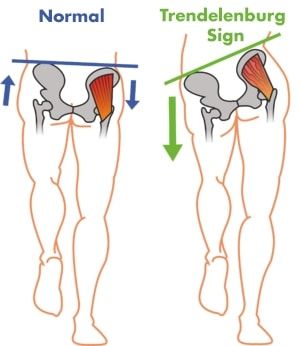
I can read what C writes as her own record, with all the professional vocabulary. She writes about Trendelenburg gait a lot. I look it up. That’s what “hip drop” is. I’ve probably been told before. It’s quite something to see drawing after drawing of what I look like. And that it has a name. I look at the images and read descriptions of it, but still have a hard time understanding the mechanics in relation to my own body. A positive Trendelenburg sign (hip drop) indicates weakness on the opposite side. I think I’ve always assumed that since my left side is weaker, that must be the side that drops more. (Since I don’t actually feel it as it’s happening, nor connect the mirror image of someone demonstrating it to my own body.) Also let’s be clear: both hips are weak; the left is weaker.

After the morning’s PT and afternoon’s research, I really want to understand what this means for me. All these years of people showing me my side-to-side sway, telling me I have muscle weakness and increased tone, and my nodding, yes, that’s true, that’s what I look like. But I still don’t really get it–or get how I’m supposed to do anything about it. After all, the small amounts that I’ve increased my strength over the years have not resulted in a noticeably more even gait. How much is it actually possible to change what’s always been there?

What’s more, I experience my CP as muscle spasticity and lack of balance, not weakness. How do you know that your muscles are “weak” if you’ve never known what “strong” feels like?

I stand in front of our full-length mirror with my Exos on, shirt pulled up and shorts tugged low so I can really see my hips. Right hand on furniture for support. I practice weight shifting. The mirror helps some, but it still feels like a disconnect between the image and my body. (Perhaps this is some sort of sensory/processing thing?) I don’t know how to make the image do what I want.

Concentrating on my core and my glutes, working in almost slow motion, I happen to look down at my hips the moment that shift to the left happens. I see it and I feel it. As I put weight on my left foot, I see my left hip shift out and up past center, with a bit of a twist. My left hip goes up. My right hip falls. I do it again to confirm. Repeat it to show myself I can do it on purpose–and undo it. There it is. My hip drop. My positive Trendelenburg sign. The muscles around my hip are not strong enough to hold my left side up over my foot and everything shifts and collapses. But I can cheat it back into place using my right side and my hand to help. Hips level again, I tell myself, This is where my muscles are supposed to hold me; this is what upright feels like. It’s only taken thirty-nine years for my body and my brain to connect this way.

Let’s revisit my two truths above: I have the capacity to strengthen muscles. Cerebral palsy does and always will affect those muscles. Truth three: The future is unknowable. 

Right now, ironically, I am unable to imagine what it would feel like to walk in my Exos as easily as I walk without them. And yet, the Exos have the potential to help me be more “able” than I’ve ever been. I cannot imagine it, but I believe it’s there.

Day 1 versus Day 33

Lessons and Advice from ExoSym Training Week

Note: I have cerebral palsy (mild spastic diplegia) and came to Hanger Clinic for bilateral ExoSyms with knee sections. Not many people have two Exos with two knee sections. Your experiences might vary widely from mine, especially as far as mobility in the first days. 

  • After my test device trip, I knew I would need trekking poles. I practiced with them months beforehand and brought them with me for training week. They have some there for you to use, but if you need them for training, chances are you will need your own when you leave.
  • Be prepared to wait. Use the time for bathroom/water/food even if you think it’s only going to be a minute. The first day, I was there for several hours and didn’t drink anything or have a bathroom break. The room with the cubbies (where my water bottle and snacks were) is at the other end of the gym from the restrooms. And I could hardly walk once I had the Exos on, so I felt a little bit stuck. 
  • Be prepared for a schedule different than the one they email you beforehand. I was able to come in earlier on several of the days. For me, the test device trip was our sightseeing trip. This one was all work (and rest).
  • Tell Ryan as soon as you realize if something doesn’t feel right. He’s booked throughout the day, so he was trying to make adjustments for me as well as see other patients, and the wait-time was long. The earlier he knows, the earlier the chance you have of getting out of there. 
  • Ryan and Jared have different styles and approaches, and you might hear pointers and ideas that seem to be in opposition. It’s a lot to take in.
  • If you have a support person with you, ask them to take notes for you and put a star by the cues that work well. We hear so much information throughout the week, and we’re supposed to synthesize so many actions simultaneously.
  • Ask your support person to take a lot of pictures and video. Not only is it great to have documentation of where you started, it will also be helpful if you can record Ryan or Jared as they are explaining how to do a particular movement, especially to share with your physical therapist when you are home.
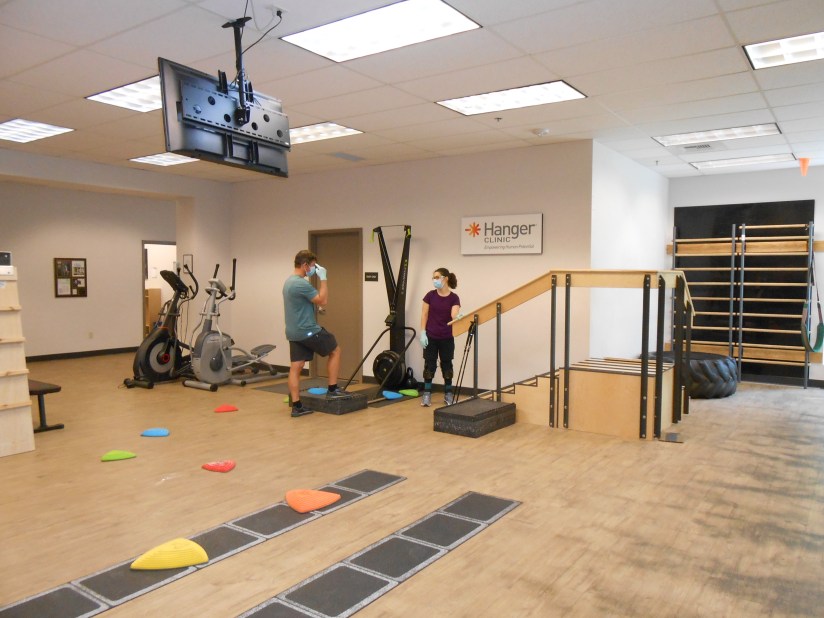
  • Do go back to the clinic to work and practice as much as you can. Two of the days I had good, long sessions alone, and it was really what I needed. Especially as an introvert. It takes time to process and apply all that we’re learning. Plus, most of us don’t have parallel bars and a mirror at home. I really miss practicing with parallel bars.
  • Jared has thousands of hours of experience, but he only just met you. He doesn’t know you or your body yet, and there’s really no time to build that relationship. It’s an opportunity for you to try to be more like the person you want to be (for me, braver), but he also won’t know when he’s reaching your limit unless you tell him. He only started figuring out the strategies that worked best for me, both physically and psychologically, on the last day. We finally start to get to know each other and then our time is at an end.
  • Jared will ask you if you have any goals before you get started, so if you don’t want to be caught unprepared, think of a few ahead of time.
  • Wide Shoes Only is more than a recommendation. I highly urge you to do what you can to go there. 
  • If you are flying, try to leave lots of room in your luggage or bring an extra suitcase. I would not have wanted to wear my Exos through an airport or on a flight, and two Exos with two knee sections take up a lot of space. There will also be extra knee sleeves and heel lifts, plus the shoes that fit your Exos, and any additional shoes you buy.

Life with ExoSyms Day 7–8: What Happened?

Sunday, 21 June–Monday, 22 June.

The Sunday following training week was another travel day, from Oregon to California. I did not wear my ExoSyms in the car, for comfort and for the previous laborious/yucky experience of using a public restroom.

My husband and I were reunited, and he was taking me to the redwoods. We checked into our cabin and ate some dinner. Then it was finally time to show him my Exosyms. I had put them on that morning, about twelve hours earlier, for a few minutes of practice before the long car trip to meet up with my husband. I put on my brace sleeves. Then the right device, and–I couldn’t close the knee cuff! I really squeezed my calf, trying to close the top part of the brace. It simply would not close. Not just a little–there was quite a gap. My mind raced: Okay, I’ve been sitting in the car all day. Too much salt. Not enough water. Do calves really bloat/swell this much? My calves are supposed to shrink now, not get bigger!

The left side was a little better, but didn’t close all the way either. I was still able to Velcro the cuffs “closed” and attach the knee sections over them and practice walking for a few minutes. There are bound to be changes and surprises, but it was a little disconcerting for this to happen as soon as I left Hanger. I didn’t want to have to think about sending them back for adjustments already. I resolved not to panic and to just wait it out.

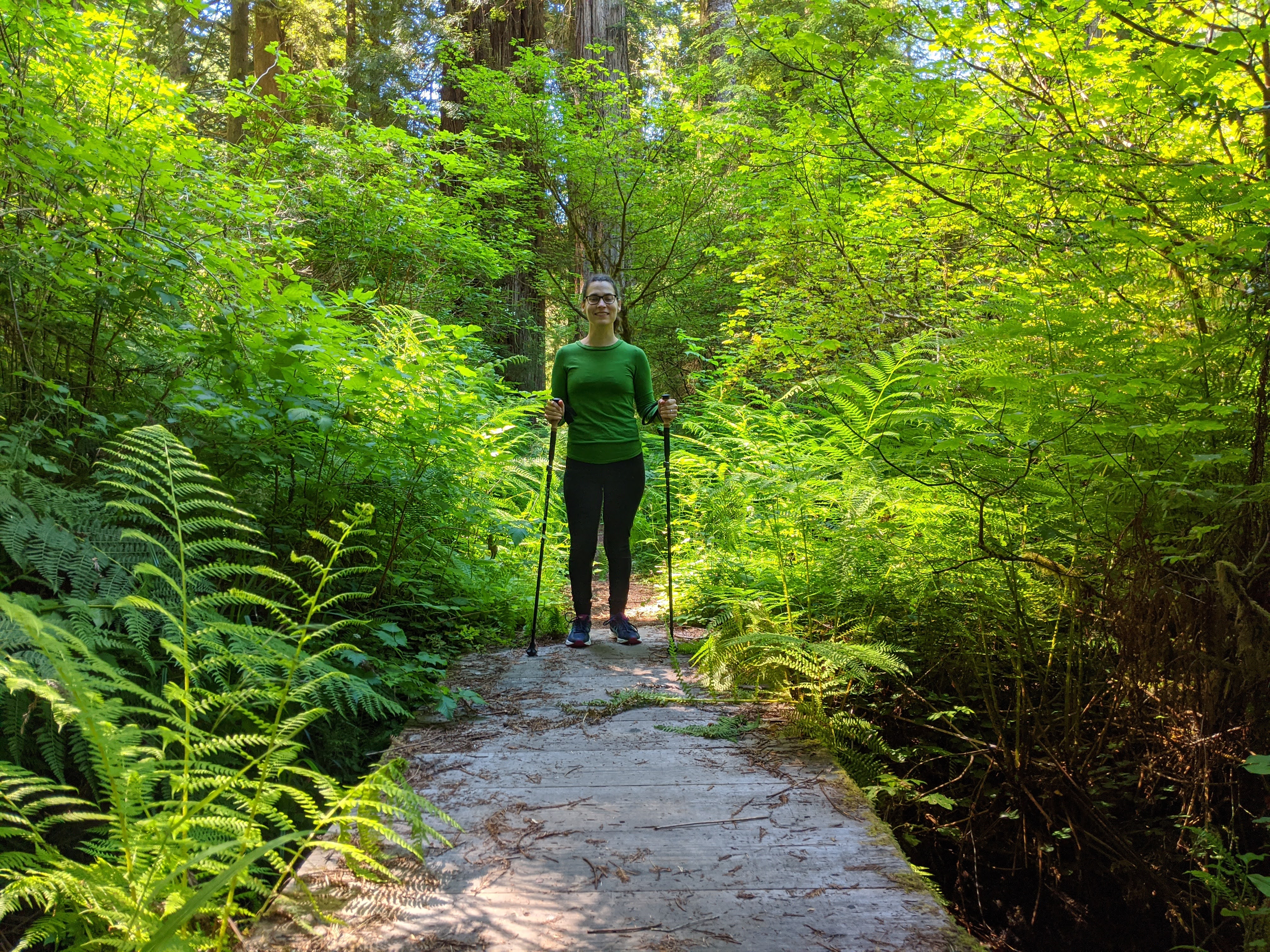
Monday morning we drove on an aptly named scenic parkway to Prairie Creek Redwoods State Park to try to find the accessible trails we’d read about. I did not even contemplate trying to wear my ExoSyms out in the wild, but this would be the first time I used my trekking poles to “trek.” 

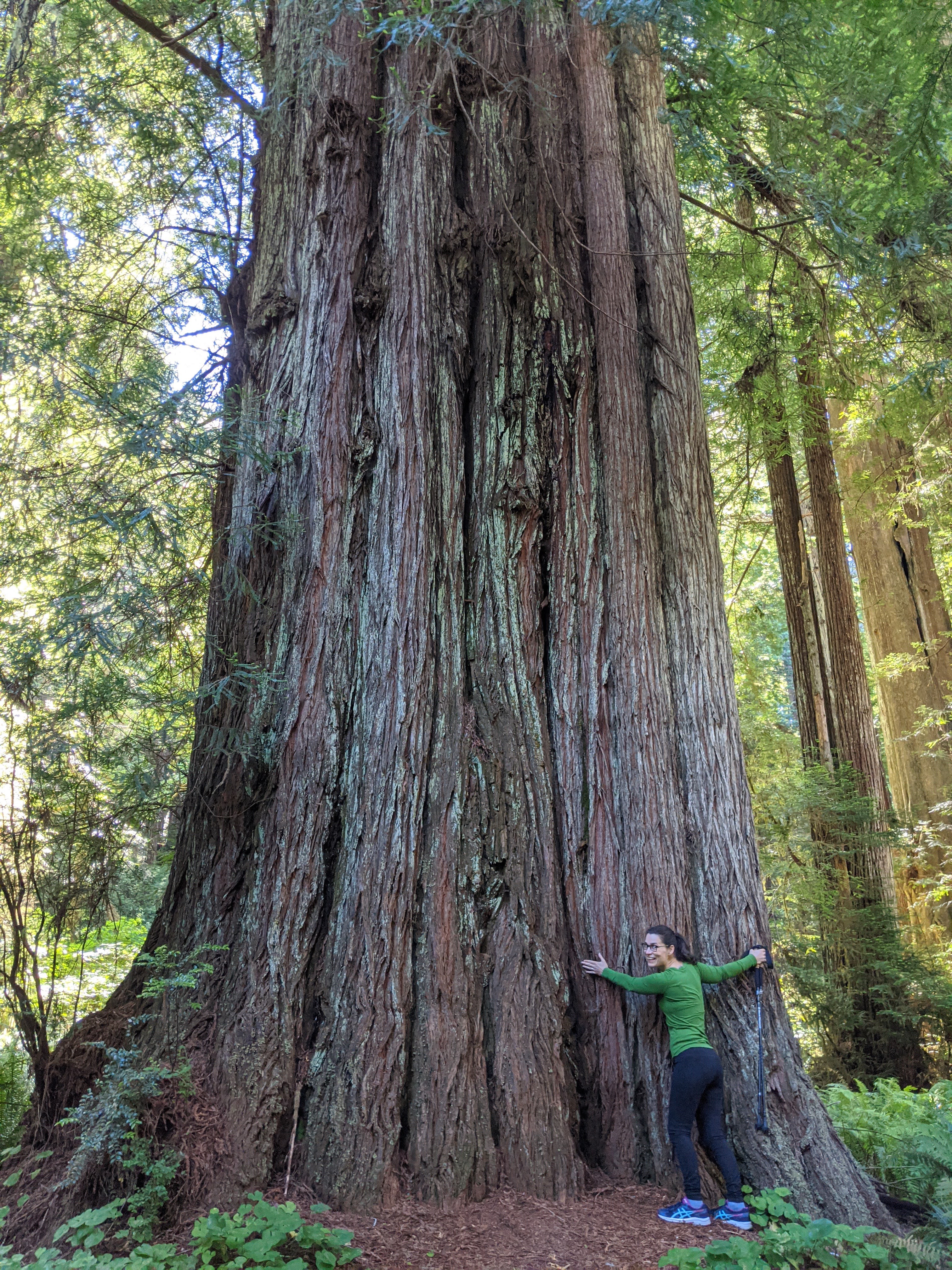
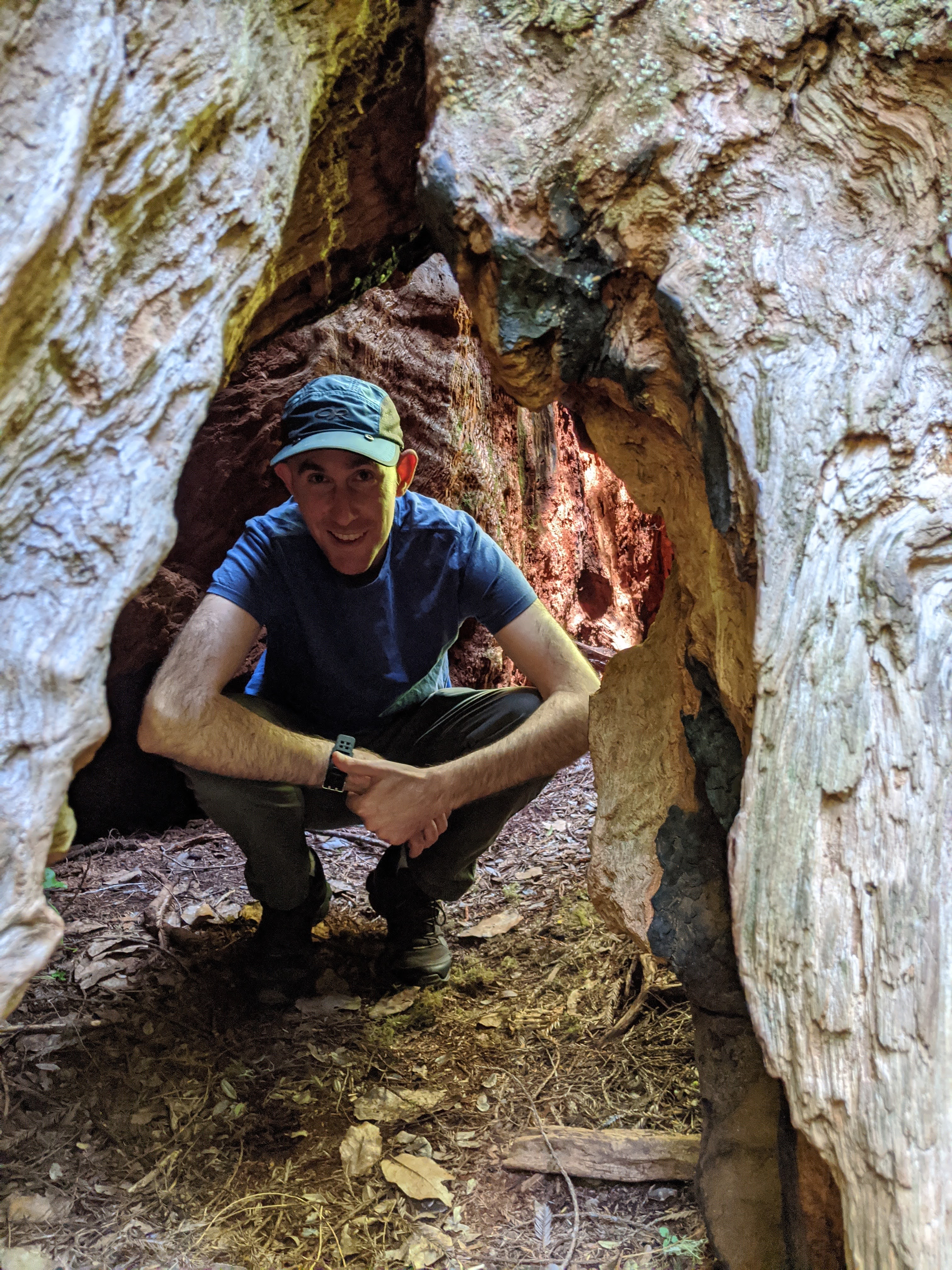
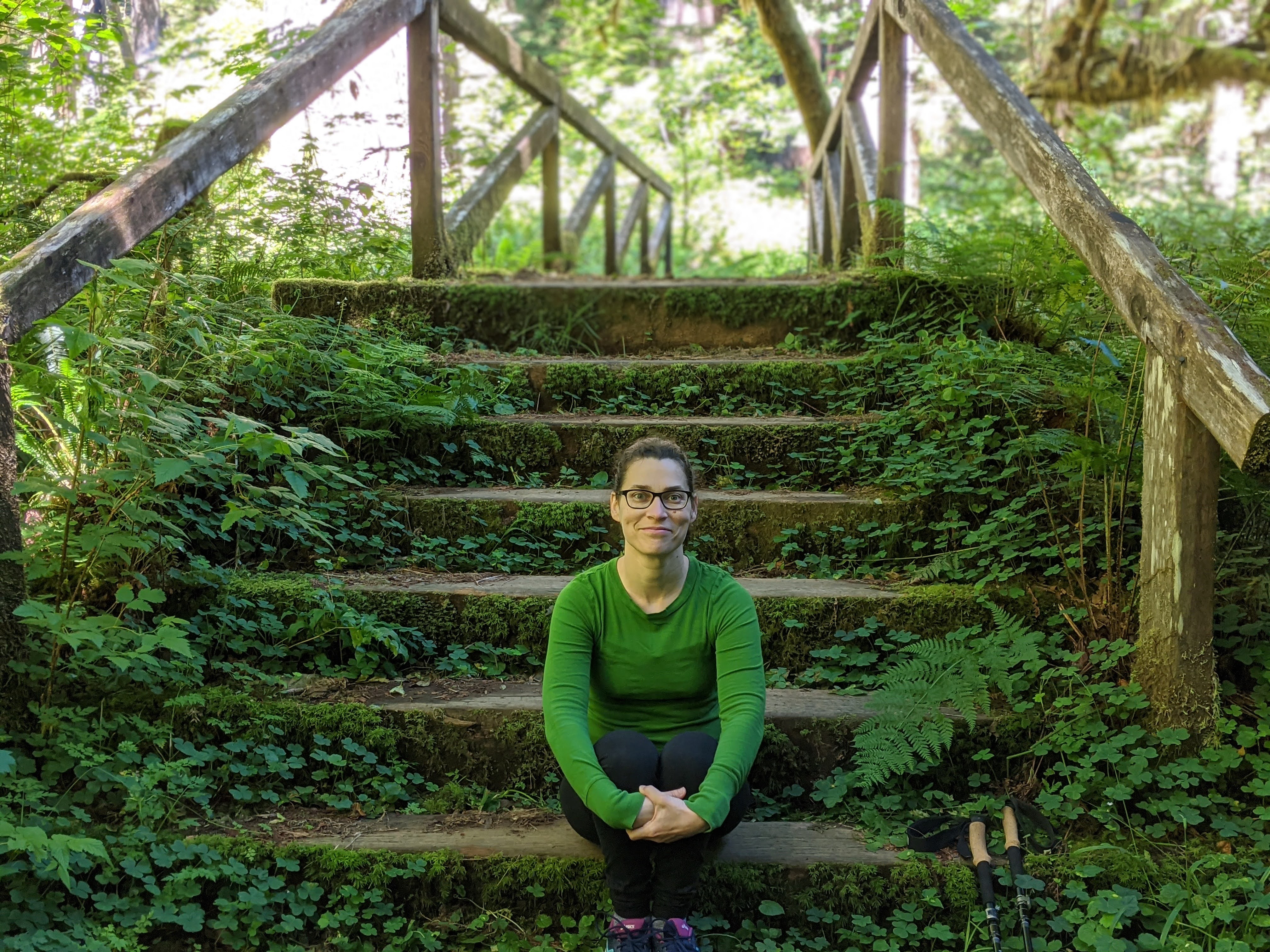
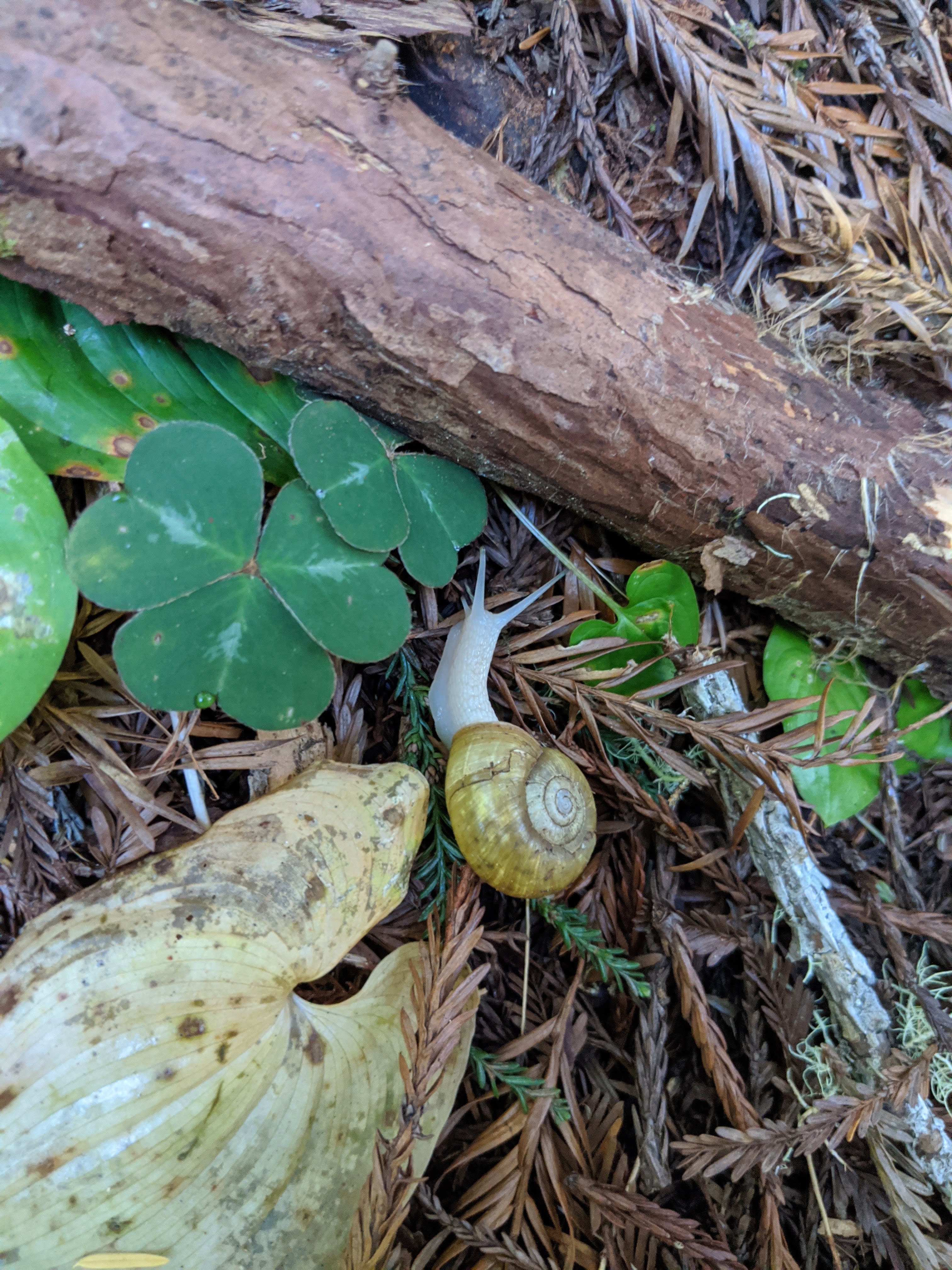
I tried to do my “squish” (engage my core), keep my poles close to my body, and keep my shoulders back and head up. Because I was holding my poles, I was not holding my husband’s hand as I would have been without them. And by “holding my husband’s hand,” I mean, gripping it, pulling it, nearly dislocating his shoulder. I even tried going up a step or two with just the poles before resorting to the (overgrown) handrail. We went over wooden bridges, and lots and lots of roots, and I did just fine. We saw snails and frogs. The air was cool. The trees were magnificent. And it was good.

After that, it was finally time to return to my life at home. With ExoSyms.

Life with ExoSyms Day 6: Shoes

Saturday, 20 June.

If you are on an ExoSym journey, you will hear a lot of talk about the store Wide Shoes Only in Renton, WA, about thirty-six miles from the Hanger Clinic in Gig Harbor.

We were not about to add seventy-two miles round trip to our drive south to Oregon the day we left Gig Harbor. But the discomfort I was experiencing on the top of my right foot and the continued recommendations from Ryan convinced us we should go.

Of course, the store was closed because of COVID-19, but we left a message and the owner got back to us, scheduling an appointment for us at 10am Saturday.

We packed up and I suited up, and we arrived in Renton early. By then, I needed to use the bathroom, so we drove to a waterfront park and pulled up near a picnic area with public restrooms. I approached the dreaded ramp out of the parking lot with snail-like speed, realizing with alarm that I had practiced stairs during training, but we never got to inclines! Ryan had mentioned something about going sideways, so I tried that. Kind of. Eventually, I made it to the restrooms. Give yourself lots of extra time in the beginning to reach important destinations like these.

Here’s something I’m not wild about. I got into the stall, settled my poles against the wall so they wouldn’t fall over, got the door closed, situated self on toilet, peed, got up. Then I had to handle my poles again. BEFORE WASHING MY HANDS. There’s no way around it until I can walk short distances without poles. I suppose while the pandemic lasts, there won’t be that many public restrooms in my future anyway.

Back at Wide Shoes Only for our appointment, Dominic measured my feet with my ExoSyms on. This man is a shoe professional and he is enthusiastic about it. Ryan is the ExoSym inventor and expert, and Dominic is the ExoSyms-with-shoes expert. No other shoe salesperson will know anything about ExoSyms until you walk in with yours and teach them. So Dominic taught me how to buy–and wear–shoes with ExoSyms. 

First, Ryan doesn’t stock half-sizes at the Hanger Clinic, so do not take the shoes that Ryan provides for training week as the right shoes for you. It’s so important to be properly fitted; shoes that fit correctly make a difference in your ExoSym experience. It’s more than a little unfortunate that most of us are probably learning to walk (and work out) in ill-fitting shoes.

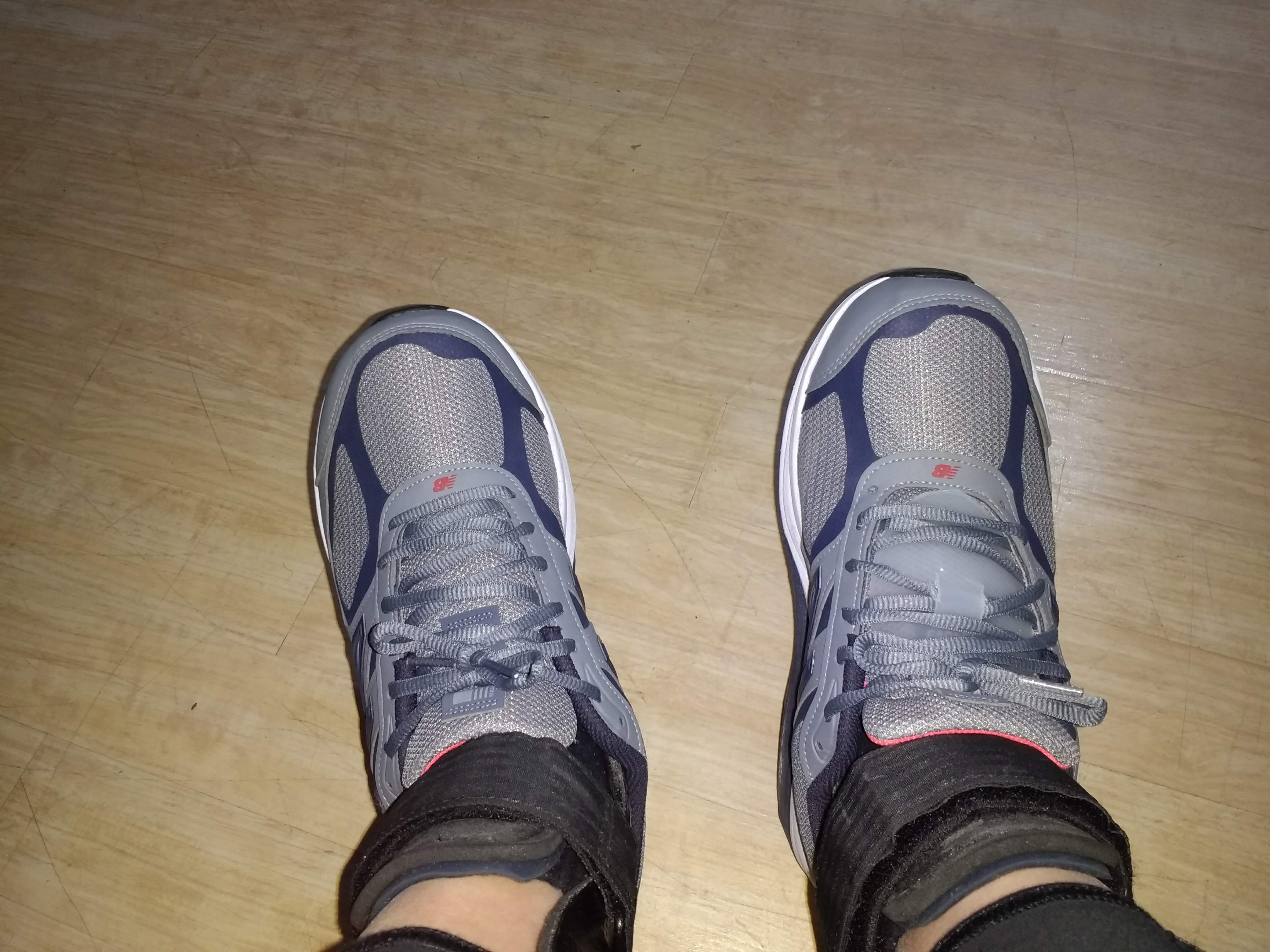
Second, the shoe shape (the “last”) is more important than the shoe size. Two different New Balance size 8s will feel different because they are different shapes. Pay attention to the model. Select a shoe with a roll bar for stability. 

Huh. Look at that. It says “roll bar” right on the shoe.

Without ExoSyms, I wear an eight, with a narrowish foot. It’s definitely easier to deal with shoes if you have two Exos and don’t have to split sizes. I also have two heel lift inserts that are the same height and will need to be worn with whatever footwear I’m choosing. Ryan put me in a 9 2E (left photo). Dominic put me in an 8.5 4E, the widest (right photo). Shoes that are too long will cause you to walk toes out and swing your leg around (think walking in flippers). I definitely do this, though I’m sure it’s not just because my shoes were a little big. Because of the lace guard that Ryan had given me for pain on the top of my right foot, Dominic showed me how to lace my right shoe completely differently. I had been wearing the 2Es with the laces as loose as they could be with barely enough left to tie. Dominic made sure I tapped my heel on the floor before tying my shoes very tightly at the ankle. A snug fit ensures that the brace doesn’t slip forward and backward in the shoe with each step. I was nervous it would be too tight and uncomfortable, but Dominic knows what he’s doing.

I hate shopping for shoes. If I find a pair I like, I’ve been known to buy two pairs so I don’t have to shop again for a while. I especially find it unbearable when the salesperson tries to help me put the new shoes on, bent over on their rolling seat with me trying to get my foot onto the slanted front. My foot goes stiff when it’s being wrangled into a shoe, so I usually say, “I’ll do it.” With Dominic and the ExoSym, my foot was already encased in the stiffest material imaginable, so it didn’t matter if it flexed involuntarily, and he had no problem getting shoes on and off for me. What a lovely, calm, unawkward experience it was to have the store to ourselves as well. 

I left with so much new knowledge and three pairs of shoes. I have New Balances for every day, a “casual” pair, and “dressy” pair. The latter two will probably last me many years because they won’t be worn very frequently. 

The takeaway: Do what you can to go to Wide Shoes Only and get fitted properly. It’s probably good to call so you can come in at a quieter time. Take what you learn home with you to your local stores. Leave room in your luggage for new shoes.

After he knows your size and your needs, you can also email Dominic about a shoe that you like the look of, and he will help you find a similar one that will work for you.

I’m so glad we took the extra time and miles to not only support a family business, but also to get me a good shoe education.

Life with ExoSyms Day 5: Training Week at Hanger Clinic

Training Day Five: Friday 19 June. 9:30–11:30, 2:00–4:00

Last night I fell asleep to a soothing voice intone, “Now we begin our body scan…” I hope all these meditations I don’t manage to stay awake for still help me subconsciously. Burning upper back woke me in the night.

This morning, I wait for the text from Ryan to let me know that my knee sections have been delivered. I am nervous; it feels like such a long build up. Jared has warned me, “It’s a lot of equipment. It’s going to seem heavy.” Ryan has assured me, “You’re going to make so much progress.”

I eat only a banana as I wait for the text. We’d hoped for 8am. I put on the longer brace sleeves I’d been given on Wednesday with my ExoSyms, so I am ready to just add the knee sections when we get there. At 9am, I get the text: they’re here. 

At the clinic, my knee sections are sitting on the counter in the room with the long parallel bars. They seem really big.

Before we put them on, I let Ryan know that the additional adjustments he’d made to my right ExoSym the day before for burning in the heel were now causing painful pressure on the top of my foot. He takes my right shoe and relaces it, skipping the very bottom holes and adding a plastic lace guard to distribute the pressure of the laces across my foot. This does help, and we’re ready to go. 

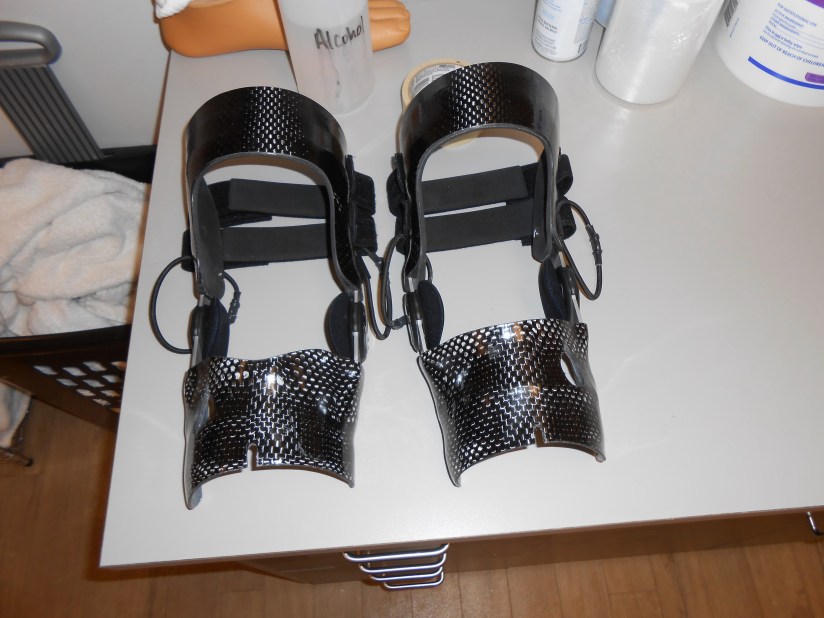
The knee sections are quite complicated to attach. Ryan shoves them over/onto the knee cuff of the ExoSyms, carbon fiber scraping against carbon fiber. Then he tries to show me how to shove the two openings in the lower piece of the knee sections over the waiting rivets on the knee cuff just right, like latching Oshkosh overalls. “There, that’s what I made you,” he says, and we’re all relieved that everything seems to be in working order now. I fasten two Velcro straps around the back of both thighs and Ryan hooks two hamstring assist bands around the metal pieces at the back of the knee cuff.

Up I stand, between the bars. My right foot feels indescribably weird. My toes are pointing out to the right, torquing me into an alignment I’d never felt before. It’s very uncomfortable, with pressure in all sorts of places, like my foot is on crooked, like I’d been casted for a broken bone incorrectly and this wonky cast needs to be cut off pronto. Instead, I’m asked to walk in it. My brain is scrambling and I ask why my toes are pointing out, voice a bit high. Ryan tells me everything looks good; it’s just that I’m more typically aligned. And that I can move my foot so it’s not pointing outward, shift from the hip. Of course, right, I can move my own foot. With effort, I get my toes pointing in a more forwardly direction. Simultaneously, there’s all sorts of sensations going on around my thighs. Rolling movements? But firm, especially around the back. Ryan had told me that the knee sections would give me more proprioception (body awareness) and stability. I hadn’t really understood how. I wasn’t prepared for everything to feel so weird. As I step, the cuff across the front of the thigh and the straps around the back put pressure into my leg at different points–constant feedback.

It takes a much shorter time than I was expecting for my brain to stop interpreting my right leg as #$@&!. My left side feels pretty good! Though it still doesn’t do as well as the right because the left is my weaker side. I wish my right side could feel as happy as my left. I quickly adjust to whatever is happening to my thighs and realize–I like it. It’s like a firm hug and a massage at once. I’m relieved that the added weight doesn’t feel “too heavy,” and I think in part it’s because I have two devices instead of one. With one, I’m sure the Exo side must feel weighed down in comparison.

Jared comes in for training and Ryan tells him before leaving that I walked with no hands yesterday.

“Can I see your new skills?” Jared asks.

I walk without using the bars for a few steps to show him my progress.

His response? “Are you using your squish?”

“Probably not,” I admit.

“I didn’t think so.”

So much for my new “skills.” Learning to walk in a new way is like learning to write in cursive after painstakingly getting the hang of printing. Smoothly connecting all the letters–all that processing needs to happen so quickly in order to make the word you want. 

I walk up and down between the bars, and Jared makes me switch to walking backward pretty quickly, to work more on the hamstrings. Then he brings in a large red gymnastics-type block for me to push out into the gym, on my toes, hips forward. Down and back the length of the gym. He tells me we’re going to practice stairs, which means I need to walk over there. After a few steps, he gives me one pole. It’s his way of “tricking” me into trying more no-hands walking, sneaking it up on my subconscious rather than telling me: “Try to walk to the stairs without poles.”

The best moment I have all week comes next. This is the moment I really know these devices are doing something for me, even now when I’m not strong enough to use them properly. I’m standing in the gym–freestanding, nothing near me to grab–and my muscles tighten up as they do, knees bend. I am now off balance and pitch forward toward the floor. I think, here it finally comes, my first fall. This will be a great first fall because I’ll just tip right over, nice and easy. But I don’t. I hang there, more bent at the waist than I ever remember being without falling. 

“You okay?” Jared asks mildly from somewhere above me.

“Yeah?” I say, disbelieving even as I successfully straighten up. What just happened? How am I still up here and not down there? How are they doing that?

We work at a set of practice stairs. One is a shallow set and across the landing and down the other side is a standard set. I muscle my way up, using the railing on one side and the wall on the other. There is a technique to learn for going down, though. With no ankle flexion, I have to position one foot with the ball and toes off the step, and step down with the other, ideally landing with that foot halfway off the next step. Meanwhile, the foot that was halfway off the first step has tilted off of it and is swinging through, ready to land correctly on the next one down. I absolutely understand the logic and can picture it in my mind. But. Short legs and spasticity do not lend themselves to stairs in the first place. For me, it’s more like plonk the foot down, position it correctly after two or three tries, plonk the other foot down…

Up again. Then down the standard set. Then up, and down the shallow set backward. Then up, and down backward. “Look up,” Jared prompts. Step. “Look up.” Step. “Look up.” Up and down again and again. With rests on a giant tire a couple times. He doesn’t tell me “Do ten,” but instead tells me, “Let’s take a break,” based on my body language. He’s figuring out how to adjust his approach just in time for our work together to be over. Five sessions isn’t a lot.

We go back to the weight lifting frame for more balance work. On the balance board, I cannot take both hands away from the bars. Jared asks if we’ve done the belt yet. I’m delighted to get another chance to put on the belt with the pole down my back. Still cannot take my hands away. I suggest getting off the balance board and just standing on the small block it’s on. Jared assents, but it’s a no go. “Look up,” Jared says. “Squeeze your buns.” He reminds me to squeeze my buns every time I feel unstable and start to crouch and collapse inward. It does help me straighten up and get my center of gravity back where it’s supposed to be. Again he wonders if it’s fear, though hastens to acknowledge that fear is real. I know there’s a psychological element at play. I tell him that I can stand in my ExoSyms and raise my arms above my head when I’m alone in the hotel room. He turns his back so no one is watching me, but of course it’s not the same, and I still can’t let go of the bars with both hands. Below you’ll find a series of clips, from the first near-panic moments of walking through the balance practice.

I push the red block up and down the gym one more time. Jared says it was nice working with me and thanks me for putting in good effort (or something like that). He realizes after a few days of working with me that I “do a lot of my work on the inside.” Probably in reference to my unexpected crying moment. 

My last training session is over. We didn’t do as much today, my only day with knee sections.

Back at the hotel, we eat lunch. I don’t get a good nap, but rest with ice on my back. As I get ready to go back to the clinic for another solo session, I time myself. It takes a full ten minutes to put all four pieces and shoes on.

At the clinic, I am in the same room as the day before, with the short parallel bars. I ask for a mirror, and Ryan rolls one in. The mirror will help me know whether or not I’m successfully combating my hip drop. Perceptions are definitely faulty. One day this week when Jared was trying to get me to maintain level hips while on the balance board, I did my squish, held myself as level as I could, and asked, “Am I level?” Jared shook his head, came over, and moved my hips into a level position. Oh. I was way off. What’s more, I couldn’t re-create the proper posture on my next try, and Jared ended up bringing over a mirror.

Today, Ryan tells me to do some laps with two, one, and no hands. Some “fast,” and some slower, with concentration. He tells me to put all my weight on the standing leg and swing the other through, especially on the left. At least, that’s what I get out of his directions as he speeds away to meet other patients.

I tuck my shirt into my shorts, so I can see my hips better, and see when I tighten my core. Up and back six steps. Fast, slow. Different hands. Try to swing my leg forward without cheating by swinging out to the side and around. I explore balance. Focus on using my core properly to help bring the leg through, try to keep my squish, and squish in time with my steps. As I practice, I think that maybe Jared was having me do a lot that was simply too advanced, or that I wasn’t able to synthesize and apply fast enough. I start to understand better today what he wanted from me two days ago. Five days, ten hours really, is such a small amount of time to learn so much. I need much more repetition and reteaching of key concepts. 

I continue to work, getting to know my devices, which after all, I’ve only had in their complete form for a handful of hours.

Then it’s time to take them off. Ryan shines them up for me. Gives me a stack of spare heel lifts for my shoes and several sets of hamstring assist bands. He shows me how to screw them into my devices in case one breaks. Ryan also removes the inner hamstring assist bands, leaving the outer ones. He will let me know when he thinks I’m strong enough to use both bands, based on the videos I send.

We go to his office for a bit of a debrief. I tell him about the lingering pain in the right foot. He says he can take the arch back down a little to relieve the pressure on top, but he thinks it will settle over time. I can always send it for adjustment if it’s needed. I decide to go with Ryan’s assessment and not make any further adjustments right now.

Ryan tells me this process will take patience and commitment, which I have shown a lot of this week. He reiterates that this is a partnership, and that I need to make sure my physical therapist gets in touch with him.

After I put my forest green pin in the world map, training week is over. Whew. Now I’m just supposed to wear them every day for the rest of my life. No big.

I have a big balance check before I even make it out of the lobby. Still so far to go to be comfortable just with walking. 

Still, I made it through, and I do know it’s going to get so much better. Right now, I literally can’t imagine what it will feel like to walk easily, with a steady gait without poles. But I believe it will happen one day.

Anyone who knows me well would agree that I am cautious, do not take any physical risks, am rather skeptical in general, and pass judgments and make assumptions that are incorrect on a regular basis. These traits do not amount to the best recipe for personal growth. So, good job, me. Good job for trying hard things.