Counting Down (Again): Cerebral Palsy and ExoSyms

We are in week…ten?…of state/county sheltering in place because of COVID-19. My March 30th trip to the Hanger Clinic was postponed. I can now say (again) that next month I get my ExoSyms. I am excited and nervous, exhausted and frustrated.

Remember back in December when I finally started making myself use trekking poles so that I could be used to them when I got my ExoSyms? It turned out I really liked using them, and I was walking more and feeling really good about it.

Middle of March comes around, and I realize that my right thumb and wrist are really bothered. The soreness even travels up my forearm. I had injured my hand last September/October by repeatedly lifting a heavy bin off a shelf one-handed, thumb stretched up over the lip of the bin. When I recognized this was causing a problem, I rearranged things and figured out how to use two hands without tipping myself out of my chair. But the pain lingered and showed itself in daily life. I had trouble opening jars. I love opening jars. I’m good at opening jars. It makes me feel strong and capable. Not being able to do it is scary because it’s tangible evidence that there’s really a problem.

So, I was used to my thumb hurting when I did something strenuous, but now it was hurting when I did nothing. And…my left hand hurt too. The backs of my hands ached as I fell asleep and the inside of my wrists hurt when I woke up in the morning. It had to be the poles. My unaligned posture and muscle weakness must be causing me to put extra strain on my hands and arms as I grip the poles, try as I might to use a light touch. 

With sadness, I put the poles away to give my hands a rest. I used ice and heat and muscle rub and NSAIDs. I even bought a wrist brace with thumb support, knowing that it wouldn’t “fix” things, but that it would help me really go easy on my right hand. I knew I had to use the brace consistently for 4-6 weeks to expect any changes. It did seem to help with the pain sometimes. 

I’m going to be honest. I left off writing the post at this juncture three weeks ago. I didn’t feel like recording the minutiae of my body and its pain anymore. But here we are, and it’s almost June so I’d better just acknowledge how things stand and be done with it.

I’ll say this: don’t google “burning forearms.” Doing so will make you worry that you might have MS. I don’t think I actually have MS, but I do probably have tendonitis in both arms. I have not made a video chat appointment with my doctor, and by now I could probably make an in-person one. I just kept waiting and hoping it would get better. Instead, both arms hurt about the same now, rather than the right being worse. And the pain has traveled up the forearms into the biceps and armpit. So, you know, I used to think I had rough days, and now I don’t have a single limb that I can trust to function properly and not hurt. It’s a lot to take mentally and emotionally. Pain is draining. New pain draining and unsettling. My nose feels good. My chin too.

I don’t know how the tendonitis will affect my use of trekking poles and learning to walk with ExoSyms. I don’t know how using trekking poles will affect my efforts to heal the tendonitis.

I would like this particular journey not to have been affected by first, a pandemic, and second, new and heretofore unknowable physical ailments. I would have liked to be able to go into my week at the Hanger Clinic energized, excited, in good shape, and in as little pain as is reasonably possible.

Instead, I am here. Tired, out of it, unfocused, sad. My eyeballs want to fall into my skull. 

So, I am adjusting my hopes for the whole experience. The important thing now, I tell myself, is just to get the braces and get the training. We will work on all the rest as we can. 

Life is Not a Montage

I love a good movie montage. An upbeat or inspiring song begins and our protagonists embark on a series of impressive and exhausting feats over a period of many days, weeks, or months. By the song’s close, gains have been made, goals achieved. Progress. Transformation. All within the space of a single song.

My favorite montages come from 

Dirty Dancing. Johnny teaches Baby to dance. (“Wipeout” and “Hungry Eyes”)

The Cutting Edge. Doug learns to partner, and Kate and Doug push each other in training. (“Groove Master” and “Ride on Time”)

Girls Just Wanna Have Fun. Janey and Jeff learn to dance together. Janey teaches Jeff gymnastics. (“I Can Fly”)

Footloose. Ren teaches Willard to dance. (“Let’s Hear it for the Boy”)

Honorable mention:

The Mirror Has Two Faces. Rose makes a change. (“The Power Inside of Me”)

Are you seeing the theme here? Clearly, I love stories in which people learn to dance. I’ll save writing about dance for another day. Today’s topic is time and progress. 

With fewer than thirty days until my second trip to the Hanger Clinic, where I will receive and be trained in my new ExoSyms, now is my time for a montage. Time for an uplifting beat to float out of the ether and start me off. Or, if source music works better for you, time for me to pop my earbuds in and get to work:

Cut to me getting up early to stretch and strengthen. 

Cut to me attempting to plank, and side plank.

Close up on my determined face.

Cut to me walking with my trekking poles. 

Cut to me stretching out my calves while I microwave my lunch at work.

Cut to me at my PT appointment.

Planking at home.

Using my DIY balance board.

Sleeping.

Waking early to stretch again.

Making smoothies. Eating vegetables.

Planking again.

Planking again–and succeeding?

This is where the vision falls apart, with the progress and transformation. Once February arrived and I had about two months to go, I knew I needed to buckle down and really be dedicated. But I was working, and editing, and tutoring. Cooking and cleaning and laundering. Reading and sleeping. Spending way too much time online. Living my daily life. Can any regular person, who isn’t an athlete as their life’s work, maintain enthusiasm, drive, energy, commitment for so long? Well, yes. Of course there are people who do. Not montage-level dedication, sure, but there are people who set goals and reach them. I am not one of those people, historically speaking. 

I’ve always found January and February more challenging motivation- and healthwise than November and December. With the holidays approaching there’s excitement and anticipation, activity. With the holidays past, there’s winter and work, and several breaks from work which are full of Netflix and the mountain of chocolate and treats resulting from Christmas, birthday, and Valentine’s Day. There was also cake. And ice cream. As there should be. I savored the gluttony and the slothfulness, but I can’t be surprised I’m having to claw my way out of it now.

Not gonna lie–the first three weeks of February were rough for my body. It’s always an interesting exercise to try to quantify and describe pain. Last month, my piriformis and SI joints were making themselves known. I go through some periods of time when that’s not the case. When my hips just feel tight and achy, but not in pain. So when one is set off, in that sharp, strong way, it feels like, “Oh, right, there it is. What I was feeling before wasn’t really pain at all.” And I remind myself that even though I never know quite how to get things to calm down again, they eventually do. The trouble is, once these areas are aggravated, so many movements throughout the day keep them aggravated, and after one week, two, three, I was beginning to wonder if this was the time that they were just going to stay angry forever. Usually if both sides are upset, one side hurts, and then the other, throughout the day. And I’m so grateful for that. I think I might lose my grip if both hips were screaming at once. But then they did (in different ways and to different degrees) and I still have my grip. 

The pain is dynamic, changing from minute to minute. Sometimes it’s sharp, almost burning. Sometimes it feels muscular, sometimes it doesn’t. It travels down my IT band. It pulls at my inner knee. It moves down to clamp onto everything that meets at the head of my femur. Occasionally it throbs. Or it feels like a bit of stabbing, quick jolts cutting through the rest. Once or twice it has felt like what I can only describe as a second of gurgling, or a gargling. And I wonder what the heck is going on in there. 

Mostly, I stretch it and I stretch it and I breathe. The pain itself is not so bad. Never would I rate it an 8 or a 9 or a 10. Because pain can always be worse. What’s bad is that it does not stop. That I cannot help it ease. No heat, rest, NSAID, muscle rub, or stretch will provide relief. I’m very aware that I could be stretching incorrectly, and that lying in bed is sometimes the exact wrong thing to do. Sometimes I start pounding on it with the side of my fist, hardly realizing I’m doing it. I want to drive a hot poker into the pain. I want to pop my leg out of its socket and put in a new one.

Meanwhile, I have new PT exercises (that are probably aggravating things) that I am supposed to be doing twice a day (ha!) in order to make the most out of what might possibly be the most important and most challenging five days of my life. I skip them a lot.

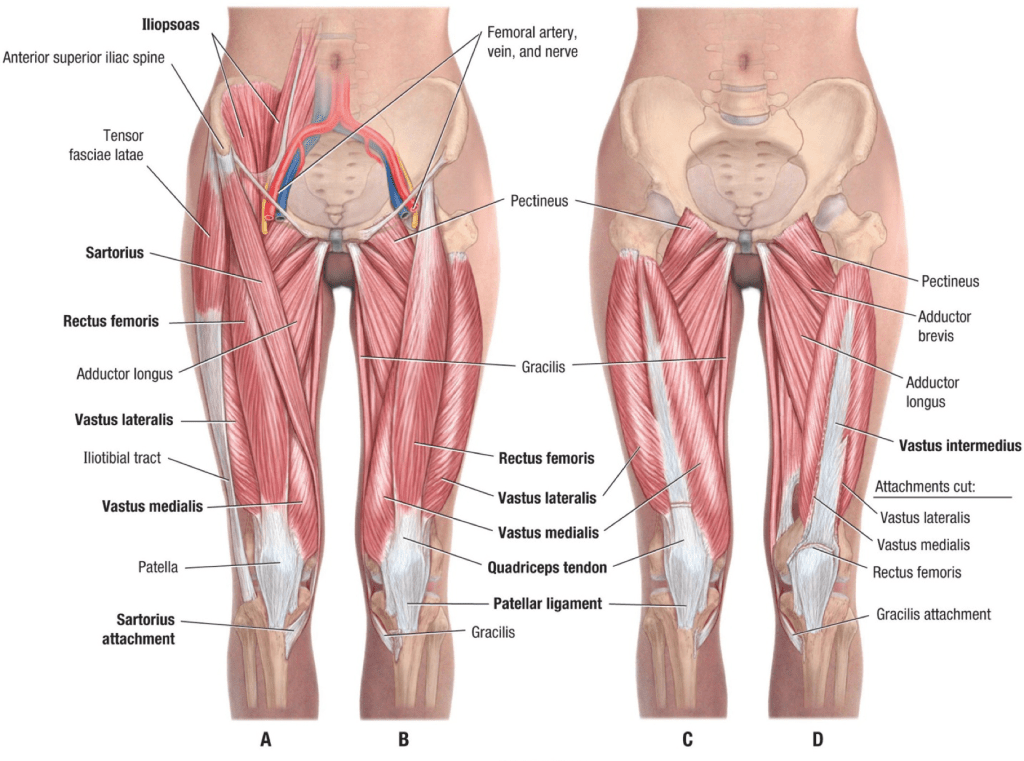
Here are some images just so we all have an idea of what I’m dealing with. On my body, obviously, there’s spasticity and lack of control. Several of these muscles have been lengthened (weakened), and there’s been a muscle transfer as well. Check out all those muscles under the gluteus maximus! Much of my pain is in that mess.

So, with March looming, I cut back on sugar, and on screen time, and I finish my editing project. I meditate and I stretch and do my exercises the best I can. One day (Sunday, February 23rd), I found a stretching position that I could manage to relax in while still maintaining it, that felt like it was hitting the spot. And it felt better. Noticeably better. I almost cried with relief and gratitude. Excitement. Triumph. Hope. Hope that I could keep these muscles and joints happy until I made it to Washington and the Hanger Clinic. Of course it hasn’t exactly gone that way. But my muscles and joints are still noticeably better than they were before. When I stretch lately, it feels like the muscles are actually stretching, instead of me fighting a brick wall. One morning after stretching, I took up my poles and did a turn about the neighborhood. As I walked, I felt a tingling at the back of my neck and down into my shoulders. Unlike anything I’ve ever felt. What is this magic? I wondered. Is my neck actually relaxing? While I’m walking? Will my neck feel less tight? Am I currently receiving the amount of blood flow to my head that I’m supposed to? There was no momentus decrease in overall neck tension, but it was a lovely moment.

The montage is a fabulous storytelling device, but real life is not a montage. I know I’m not the only one who’s ever wished to speed through (to a motivating tune) the daily grind and just finally be there–wherever the there is. Day by day, I’m nearing my “there.” And I am getting stronger. I am making progress. It’s tiny, but it’s there. My stint at the Hanger Clinic will arrive. In the meantime, I’m not living in a constant state of motivated, dedicated, driven, inspirational activity. I’m incorporating a reasonable–for me–amount of daily preparation. Could I do more? Absolutely. Will I wish I had? Don’t know. Would it really make a difference if I did? Perhaps.

What It Feels Like to Live with Cerebral Palsy

I have cerebral palsy, but it does not have me. 

Sounds nice, doesn’t it? Did it make you feel good to read that? Here’s the thing. It isn’t true. Cerebral palsy absolutely has me. I cannot turn it off or take a vacation from it.  

In my Growing Up with Cerebral Palsy post, I wrote, “Cerebral palsy just affected the way I moved about in my environment. Cerebral palsy was simply my normal.” But there really is no “just” about having a lifelong disability, is there? Cerebral palsy does not affect my movement in isolation, but has shaped who I am in a way that is inseparable from my DNA.

I am going to attempt to describe what it’s like to live with cerebral palsy. But it is like asking an able-bodied person to describe what it’s like to live without cerebral palsy, you see. We really know only our own experience. We can try to articulate it in relationship to another, but how do we know if we are accurate?

This should go without saying, but I will say it again, nonetheless. Every person experiences CP differently, with some commonalities. My CP is mild. I am always aware of that and grateful for my overall independence.

So here we go. I would characterize my life as one of uncertainty. My ability to balance consistently is tenuous at best. I cannot trust my body to hold me up. 

Imagine that you are walking down the sidewalk, and then you are suddenly sprawled on your hands and knees and they are stinging and you know there will be blood and you’re unsure if you will be able to get up by yourself. Imagine that you are standing in your kitchen, holding a cup. Suddenly, equilibrium in your body shifts, all your muscles tense and you flush with heat, your hands fly out, liquid sloshes, balance has flown, and you clutch the edge of the counter in time to keep from going down. Or, the counter is just out of reach and you’re wondering as you fall if you’ll knock your head against the cabinets, mentally bracing for the impact of your backside against the hard floor. The world is not a safe place, you see. Your body is not a safe place. Are you beginning to understand how this affects who you are–influences how you interact with space and things and people? 

Sticking to the edges, where there are fewer people to bump me, a hand always on furniture or the wall, a hand always needed as insurance instead of free to greet, or carry, or hug. Always calculating the risks involved in an action, always cautious. Will my body succeed at that or not? Do I try it? Or not? Split-second decisions all the time. Will that person move away from the railing so I can use it? Or stand from that bus seat before the bus starts moving, so I can maneuver into the seat in time? Do I have to speak up and ask?   

There is no striding confidently into the room. No standing for hours at a party, holding a plate of food or a full glass, and chatting comfortably. No stepping off a curb or over a puddle or a backpack in the aisle. No running to catch up with friends or stopping and turning with ease if someone calls my name. No giving or receiving hugs freely. 

It is not only the constant challenge of staying upright–but upright AND functional. I do not have the strength or balance to stop moving when I need to. My body will keep moving haphazardly forward with my momentum even when I need to stop. Small, uncontrolled steps to keep up with the momentum, or a hand out to stop and steady. If hands are full, then it’s the backs of the hands, the forearms, or the forehead that halt the forward motion. The forehead is not a good brake. Example: emptying the dishwasher. I’m carrying a stack of plates to the cupboard using both hands, and I don’t stop well when I arrive at the open cupboard. Elbows and wrists pitch outward toward sharp cupboard edges in an effort to save my head from using the front edge of the cabinet to stop my body crashing into the stacks of glass dishes inside. Hence, moving through life with one hand functional and one hand occupied by steadying. And only carrying two or three plates at a time.

Let’s acknowledge for a moment bodily needs like toileting and showering and menstruating and intimacy. Cerebral palsy might directly affect these things, or directly affect my ability to address or participate in them. Does CP affect my ability to retain or release urine? I do not know. I do not know if me holding my pee feels the same as you holding your pee. I can tell you that really needing to go makes getting pants down and getting seated properly, without falling on my face, a hundred times harder than when I’m not in a rush.

Emptying the dishwasher, removing a heavy pan of hot food from the oven, scrubbing the toilet. Putting on clothes and taking them off. How will my body handle this today? Will I be able to lift the hot casserole dish with one hand while using the other hand to stop my whole body from tipping forward into the oven? Will I be able to step into my underwear on the first try, or get my foot tangled the first three tries, whole body tipping forward again, leg muscles straining, one hand holding the dresser as I try to hold the leg hole open with the other, to create a wide target for my uncontrolled foot.

The constant navigation and calculation is exhausting, both physically and mentally. I perform every private action and every public interaction with some degree of uncertainty. I literally do not have physical confidence. How can that not affect who I’ve become as a person? 

I’m not trying to say that there are no confident people with physical disabilities. Of course there are. Of course there are extroverted people with cerebral palsy who may indeed walk confidently into a room. I was born a cautious introvert. And I theorize that living with cerebral palsy has intensified my caution and my introversion. 

Cerebral palsy has also made me more observant and detail-oriented. I’m probably more aware than an able-bodied person that there’s lots we can’t see about someone. I readily accept that everyone and every situation has complexities. I think I have more compassion and curiosity than I would have had without CP, and more appreciation. Of course, I’d like to believe that I would have been a kind, observant, compassionate person even without cerebral palsy, and that having CP again only intensified what was already there. 

The world is complicated and being human is complicated. And we can only ever fully know our own experience. I hope this helps you understand a small bit of mine. 

So What SHOULD I Hope For?

My first trip to the Hanger Clinic is coming soon. I will be casted on day one, and try out mock-ups, or “test devices” on day two. My last post included a list of actions or activities I used to be able to do. Now, let’s take a quick body scan and assess some chronic pain, shall we? Listening to someone’s aches and pains is not interesting. I know that. This catalogue is so I have my own “before.”

Feet: my left big toe started to send me sharp pain somewhere around…two?…years ago. About a year ago, I realized I was unable to step on it walking barefoot on my laminate flooring. This year, I went to my first podiatrist. He told me to wear stiff-soled shoes and thick, soft insoles. And don’t walk barefoot. I do not walk heel-toe; rather, my whole foot comes down at once, mostly on the big toe. So, I’m grinding the bottom of my toe into the ground with every step. After 38 years, I guess it’s had enough.

Ankles: these are mostly fine, unless I walk too much at once. Hooray!

Knees: One or the other of these aches often. The right started clicking and aching in June 2014, and the left followed in July. A doctor told me to ice them, twenty minutes on, twenty minutes off. What, forever? When I got referred to PT, I asked the therapist if some kind of knee support would help. She had me stand up and put her hands firmly around my knee. “Does that help?” she asked. I almost laughed. You mean if a knee support were going to help me, the pain would lessen right now? Just from that?

Hips and legs: Hips are always very tight. Sometimes I have strong, almost burning, pain in my right IT band. Other times an inner quad might hurt. Often, my right SI joint will give me sharp pain. It changes day to day, sometimes hour to hour. Sometimes I know what set it off; usually I don’t. I know I should avoid twisting while standing. Trying to do anything while bent over, wiping up a spill on the floor for example, is a really bad idea unless I take the strain off my hips and legs by holding onto something.

Back: I do not think of myself as having back pain. But sometimes at the close of a long walk, there is a pain and stiffness in my lower back that makes it hard to breathe. I stagger to a seated position and bend over my lap. A few cracks and a deep breath and I can straighten up again. I realized the other day that I “don’t have back pain” because I can make it go away. Apparently, I only count chronic pain as real pain.

Trapezius: If you’ve never looked at an image of the trapezius, check it out. It’s a giant muscle from the base of the skull, out to the shoulders, tapering to the middle spine. Since 2016, my neck and shoulders have been painfully tight. I know I have terrible posture. Telling me to sit up straight isn’t helpful. It takes a tremendous amount of energy to maintain good posture. Certainly while walking, it’s nearly impossible for me. Is PT helping? Can’t say for sure.

Jaw and ear: Yes, my jaw and ear hurt sometimes, just the right ones. It’s all connected. I think the constant neck tension is pulling my jaw and ear out of alignment. The years of extra strain on my stronger right side as it compensates for the left is taking its toll. If you’ve never had sharp, intense pain in your ear, be grateful. 

This is the state of things. Pain from head to toe. Perhaps not all directly related to cerebral palsy, but definitely indirectly affected by it. I have tried many modalities to address the issues.

The ExoSym is life-changing. All the people in the videos say so. But what about all the people who aren’t in videos? How many try out the test device and decide not to move forward? Maybe it won’t be life-changing for me. Maybe I’ll still have chronic pain and very limited balance. It won’t do a thing for my muscle spasticity. It won’t make cerebral palsy disappear. The people who put on the test device and are “pain free”  right then and there are usually people who were able-bodied before having some kind of foot or ankle injury. 

My pain comes from a lifetime of atypical body mechanics. It’s going to be a different kind of experience for me. How can an hour or two in the test devices show me how they might affect my body long-term? I don’t expect any of my chronic pain to be immediately relieved. I’ve never felt an immediate improvement in anything physical in my life. Never have I been able to report back to a doctor or therapist, “Yes, _______ definitely helps.” 

So what will the ExoSym do for me? What is a realistic hope? I hope that I feel lighter, that I can feel the “energy return” that the brace is designed to provide.

I hope that I feel something. That I can tell the devices are doing something.