So How Much Therapy Do I Need?

Content Warning: this post contains descriptions and mentions of animal deaths, the Holocaust/genocide and WWII, and school shootings. Brains are complicated things. Please don’t read about my brain if it will upset yours. 

I have dreams about my childhood home all the time. I lived in that house from the age of four to nineteen (and a half), and then for smaller periods of time in my twenties. 

The house was on five acres, and though we were in no way a true working farm, we had an assortment of cats, dogs, some sheep and chickens, and for a while, turkeys, ducks, and geese. Just for fun. My dad enjoys eating lamb (though he did not slaughter the sheep himself). We always had fresh eggs, and we hatched chicks in an incubator on our kitchen counter in the spring. We had frequent lessons on the circle of life when lambs or chicks didn’t make it, and when coyotes/hawks/raccoons disappeared various animals and perhaps left a trail of feathers behind. Two of my very own kittens disappeared without a trace, and I am still sad about it. Why didn’t we let the cats inside at night, you ask? Because animals live outside, of course. 

Often, my childhood-home dreams involve wildfire and needing to evacuate, or some other kind of disaster or intrusion that seems perfectly normal in dreamworld. Almost without fail, there are small children or animals who need help. 

In last night’s dream, I was showing an incubator full of fluffy chicks to a girl about five years old. But upon a closer look, there were a couple birds in there that didn’t belong. A skinny little black thing whose feathers reminded me of a shrimp, and some other kind of songbird. I wondered how we’d get the wild birds out of the incubator without them flying around the house. I got a cardboard box ready, and when Dad opened the incubator, I pointed out the skinny one that was definitely not a baby chicken. He was able to pick it up, and I noticed it now had blue painter’s tape wrapped around its body. I asked Dad if he wanted help removing the tape and followed him to the front door. I stood in the open doorway while he leaned over the porch railing, and though his body blocked my view, I could see feathers falling. I realized way more feathers were dropping than if I had helped, and that the bird was probably now very hurt. My mouth opened in a silent cry, and I made sure the girl inside couldn’t see. My grief felt overwhelming, and I woke up.

I have realized in my adulthood that there were small-T traumas in my growing up with all those animals, experiences I had that stayed with me. Experiences that are not the norm for kids who didn’t grow up in the country. My siblings also had these experiences, but don’t seem to be affected the same way I was. 

My dad is a doctor and an anatomist, and as both a scientist and a man of religious faith, perhaps he has a different view of life, death, and suffering than I have.

He wanted us to see and learn and experience all that the natural world has to teach us. He delighted in using the chicken bones on his dinner plate to illustrate the way joints moved. He invited us to watch him slaughter the Thanksgiving turkey so that we could see the way the body moved even after the head was cut off. I watched him snap the neck of a tiny chick who was not going to make it. And perhaps most gruesome, one night he called us out onto the porch to show us something. There, by our front door, lay a deceased lamb whose whole underside had been eaten, probably by a coyote. He wanted us to see the way the predator ate the warm insides and left the rest of the body intact. “On the porch?” I asked, confused and staring. He chuckled and said, no, that he’d brought the body up to the house. My dad does not remember this, but I can’t seem to forget it.

I have snapshot memories of these three events: the dancing turkey, the dying chick, and the dead, eviscerated lamb. I have come to the conclusion that it was not appropriate for me to see these things. I’m not sure that it would even cross my parents’ minds to shield me from these parts of country life. Maybe they warned me and asked me if I wanted to see, and because my older siblings did, I did too. Maybe there was no warning. I don’t remember. I’m sure many young children could experience these events and not have any lasting negative effects. All three of my siblings grew up to earn master’s degrees in something sciencey. One even became a doctor like my dad. I majored in English and history.

I remember the moment that my kid-brain integrated the information that the Holocaust and the US dropping atomic bombs on Japan happened in the same war. I was in the car with my mom. Apparently, we were talking about World War II. I felt it like a gut punch. How could these horrifying events happen one right after the other? How could groups of people commit these atrocities against other groups of people intentionally? It was probably that moment that turned me into a history major.

There were two classes dedicated solely to the Holocaust at my university, and I took both of them. On the first day of the first class, we discussed the meaning of the word “genocide.” The term was coined in 1944 by Polish lawyer Raphäel Lemkin and genocide was recognized as a crime under international law in 1946. Lemkin created the term in response to Nazi policies, but also as a way to define previous targeted actions against other groups of people. I knew about the Rwandan genocide against the Tutsi in the 1990s, but I’d had no idea there had been so many others. We in the United States, for example, have a hard time recognizing the genocide of the Native Americans. I never heard it talked about in school using those terms, though books that call it what it is have been around since at least the 1990s. I have several memories of my Holocaust classes as well. One is of an old man coming slowly down the steps of the lecture hall to take a seat near the front. My professor introduced him to the class as a Holocaust survivor who came to sit in on the class whenever he liked. The other memory is of the professor reading aloud the poem “Death Fugue,” by Paul Celan. I still feel compelled, twenty years later, to read Holocaust memoirs and stories set during the second world war. 

I know there are so many more historical events that, if I knew about them, I would feel a compulsion to learn more, to keep reading, horrified. It’s like I have to keep looking, keep learning. If we look away, if we ignore it, we forget. We forget what we’ve done and what we’re capable of. And we can’t do that, because we have to change.

I was watching a documentary (yes, it was about indigenous genocide), and the narrator mentioned a good friend who died in a plane crash, whom he still misses. That the maker of this film mentioned his friend struck me, and I looked her up. The wikipedia article about the commuter flight she was on included a video simulation of the crash, that stopped a second before the plane hit the ground. I read the article through and clicked on the simulation. And then I clicked it again. And again. And I imagined the people on board, and the mistakes the pilot made. And now it’s a tragedy I carry, in my catalog of tragedies. 

In 2018, when a young man in terrible need of help went to Marjory Stoneman Douglas High School and killed seventeen people, I felt compelled to read about every other school shooting I’ve been alive for. I worked at a school then, and yes, we helped the first graders and kindergarteners when we held shelter-in-place drills. I developed shingles after that shooting, and the doctor who diagnosed me at urgent care chuckled, said I needed to work on my stress, and left the room. In May 2022, when another young man in great need killed twenty-one people at an elementary school in Texas, I again felt compelled to read about all the school shootings. But this time, I did not. It doesn’t help you, I told myself. It doesn’t change anything. I’m trying not to dive head first into every horrible thing that happens anymore. I try not to read the news, because we only publish horrible things. 

Almost every day since I started The Gupta Program last July, I do a “Soften and Flow” meditation, often twice a day. During this meditation, I’m supposed to focus on an area of tension. That tension is trapped energy or “trapped emotion” that needs to soften, and flow through the body instead of being stuck. The idea that I have emotion trapped in my jaw and neck and shoulders simultaneously sounds incredibly hokey and makes perfect sense to me. 

Recently, during my Soften and Flow meditation, I lay there, and I told my tension to soften and flow; I told my body it was okay to let go. I told myself that I could let go. I could let those childhood memories that bothered me go and keep all the good ones; I could let my childhood house go because we don’t live there anymore. And I told myself I could let the Holocaust go. It’s over. It’s long over, and I can’t change it. All that gut-wrenching, world-altering tragedy has happened; we will feel the effects of it forever. And I’m allowed to let it go. I don’t have to carry it. It doesn’t help me to carry it and it doesn’t help the victims for me to carry it. These are lovely, new ideas to my subconscious, and she doesn’t quite believe me yet, but I’m working on it.

When I was in seventh grade, a teacher informed me and my best friend that we didn’t have to save the world. I think that’s still the crux of what I’m struggling with. How can I live my life and be happy when there’s so much horrible stuff happening and so much to be done? But I cannot be AOC, even though the world needs thousands more like her. 

In fact, I don’t have the energy or ability to be much of any kind of activist right now. But it is okay that I am just myself. I am allowed to experience moments of peace and contentment. I am allowed to feel joyful even while tragedy is happening at this very second. My happiness doesn’t ignore someone’s sorrow or pain. The world will always contain multitudes of simultaneous joy and tragedy. I and my highly sensitive nervous system have to find a way to reconcile that unconscionable truth. I will try to remember that in the face of our current overwhelmingly dire circumstances, our world full of fear and pain, that joy is rebellious action.

Life with ExoSyms: Take Two

8 February–24 March, 2021

I’ve mentally composed bits and pieces of a blog entry so many times that it seems as though I must have already written it. But I haven’t, so here we are, as I finally buckle down to write during my second spring break of the pandemic.

When I first got my ExoSyms, I was told it would take one to two years before I was using them to their full potential. I liked the idea of marking time, tracking that progression, until I could say, “It’s been two years and look at me now!” But I’m nine months in, and I don’t feel like marking time anymore. I’m no longer going to put the number of days in the titles of my posts. Progress is not linear, and there’s no endpoint. I keep thinking, What if they’re not for me? What if I just don’t progress beyond walking on a flat surface with poles? Maybe my body truly cannot use them to their full potential and it’s a case of too much, too late

I’m part of a Facebook group for women with cerebral palsy. Recently, someone wrote about how she used to walk independently and now she needs a walker. She fights the feeling that she just needs to “try harder,” that she shouldn’t take twice as long to clean the house and use twice as much energy doing it as she used to. Others chimed in, feeling the same. The decline is real. And it’s making itself known to me in very real ways. If ExoSyms had been available to me when I was twenty or twenty-five, before all the chronic pain and decline really took hold, maybe I could have really used them then, and extended my peak quality of life. But now? I just don’t know if I can do it.

The pandemic certainly hasn’t helped. It’s had a physical and mental effect on all of us. Maybe there’s a small group who were really able to use the time at home to cook well and do yoga and take up running. For the majority of us, our physical activity has plummeted and our time in front of screens has skyrocketed. Of course it’s not good. I’m not sure that I can ever achieve my pre-pandemic level of activity again. In 2019, when I first started using trekking poles, I was delighted with how they helped me, what a great option they were for longer distances. Now? Now I need them. I have gone from walking independently to using a mobility aid, just like so many others with cerebral palsy.

With PT, I had left off with my therapist at a loss and ready to let me go for six months. Instead, I decided to keep going. When I returned mid-February after a month away, not having pursued more x-rays or the facet block shot as he suggested, I said that I think consistent therapy is a worthwhile thing. My cerebral palsy is not going anywhere, and I can get stretched with a therapist in a way that I simply cannot replicate at home. That session was the first time this therapist had ever really explored my increased tone and decreased range of motion, I think. (He has taken over from C, who is recovering from surgery, and we had been focusing on core and glute strength and lumbar issues.) So this was for him an introduction to how my body works. He realized that, yes, actually, I can benefit from passive stretching. There was a “wow” moment, as in “whoooa, that’s tight.” Yes, I thought, now you understand.

He did stretches that I can’t do alone and encouraged me to try them with assistance from my husband. So, I’m back to going every two weeks. We’ve even done a couple ultrasound sessions on my right piriformis, which is more often painful than not.

Also in February, I finally made myself get in touch with Ryan at the Hanger Clinic and let him know what’s been going on with my back, and that I hadn’t walked in my ExoSyms for more than three months.

“So you’re really starting over then. That’s okay,” he said. It’s not entirely true, as I’ve tried hard to keep up with strengthening my glutes and core, and I hope I’ll have at least maintained what strength I had in the fall. Ryan suggested some back support and told me to practice walking fifty feet five times at a stretch and then take the Exos off. (Rather than trying to wear them for hours at a time, navigating around furniture, etc.) He sent me four brace options. I sent those on to my physical therapist, and ordered the winner.

My new brace arrived on March 8th. This is the second time that I’ve made an assumption about physical aids and been proven wrong. The first was about the poles, and how I thought they wouldn’t help and just be a tripping hazard. With this brace, I had wondered before if back support would help, so I was open to trying it right away. I still figured it was likely that it would just be uncomfortable and not do much.

I have to lie on the floor, bend my knees, and make sure my back is flat before I strap myself into it. The first time I did it, and got myself back to a standing position, I said, “Whoa.”

This thing holds me up. It holds me in. It’s there, supporting me. Hugging me so firmly. It doesn’t let me take steps the way I usually do. It’s amazing to realize how much my lack of trunk control must be affecting my gait, my alignment, my whole body. Because I don’t really feel like I do lack core stability. It’s another “Oh” moment. How can I know what stability feels like if I’ve never felt it? This little bit of stability afforded to me is like a glimpse into another world.

 The worry, of course, is that my core will become weaker as I rely on the brace. I don’t think this will happen. It’s more like it’s giving me a continuous awareness of my core. Like when a therapist or instructor touches your abdomen and says, “Tighten here.” It’s easier to do it when you know where to focus, or when you have something to tighten against. The brace feels similar to the super-tight belt and pole combination, used during Hanger training week to teach me how to “squish” with each step. I think for me the belt did more than the pole. As soon as Jared took it off, I didn’t feel my core as well, couldn’t tell whether I was really squishing. 

I may be feeling a further benefit as well. It’s a little like having my own personal weighted blanket on me at all times. I’ve never tried a weighted vest, used with kids on the autism spectrum, but I’m guessing this is similar. It’s the firm hug that calms the nervous system. It’s Temple Grandin’s squeeze machine. I’m not saying I’m completely calm now, but I can say that I like wearing this. If you have anxiety, it’s an inexpensive option to experiment with. Yes, it can be uncomfortable. Yes, it tends to ride up and need readjusting throughout the day. Yes, it makes wearing clothes interesting. And yes, it’s going to be way too hot in another week or two. But–I like it.

I’m tired of letting the pandemic get the best of me, and with the stability for my back that I needed, I’m trying, once again, to increase my physical activity. I returned to three seated workouts I like on YouTube. I find these extremely challenging once they get going, and have started again with only fifteen minutes. The only time I’ve made it through an entire workout (several years ago), it took me and my husband months to work up to it! All three of these workouts are truly gems. Along with some schnazzy workout gear, they all feature people of different sizes and races and abilities. Two of the workouts have real, live people with cerebral palsy. It’s truly an awesome sight to behold. As I feared, however, these arm workouts are really, really hard on my tight neck and shoulders, so they are not for every day. 

Inclusive Exercise Playlist

As such, I’ve also returned to my trusty Yoga for the Rest of Us DVD that I’ve used intermittently since 2006ish. I’ve been doing it before work. This is not as impressive as it sounds, since I no longer have to be out the door at 7:30 am, but still. 

I’ve also been taking more walks in my brace and with my poles. Instead of twenty slow, careful, cautious minutes worrying about my back and trying to engage my core, I can now do 60+ slow, careful minutes engaging my core.

A week after getting my brace, Monday, March 15, I put on my ExoSyms to try my first true practice session since November 1st. I no longer walk across the house without poles, instead making sure my poles are right there when I need to walk to the front door. Day 1 was hard. My right hip was so sore and tired. The “Is progress even possible?” thoughts resumed. I did my three up-and-backs along the sidewalk and made my way back to my front door, ready to take them off. The next day, I did it again. The third day, I reported back to my physical therapist and got stretched. Thursday and Friday, I put them on again. It felt like a good week. At least I was doing something with them on. I had this realization: I need to practice on Saturday too. No more giving myself the “day off.” I don’t need a whole “rest day” after only ten minutes of dedicated practice. After all, I’m not pushing myself or taking risks or hurting my back now; I’m slowly building endurance. This is something that needs to happen every day. That’s all there is to it. 

Saturday morning came, and I fully and absolutely did not want to strap myself into my four pieces of heavy carbon fiber and take myself outside. Not for the first time, some of the most relatable lines from Leonard Bernstein’s MASS came to mind, from “I Don’t Know”: 

Why I drift off to sleep

With pledges of deep resolve again, 

Then along comes the day

And suddenly they dissolve again.

I don’t know…

So many pledges of deep resolve we make, only to let them go when we simply would rather not do the thing. My husband said, “You just have to do it anyway. Even as you’re telling yourself you don’t want to, put them on.” He was right, of course. So I put them on anyway on Saturday. And on Sunday. And on Monday, the 22nd, something happened. It’s always hard to know if I’m using my core and squeezing my glutes and “loading the devices” all correctly, all with the right timing for each step cycle. I try it different ways, not knowing which way is right. I remember Jared telling me to kind of lead with my pelvis, but how do I do that and lean into the knee cuffs properly (load the device)? Also, when I’m stretched well in PT, I can actually feel a little looser at the front of my hip for a while. Which means that I have more range of motion in my step. I can actually straighten the knee before the foot comes off the ground to swing through, rather than keeping my knee slightly bent throughout. At least, that’s what it feels like. I don’t know if that’s what’s actually happening. 

So, right now I have a smidge longer stride that I have to figure out how to coordinate with the Exos. Do you know how weird it is to suddenly have a longer stride? It throws everything off if you actually try to use it. But looser hips and a longer stride are very good things, so now I’m trying to see if I can keep it going until my next professional stretching session on the 31st. I’m out there in my back support and my Exos, practicing, trying to incorporate this new stride and coordinate everything. And suddenly I’m walking faster. It’s a week after I’ve started walking in them again, and I’m startled to realize I seem to already be going the same speed I’d built up to last fall. Maybe even faster? 

It felt like I was just walking. It felt really good. There’s no way I can know where I’ll go from here. If or when I’ll progress beyond using poles on a flat ground. All I can do is keep practicing. 

Here’s video from March 23rd, and a side-by-side with the last video we took before the back injury last fall. Any difference? Hard to tell.

Life with ExoSyms Days 113–133: October

5 October–25 October

On Monday, October 5th, I went back to my primary care doctor to follow up regarding my throat pain. Because my pain is worse, she put an “urgent” note in to the GI, and my referral for January was moved up to October 22nd. How is that possible? Did someone less urgent get bumped? All I have to do is complain more and suddenly there’s a spot for me, not months in the future, but days? So I had a couple of weeks to feel really anxious about being sedated and getting an upper endoscopy. I had not realized this would be the next step, and it feels a little like overkill. My other choices were to go to another ENT, or go the holistic health route. These are all very different levels of treatment–how am I to know the best option? 

I have tried to recommit to wearing my ExoSyms and doing my PT at home. A few days, I have done 100 squishes at lunch time in the time it takes for the microwave to heat my food.

October 8th was the first day with a high in the 70s (78), since…May? And the air quality was moderate. So I went for a walk outside. At 4:30pm. After work. Instead of immediately taking my Exos off. The walk felt pretty good. I’m going faster and I’m less like a wobbly colt. Afterward, my tailbone was achy. I notice that my spastic diplegia aches and pains are more quiet the less I do. Activity wakes them up. It’s an unfortunate truth that right now, I feel better pain-level-wise the less active I am. Despite the mild temperature, I was covered in sweat when I made it back home. And I was glad that I had gone.

Here’s an update from October 9th:

I have continued my daily meditation practice. One meditation I tried begins by telling you to say to yourself, “May I be well. May I be happy. May I be peaceful. May I be loved.” Then you think of someone you love and wish them, “May you be well. May you be happy. May you be peaceful. May you be loved.”  You do the same for an acquaintance or someone you don’t know, like a cashier you see regularly, and then the same for someone in your life that you don’t get along with. It was an interesting exercise, but I didn’t quite feel joy flowing out of me like my guide encouraged me to feel.

On Saturday, October 10th, my husband took us on a day trip. On the freeway, a vehicle alongside us had those “my family” stickers on their window. But instead of cute little stick people and a dog, the “family” was different kinds of guns. I felt horrified, disgusted, deeply sad, and deeply mystified how anyone could become whoever that person was. And then I thought, “May you be well. May you be happy. May you be peaceful. May you be loved.” It surprised me, as I struggled against judging that person, that I recalled those wishes from the meditation that had felt foreign and awkward. I don’t believe that the thoughts of peace and happiness I sent out to the person in that car changed them in any way. But they changed me. My feelings shifted from horror and disgust to peacefulness. And that is a good change.

On the 14th, I had my thirteenth PT session with Exos. C did the required strength measurements again and noticed that my glutes are stronger. I could already feel this, so I’m glad it’s noticeable for my therapist as well. We streamlined my home program after I told her how I’d attempted and adapted the clock from last session. Now we are focusing on mat work without Exos, really trying to get my core to engage consistently and build stamina so it actually works when walking. Obviously, weight shifting and walking practice with Exos on is still expected as well. Our plan going forward is to meet every other week rather than weekly. 

Here’s what I looked like on October 18th:

And here’s the side-by-side comparison for months three and four:

On Thursday, October 22nd, I had the upper endoscopy. Before and after the procedure were unpleasant, but the thing itself is a complete blank. Thank goodness. Everything looks “normal,” as I figured it would, based on the ENT follow up I’d had. Except for some “granular mucosa” in my esophagus. Maybe that will be something?

I feel like doctor-patient communication has a long way to go. I had never before met this doctor when he came to my curtained cubicle to go over my history prior to the procedure. We’re in a very loud environment, both wearing masks, and I feel like we’re not speaking the same language. Somewhere in the huge litany of questions, I told him I was diagnosed with celiac disease in 2018. 

“You have celiac disease?” 

“I had the blood test.”

“And who did that?”

“Dr. —”

“Who?”

“Dr. –” I’m referring to the integrative health doctor who ordered a slew of labs for me two years ago, but whom I haven’t seen since because I feel like every doctor should treat the whole patient, and that I don’t want to schlep to Sacramento when I can walk to my local hospital.

“I don’t know that name.”

“I think she even works in this building.”

“Oh, I know who you mean. The gold standard is an endoscopy, so I can take a biopsy while I’m in there.” 

“Well, I haven’t eaten gluten in two years.” 

“You haven’t eaten gluten in two years?” 

“No.” 

“Well, I don’t think anything will show up then.”

“Right.”

Many people choose not to (or can’t afford to) follow up a positive celiac blood test with an endoscopy. Did he think I was just going to ignore the blood test and keep eating gluten? I know any damage I may have had will probably have healed by now.

What I would like is for a doctor to review a patient’s history and test results himself instead of quizzing a highly anxious patient in a chaotic environment in which he can’t properly hear. I can’t remember the results of all my labs, nor do I know what they mean.

It’s over now, and I await the results of the biopsies taken. Though rest assured I will ruminate about the whole thing for a while to come. For instance, he asked me about chest pain, and I think I said I didn’t have any because “chest pain” makes me think of heart issues. But actually, the honking cough I have makes my chest hurt quite a bit. Is it burning? I think he asked about that? What did I tell him? And why didn’t he ask about SIBO? SIBO is common with celiac. I wish he had tested for that…  How does a throat that hurts this much have no outward signs of inflammation? Do I have some sort of pain feedback loop going on?

Whatever I said to this doctor, he said it didn’t sound like reflux (ENT diagnosis). I tested his theory Friday night by eating chocolate (vegan, gluten free, really good dark stuff). Chocolate is not advised with reflux. Cue a huge uptick in throat and chest pain on Saturday and today. 

On Saturday, while I had the house to myself, I did a nice long meditation and then I did my exercises and put on my ExoSyms for a more focused, extended practice session than I’ve had in a long time. In spite of all this non-CP related pain and health crud, I’m still trying to get stronger and use my Exos.

Life with ExoSyms Days 92–112: My Throat Takes Over

14 September–4 October

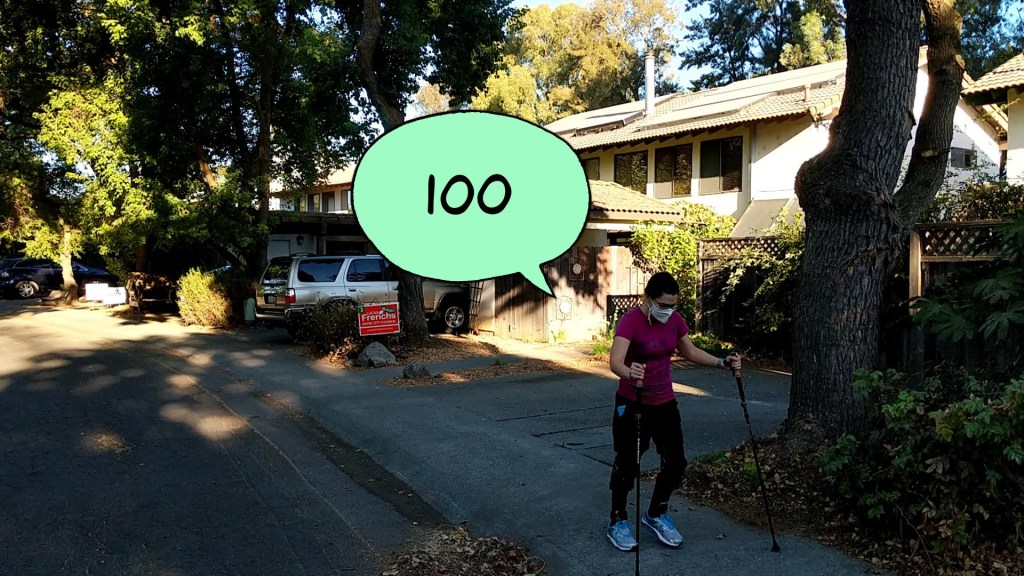
In the last three weeks, I have reached and surpassed the 100 day mark. In June, when I came home from the Hanger Clinic and marked the one hundredth day on my calendar, it felt very far away. I didn’t hope for any specific achievement, as I could not imagine what my progress would be by then. I did take a short walk outside on day 100. But it wasn’t particularly triumphant or celebratory. My husband could see that I was swinging my left leg from my hip, rather than really using my glutes and core to step.

If I were to be honest, I would also admit that, while I have technically owned my ExoSyms for more than one hundred days, I have used them for much fewer. Eighty, seventy-five days out of one hundred? That’s what the gaps signify in the “actual progress” graph below. There are periods of time where nothing happens on the ExoSym front at all.

I know, objectively, that progress is not a steady, uninterrupted line. But I didn’t truly know it until this journey.

Looking back at my notes, I see that these past three weeks haven’t all been stagnation. On September 17th and 18th, I made myself take a walk outside, that same twenty-minute loop I’ve done before, working up to walking to PT with my ExoSyms on my legs instead of on my back in a backpack. There were moments during those walks where I felt like I was reaching my regular walking speed, actually walking rather than think-stepping. That feeling of increased speed–was I finally engaging the struts properly and experiencing the energy return these ExoSyms were designed to provide? It was thrilling, for a moment. Until I stepped on a bump in the sidewalk and was thrown off so much that I nearly fell. How practical are these things going to be if I can only get them to work on perfectly flat, perfectly smooth surfaces?

I don’t have a Day 100 video, but here’s what I looked like on day 96, September 18th. I’m trying to show off my (occasionally) increased speed and my Ida B. Wells t-shirt:

Here’s the side-by-side comparison for two months and three months:

On the 23rd, I had my twelfth physical therapy appointment with ExoSyms. I told C about my falls and we discussed my pattern of losing my balance when turning, especially if I’m holding something. She gave me a new exercise to do, the clock. We have been concentrating on strengthening my weaker left side to combat the hip drop, and to encourage it to hold up my body long enough to allow my right leg to get a good step in. When I’m standing on my left foot and stepping through with my right, the right usually comes down early without a proper heel-toe because my left side isn’t doing its job.

The falls, then, are not surprising because I am again standing on my left foot, stepping with right, turning the upper body, etc. The left side needs to be able to hold me up while the rest of me functions, basically. The new exercise has me standing on the left and moving my right foot to different hours on an imaginary floor clock. I am one hundred percent holding on to furniture while I do this. For reference, I have never had the ability to stand on one foot, and if I were ever going to try to work up to it, the right would have to be my standing leg, not the left.

The whole situation is a little funny because as soon as C watched me attempt to point to twelve o’clock with my right foot, without ankle flexion and the added weight of the ExoSym, she realized that what we needed was the stability the Exo gives my on the left, but not the complication of the Exo on my right. Rather than actually taking off the right Exo and being lopsided, we kept going.

The following day, a Thursday, I did my exercises and I did my small loop outside. And that was really the last time I did much. I actually overdid it, I think, and felt sore (tailbone) and tired the next day.

Monday morning, the 28th, I was going to make myself put my Exos on after three days without them. As I did, I saw that the small metal piece screwed to the front of the right knee cuff was missing. This one has actually fallen off a few times, and I haven’t been diligent about checking and tightening the screw that holds it on. This metal piece is what the knee section locks on to to stay in place. Usually, it’s right on the floor at my feet, but this time it was nowhere to be found. I thought I could just get another one at the hardware store, but when I sent Ryan a picture and asked what it was called, he said it’s not at the hardware store and that he would send me one that day. It didn’t arrive until Friday. Could I have worn the Exos without the knee sections? Yeah. Could I have practiced the clock with just the left one on, just to see what it was like? Yeah. Did I? No. (For the record, I have in the past worn my Exos without the knee sections, and it was a fascinating combination of way less bulky and heavy but also way more unstable.)

So my Exos were all back together by Friday. Today is Sunday. I did wear them yesterday, and I even did the clock a few times. But my ExoSym life has been derailed by the rest of my life. 

Whatever we’ve got going on healthwise, stress and anxiety make it worse. Health issues can also cause stress and anxiety. So we are in a circle that is difficult to get out of. This is an ExoSym and cerebral palsy blog, and no one’s really interested in your ailments as much as you are, I know. And I’ll never know if you stop reading now.

I’ve had a low-grade sore throat for a year-and-a-half to two years-ish. It was always worse on Mondays when I had to return to work and use my teacher voice. Eventually, it got bad enough that it felt sharp, like something viral. It ended up being mild strep that time, May 2019. Months later, when the soreness hadn’t gone away, I got tested again and it wasn’t strep, so I was sent to an ENT (further months later, of course).

He could see inflammation and diagnosed me with laryngopharyngeal reflux (LPR). Since my diet is already pretty good and I don’t smoke, the best he could do was “bring down the spicy food from hot to medium,” and he got to check off that he discussed diet and lifestyle changes. Gave me a prescription for three months of reflux medication and sent me on my way. I was skeptical about this whole process because reflux can be caused by low stomach acid as well as high, and I didn’t like being put on a medication to lower it when we didn’t know what was causing the reflux in the first place. At my follow up (many months later, postponed because of COVID), the inflammation was gone, but my pain wasn’t. Because the inflammation had healed, it looked like the doctor had made the right choice, but since the pain hadn’t improved, he referred me to a gastroenterologist. I wasn’t looking forward to seeing another specialist, who probably wouldn’t find anything, so I put off making the appointment.

Then it was mid-September, and it was time for me to start teaching my groups through distance learning. I noticed a dramatic increase in my pain. Had my reflux flared? Is it strep again? It’s nearly unbearable. Anyone else get that thing where when the pain is bad enough, a headache and a touch of nausea show up, so you just feel downright ill? Sometimes I do actually vomit, as with the neck tension. I made the appointment with the GI doctor (months away, of course).

What’s funny to me is that I feel like I’m handling distance learning so much better this time around. I’ve always been an anxious person, and there’s oh-so-much to be anxious about right now, but I thought I was taking everything in stride, so to speak.

Last weekend, I read up on LPR again and cut out spicy food and acidic food, citrus, tomato products, garlic, fatty foods, chocolate. As a vegan with celiac disease who loves coconut curry and salsa, I have little enjoyment in what is left. I sleep propped up. I try over-the-counter antacids. I attempt to implement a more regular meditation practice, because, of course, along with cutting out everything with flavor, reflux sufferers should reduce stress.

Today will be the seventh consecutive day I’ve meditated, which is new for me. Thursday and Friday I managed to meditate before work, after work, and before bed. I’ve certainly never meditated more than once a day before. I’m fortunate to have the time and space to do this, and it might be exactly what I need. With yoga, pilates, meditation, and every other de-stress/mindful practice, it’s so hard for me to really believe in “the power of the breath.” I mean, it sounds pretty woo-woo. We breathe all the time. Does taking mindful breaths really change things all that much? 

I feel like I already have compassion for myself and my body, but doing all these compassionate body scans and “affectionate breathing” has been really interesting. It was a bit of a revelation to have a moment of understanding that I am not my body. I myself am separate from it. It is the vessel that I have, but it isn’t me. Of course, the reverse is also simultaneously true. Existence is complicated. 

One body scan starts with the left toes. By the time we reached my left hip, I was crying. Another started with the crown of the head, and by the time we reached the forehead, I was crying. I think we all need to lie down in the quiet darkness, take a deep breath, and listen to a gentle, calm, compassionate person guide us through our own bodies. We, all of us, need gentle, calm compassion.

I first tried mindful breathing about thirteen years ago during the relaxation section of Yoga for the Rest of Us. It’s taken me until now, with more regular practice, to actually feel the physical and mental effects, and now only sometimes. So, if you try it and think it isn’t for you, try it again.

I thought I’d leave a few of the meditations I’ve really come to enjoy down below. Some have a more professional quality than others. All have helped me.

Life with ExoSyms Days 63–91: Annual August Doldrums and Beyond

16 August–13 September

Since childhood, August has been a time of anxiety. That first back-to-school commercial used to make my stomach clench with dread. Now that I’m an adult working for the school district, I still have summer breaks and back-to-school anxiety. 

My relationship with Netflix began the summer before I entered graduate school. I chose the cheapest plan: one DVD at a time with unlimited streaming. I waited for my red envelope and I watched a lot of documentaries. My deeply conflicted feelings about attending grad school grabbed hold of me in the form of a permanent stomach ache. That summer was also the first time I threw up because of neck tension, and I don’t think it’s a coincidence. Looking back at my goodreads account from 2008, I see that I read twenty-two books from June to August. Mostly young adult books, fast and easy. Then, from mid-August through September, as my first quarter loomed closer, I did not finish any books. (For the record, I didn’t finish graduate school, either.) I can tell you what I was doing. I was employing my annual, less-than-healthy coping strategy that I have since dubbed “Doing nothing as hard as I can.” Introverts already excel at staying in and reading and watching Netflix. But this coping strategy takes it to another level.

Every August, I can’t concentrate enough to finish a book. It’s too hot to go outside, even if I wanted to. I stay in and I watch things. Time moves slower if I don’t move, right? I can hold the future off if I just stay put, right here, on this bed. With snacks. Rational me knows what I could be doing instead that may indeed help me feel better. Emotional me refuses. So I do nothing. As hard as I can.

This year, well this year is 2020, and I don’t need to tell anyone what it’s been doing to our levels of stress and anxiety. Today is Sunday, and the last time I left the house was on Monday for OT and PT, for which I walked through unhealthy air under an orange sky.

Typically, I tend not to put on my ExoSyms on Saturdays because you can’t lie in bed all day and comfortably watch Netflix / hulu / whatever with ExoSyms on. Even if I wanted to keep them on for lounging, it’s impossible to walk in them unless I have shoes on with the heel lifts in them, and I’m not lying on my bed with shoes on.

Now that days of the week have lost their meaning, stress levels are high, and it really is annual August doldrums time, every day is a lounge day. I let myself not put on my Exos for consecutive days. My physical therapy journal has blank spots for days at time, because I don’t want to document that I didn’t put them on, that I barely did any stretching or strengthening. I feel equal parts defiantly fine that I’m going easy on myself and frustrated that I’m not pulling myself together. One part says, “For pete’s sake, get up and walk around the house in your ExoSyms at least.” The other part answers, “Nope. I will get up. But only to make more brownie batter.” Have I crossed the line between self-care and self-indulgence? Maybe.

Distance learning isn’t helping. My school officially started on August 26th. But because I didn’t have to get up and go anywhere, I didn’t. I don’t have to be dressed and out the door with a lunch packed, walk a mile, and arrive at work on time. I am still in my house, still feeling like I’m deep in my August doldrums.

I am nowhere near ready to wear my Exos to in-person school, had that been happening this year, even just around the campus. Never mind getting there and home, be it via walking or busing. Here’s the most recent video documentation, from August 28th. I haven’t even filmed an update these past two weeks.

I know that I’d have made more progress had internal and external factors been different. But there are always bumps in the road. Progress is never a given. Bad days are. Life is not a montage.

I would love for this part of my ExoSym journey to be a montage. From first steps to triumphant striding around without poles in the space of one upbeat song. Instead, this anxious introvert with a preference for a sedentary lifestyle even in the best of circumstances is having a tough time.

Back in June, during training week at Hanger, I felt like I needed to experience a fall in my Exos, know what it’s like, get it over with. It was just a matter of time, an unknown certainty. Well, I had my first fall on September 2nd. I gotta say–it wasn’t good.

Anyone who falls regularly will tell you it’s infinitely preferable to fall forward than it is to fall backward. You can see where you’re going. You’ve got four points on which to distribute the impact (hands and knees), even if it’s not always evenly executed. And you usually have time to lean away from objects to protect your face/head. At least that’s been my experience. Falling backward, on the other hand, is just scary. You don’t know where you’re going to land, what you might hit. And your backside has to take the full brunt of the impact.

My first ExoSym fall, was, unfortunately, backward. I walked into my bedroom, closed the door, picked up my phone, and as I was turning back into the room, I lost my balance. Simple as that, with a near-simultaneous thud-crack of my body hitting the floor and my head making contact with the hard furniture behind me. Using the foot of the bed, I hauled myself to standing. I knew my bottom would have a bruise, and I was more worried about my head. It’s not an irrational fear of subdural hematomas when there are many stories like Natasha Richardson’s out there. I tied a cold pack around my head using a Theraband so I could still have my hands free to work. I was, technically, at work right then, even though it was already 11am, and I was only finally going to get started at that moment.

No subdural hematoma, but I guess I should have paid more attention to my backside. I’ve never injured my tailbone before now, but apparently that’s what I’ve done. It’s unpleasant. I wondered if having the ExoSyms on made the fall worse in some way. There’s no way of knowing, of course. Maybe it would have been worse without them. So take a guess, am I doing all my stretching and exercising, and putting on my ExoSyms to get weight shifting and walking practice in? No, no I am not. Do I at least feel like it’s getting better and I’ll be able to get back to it soon? No. It’s been eleven days and my tailbone still feels deeply bruised. My head still hurts if I press the injured spot.

What’s more, in the middle of writing this, I fell backward again. No Exos this time. I took a break from writing for a snack, got something out of the cupboard, turned, and lost my balance. Had enough time as I was trying to correct and regain balance to say, “Not again,” as I was going down. I did not hit my head on the cabinets, but I did land on my tailbone. 

There’s a pattern here. I can remember one other fall like these two, and another one that was pretty similar. Each time, I was both turning and holding something in my right hand. Usually I would reach out and steady myself with my right hand, and turning means I’m already off balance, or the momentum is taking me off balance. Or I have my weight shifted back instead of forward. Or something. I feel like I should be able to make a learning experience out of this. 

Maybe today’s twice-bruised tailbone is the universe’s way of telling me to put my damn ExoSyms back on; it wasn’t because of them. I will. Later.