After I posted my last blog, I couldn’t stop thinking about my realization that my tight muscles in my upper body aren’t trying to hurt me but help me. I went to bed at 10:00 pm that night and lay there talking to my muscles in my mind, just as I had done earlier in the day during my Soften and Flow meditation.
I told my muscles that it is okay to let go and I thanked them for helping me. I used language from the Soften and Flow meditation and from the brain retraining exercises to let the muscles know that I am safe now and that it’s okay to relax. Similar to my experience in meditation, I began to feel tingling in my jaw. I put focus on my jaw, my neck, my throat, my forearms. Each area began to feel different. My forearms tingled and ached deeply. Other parts of my body softened and tingled as well, not only the front of my hips as before, but also new places like my calves and my feet. Muscles were doing all sorts of things I’d never felt before.
I was rather surprised but tried to keep up my calming mantra and reassurances and not get ahead of myself. My jaw / TMJ has been tight for years without ceasing. No amount of moist heat or muscle ointments or cannabis has had any effect. Now I could feel all those muscles letting go, up to my eye sockets, up the side of my face to my temple, around the back of my head and my scalp. My shoulders tingled, and my neck. On the right side of my face where my jaw connects to my skull, for years I have felt a bruise-like sensation anytime I accidentally touched it. I’m truly amazed to say that it is no longer there.
I felt shifts in my throat. At some point, I felt loosening in the space between my inner ear and my throat–something actually shifted inside my body. I felt that my hearing was suddenly sharper, then it went dull, and cleared again. I looked up at the ceiling in wonder, perfectly awake at 1:00 am.
When I woke up on October 21st, I found that my forearms and my trapezius had not let go completely. But the ease with which I could open my mouth without any tightness or startling pain in my ear was so lovely. My throat pain wasn’t gone, though it was greatly lessened. I didn’t really care, because I knew now that I could help my body relax, and that’s all that mattered.
I went for a slow, careful walk, as I try to do most mornings. My left calf was so noticeably softened. How delightful the change felt. How amazing to use my poles and feel my step go gently from heel to toe, heel to toe. (Lots and lots of people with spastic diplegia, including me, land toe first or flat-footed.) I felt like laughing. I was full of joy.
I am so unbelievably grateful for this experience. I’m amazed that I get to be one of the brain retrainers who can say that there was an immediate physical change as a result of meditation. A great shift. And I did it, without drugs or procedures, just me and my own brain.
Has it lasted? Well, not exactly. In fact, I’ve managed, through a new physical activity, to tighten up my neck and shoulders until they’re all more painful than they’ve been in years. The difference is, I have hope now.
But exactly HOW did I manage to achieve this wonderful change? How the heck did I stay awake until 1am when I usually go right to sleep during a twenty minute meditation? What was it I said? How did I say it? Can I do it again? We shall see.
In my Safety Dance post, I wrote about using The Gupta Program to calm my hypersensitive amygdala and get back to a parasympathetic state instead of nearly always being in a state of fight/flight/freeze. I wrote about how complicated it feels to use this program while living with cerebral palsy.
There’s been no magical transformation and I’m still working on it. In this post, I’ll refer to many of the core messages in the program. There are over a dozen lessons, with several recordings to watch in each session, and there’s also a 12-week webinar, which is live. I started the program in July, and the next webinar series began at the end of September, so I’m only four weeks into that, while the recordings are obviously self-paced. All that to say, when I use quotations, I’m quoting Ashok Gupta, either from a video recording, a meditation audio track, or a webinar.
I signed on to the Gupta Program to help with Chronic Inflammatory Response Syndrome brought on by exposure to mold. I’ve always been skeptical of CIRS, as it seems only to exist in functional medicine circles and lacks scientific research. But brain retraining can be used for all sorts of conditions, including chronic pain and anxiety, so I figured it was worth a try, especially since the main CIRS symptom I want to ease is my chronic, sharp, neverending throat pain.
Early on in the program, Ashok says, “You don’t have this condition anymore.” If you’re comfortable, he says, you can let the diagnosis go. Sometimes labels are helpful because they provide validation and reasons for symptoms. But it can also be liberating to let go of the label and stop thinking of yourself as sick. Instead of bearing the burden of a chronic illness, you can reframe and think, “It’s just a loop in the brain!” (See the Safety Dance post linked above for more explanation about this “loop.”) It felt good for me to release the CIRS label and stop thinking about mold. My brain is just being hypersensitive and reactive, and I’m retraining it. Great.
But. Cerebral palsy is not “just a loop in the brain” that I can learn to unloop. At first I was trying to only use the program for my throat, for what I thought was mold-related. I figured I was doing fine with CP stuff; those pains are there and I’m okay with them.
Then I did something that really flared up my right SI joint and gluteal tendonitis. You know how it happens–you’ve got a chronic issue, but you don’t realize how good it’s been until it’s bad again. Apparently, I’d been dealing with regular glute/groin/hip stuff, but my SI joint had actually been pretty quiet. Until it wasn’t. Wow, did it hurt. Oh THERE you are, SI joint pain. I did not miss you at all. In fact, now that you’re back, I’m LOSING MY MIND. It really threw me. (Mostly because I feel I could have/should have avoided it, and I did not.) I was angry and sad and so frustrated, and I did not want to deal with it all over again. I knew it would ease eventually, I just didn’t know how long it would take. And I DID know that, now that it was flared, it was going to be easy to continue to mess with it, just by doing daily tasks. Like moving. I realized that I needed to use the Gupta program for all my symptoms, and stop trying to separate the different conditions. I needed to meditate and calm down because panicking about this new pain spike was definitely not helping.
I keep reminding myself that this program can help with chronic pain. And then I automatically think, “But since I’ll always have cerebral palsy, and it’s my ‘maladaptive’ movement that’s creating the pain, how is this going to help?” Then I remind myself for the hundredth time that “We’re not changing our symptoms; we’re changing our worry about the symptoms.”
The goal is not to treat the pain, but to change the brain’s perception of the body, to train the brain to recognize that, yes we have this sensation, but we are not in danger: “Thank you for sending warning signals, but stand down, I’m okay.” Yes, indeed, I DO and always WILL have chronic pain. And what’s more, it’s going to change and shift throughout the day, and through the months and years. I am experiencing and will continue to experience a decline in function. And that’s OKAY; I will handle it. I have to teach my amygdala that all that is simultaneously true and okay.And that’s not easy. Acceptance of pain is really, really hard, but that’s what we’ve got to achieve in order to calm down this overactive response. If we succeed in changing the brain’s perception, THEN the pain may lessen. But we have to be okay with whatever happens. We have to not be attached to the outcome. If we resist the sensation (pain), then we haven’t accepted it. And it’s the resistance, in part, that the brain is reacting to; the brain is perceiving danger.
Have I succeeded in accepting my pain? Nope. Some days I’m better at it than others. Honestly, my throat pain drives me to distraction. Partly because it doesn’t make any sense and I don’t want it to be there. Years ago, I took a cannabis sleep gummy and woke up and it was gone. I was a new person. It was such a relief; I felt lighter and happier and just so much better. It came back a few hours later, and cannabis doesn’t do anything for it now. The idea that I’ll never be rid of it is unbearable. So you can see how well acceptance has been going.
During the day I’m supposed to stop and retrain my brain every time I notice “a negative thought pattern.” This can be anything I think about my body that a healthy person wouldn’t think. For my throat that’s easy: “My throat hurts so much.” “What if this never goes away?” “Maybe it’s another illness we haven’t figured out yet.” “I need to google xyz.” “I wish I could sing along to musicals like I used to.”
But for cerebral-palsy-related thoughts, it’s a completely different story. We’re supposed to retrain “body scanning” (checking the body for symptoms) or any kind of attention on the body that a healthy person wouldn’t have. Attention on the body? My attention is almost ALWAYS on my body! I’m not exaggerating.
People with CP have a constant flow of thoughts like, “Watch out for that ___ in the path. Can I step over/around___, or should I go the other way? Do I bother trying to pick that up or should I save my energy? Whoops, don’t put your hand down by that hot pan; hold on to the oven door handle instead. Stand with your feet farther apart. Careful of your left knee. Engage your core; your back is really hurting. At least try to stand up rather than leaning your belly against the counter.” And at least a half dozen almost-fall-and-catches. It’s really nearly nonstop in order to function. There’s always an undercurrent of the awareness of pain in various places. And of course, if you actually do your recommended physical therapy exercises, that’s more, perscribed fixation on the body. I know able-bodied people have awareness and attention on their bodies, too, throughout the day. So where’s the line? I’ve realized that my addiction to YouTube is my coping mechanism. It’s one thing I can do where I can just relax and be entertained and engaged, and later I’ll realize I didn’t think about my body at all. (It doesn’t always work, but often.)
The program is made from the point of view of a once healthy, able-bodied person who is trying to get back to that healthy, energetic body and mind. The videos say things like, “Have faith that your body knows how to get better and return to health and energy.”
“But I’ve never had energy. My body doesn’t know how to get better. It’s never been ‘better,’” I think in response. I struggle because I know that my body is only going to continue to deteriorate, not return to some kind of amazing state of physical fitness. Then I remembered that as a kid, I truly thought it was weird when a peer would ask, “Does it hurt?” For the first 25ish years of my life, I wasn’t in any kind of chronic pain. I’ve been concentrating so hard on the ways that my body and my abilities and my energy are declining and the ways my pain is increasing. I’ve been grieving. I’ve been worrying about the future. But my brain DOES remember what it’s like for my body not to be in pain. I’m so grateful for those first twenty-five years. Hey, that means I’m only retraining 16 years of brain patterns. Piece of cake.
Ashok says again and again that we need to relax and let go and “Have that belief and faith that you’re on the path to health, that you’re on the road to recovery.” But of course, I’m not going to “recover” from cerebral palsy. So my version of “health” or “recovery” will be different. That’s fine–I’ve just got to get it straight in my brain. Health for me isn’t energetic or pain-free. It’s LESS pain and MORE energy in general. I do think brain retraining can help me with chronic pain from CP. If I can lessen my attention on my body even a little, if I can stop worrying about the future even a little, I can show my brain that I am safe right now, even with CP, and that’s all that my amygdala needs to calm down. Even just a little improvement would be a huge win for me. Furthermore, the potential for better mental health is phenomenal, so I am able to tell my brain with conviction, “You are on the path to better health.” And that’s good.
During the “Soften and Flow” meditation, which we are supposed to listen to at least once a day, Ashok tells us to scan the body (this is the appropriate time to have attention on the body) and find a place of tension. Of course that’s not a problem for me. I usually focus on my jaw and the back of my neck and scalp, sometimes on my forearms. Sometimes on my throat–hey, it could be that everything around my head and neck is so tight that my throat is out of whack. We “become one with the sensations.” We “feel them fully.” Ashok says, “They can’t hurt you.” Here, I used to automatically respond, “It IS hurting me.” I really try to just be with it and not think that anymore. We’re supposed to “welcome them” and treat the sensations “like a guest in our home.” It’s trapped energy/emotion and we’re going to let it go, let it soften and flow throughout the body.
Meditation is really wild. Sometimes my jaw will tingle, sometimes all the way up my face into my eye socket. Sometimes the fronts of my hips will let go and tingle too. Sometimes I’ll feel a giant whoosh through my body and float away. Sometimes my hands will disappear. Sometimes I’ll feel nothing at all. Often, I will cry. Very often, I will fall asleep. Whatever happens physically is gone when it’s over, but the calmness might last for a bit.
I’ve done this meditation nearly 100 times now. Today I scanned my body, and focused as usual on my forearms, trapezius, neck, scalp, throat, jaw. All upper body. When I got to the part where Ashok says, “They can’t hurt you. Welcome them,” I thought, “They aren’t hurting me. They’re trying to HELP me. My entire upper body is trying to help my lower body.”
Now of course I realize that the tension that I have in my upper body is related to the cerebral palsy in my lower body. I know that my shoulders and neck are like a permanent vise I can’t loosen because of my gait and my posture. But you see, I’ve been thinking of them as a vise, and not a help. How is my brain supposed to know that I am safe if it thinks my neck is in a vise? For twenty, thirty, forty minutes, I thanked my muscles for helping me and told them it’s okay for them to let go now. I told them I have the help and support that I need. Did I fall asleep? Yep, I think so. Did the muscles release? No, of course not. We’re talking about twelve or fourteen years of tension here. It’ll take time. And I’m not focusing on the outcome, right? Right.
It just feels so much better to think of these sensations as a help rather than a hurt. Goes a long way toward acceptance. That’s a darn good step. Progress is not linear. I do think I’m heading in that general direction, with each jaw or neck tingle a sign that my brain is learning that I am safe, and that I can continue to be safe even when my body has pain.
My husband brought me home from my parents’ house on September 4th. My two months away was at an end, and I was home again, trying to keep my routine, do my Gupta Program, and not think about mold.
On September 6th, I had two doctor’s appointments in the big city. So once again, my husband “worked from home” in waiting rooms.
First, I had an x-ray of my lumbar spine again. This was ordered by the sports medicine doctor. He referred me to Pain Management after the injections didn’t work and the EMG on my legs was normal. (Which feels to me an awful lot like, “If injections don’t work and you don’t have a pinched nerve, I have no idea what else to do with you. Next.”)
At my pain management appointment, I had to fill out a LOT of forms, including ones about whether or not I was a drug seeker. I filled in the little person diagram showing where my pain is. Do they even look at any of that?
I saw a young woman doctor, who was doing her fellowship, and who would report back to the doctor who was certified in anesthesiology/pain medicine. I told her my whole history, and I feel that she could learn to be a little more tactful and gentle. She pushed me to strengthen my core and stop wearing my lumbar support brace so that I’m not dependent on it forever. I agree with everything she said. But of course she does not fully understand what her patients are going through. It’s not like I’ve never tried to strengthen my core.
Eventually she picked up a model of some vertebrae and explained what radiofrequency ablation is. I think. This is what the sports medicine doctor thought the next step might be. I’d have to come in three times for different parts of the procedure. They burn nerves in the spine, which stops them from sending pain signals to the brain. I mean, sure, stopping the pain signals sounds really good. But it also sounds a little ridiculous. “We can’t help you with your back, but we do know how to destroy some nerves so you don’t feel the pain anymore, but everything that’s going on in there is still going on and progressing. Also, you’ll have to come back once a year because the nerves grow back.” Yikes. Is it worth it? My pain doesn’t hurt that bad, does it? It’s just that it’s always there. So maybe ablating the nerves is exactly what I need.
She left and talked to the doctor. By this time, we’d been talking so long I was afraid that I’d have barely any time with the specialist himself.
When they came back in together, the specialist introduced himself and said something like, “We’ve been talking and really trying to figure out what would work best, kinda throwing everything out there and seeing what sticks. And I really debated whether to even bring this up. I really debated it, but I want to ask if anyone’s ever suggested a baclofen pump.”
I was definitely not expecting that. I told him no, and I wondered why he went straight to the pump (which is surgically placed inside your body) when there’s oral baclofen. He said oral baclofen isn’t as effective. His thought process was that while there are drawbacks to the pump, maybe because my spasticity isn’t so profound, I’d need less medication for a bigger return. The first step to figuring out whether to get the pump placed is to have an injection into your spine to see if it works for you. Not wild about that either. So, I’m not ready to go that route, but I’d look over more information about it.
What else? Besides those two rather invasive options, there were also compounding cream (out of pocket, $100 a tube; I’m not optimistic that it would do anything), and CBDa. I’ve tried loads of different CBDs, but not this one, and of course it’s supposed to be stronger and better and etcetera. Maybe I’ll give that one a shot.
And then there’s Cymbalta (duloxetine). I’m trying gabapentin now, and I’m still on such a low dose that I don’t notice anything. I guess we’ll work our way up to the max dose before we decide it does or doesn’t work. I’m not really comfortable with starting a new medication while also increasing the dose on an existing one, because then how do we know which one is doing something? This doctor is fine with me being on both medicines together and seems to really like duloxetine; it works differently than gabapentin, which targets nerves. This doctor thinks that my pain is more muscular, which makes sense, based on the injections that haven’t worked so far. Sigh. I don’t know. His job was to give me all the options and send me back to my primary care doctor to make the decisions. I did also come away with a referral to pool therapy. Sounds nice, sure, but logistically, there aren’t many options.
After that my husband and I had enough time to go have lunch before returning to the hospital for the EMG on my arms.
I was much calmer this time because I knew what to expect (and because I’d been doing SO MUCH meditation over the last couple of months). And because I’m able to actually relax or contract muscles in my arms and hands when asked. Which is a big plus. Well, I’m able to relax the muscles when they aren’t under extreme duress. It’s possible that this one was more painful than the leg one. Needles going into my hands seem to have trouble. Like they’ve really got to dig. Ugh. Lots of attempted deep breathing. My hands still ached for an hour or two afterward.
It’s kinda rough to go through all that just to be told that everything looks good. I’m glad it looks good though. It’s what I expected. But now what? The doctor who performed the EMG suggested an MRI on my neck and other possible tests. But I don’t want to keep doing these time-consuming, expensive, small t traumatic procedures just to be told everything looks good.
I just had a followup with my primary care doctor today and we discussed these two appointments. She followed my lead on not moving forward with the neck MRI, and not starting duloxetine until we figure out the gabapentin. Now, the pain specialist really thought the duloxetine had a good chance of working better than the gabapentin. And the real reason I don’t want to take it (which my doctor knows) is that it only comes in a gelatin capsule and I don’t eat gelatin. I understand that gelatin capsules are cheaper than non-animal capsules, but that excludes several populations. Not that drug companies care about people’s religious guidelines, dietary preferences, or moral imperatives, I know. The skins and bones of others are not for me. Will I end up making the choice to consume the skins and bones of others every single day? For now, I’m stepping up the gabapentin.
Transitioning back home hasn’t been easy. I am still not working outside the house. I have not gone back to the school district, so my days are still wide open. And yet, I’m finding it difficult to fully do the Gupta Program, to do my 7-Step rounds as much as the program advises me to be doing them, to do the meditations during the day instead of falling asleep to them at night, to watch the videos and really take in the material. To make a daily practice of it all. To focus on anything. It’s a struggle.
Whenever someone in a book, movie, or show says something like, “I feel safe with you,” I cringe a little. It sounds so fake. Does that mean that person feels unsafe in most other situations? In my mind, feeling unsafe only happens when you feel that you’re in immediate danger–like narrowly avoiding a car accident or being in an abusive relationship.
However, I have recently realized I am very wrong. My own blog proves it. I have written that the world is not a safe place, and that my body is not a safe place either. We will circle back to these statements.
After the functional medicine doctor suspected mold was causing my symptoms, and then we confirmed that mold was present in our home, I felt relieved. There’s a reason I feel like I’m in a sharp decline and I can take steps to recover. I spent so much time in bed. I was sick, so I was allowed to rest. While part of me felt validated, another part of me doubted and questioned and researched. I don’t know if mold is indeed the original cause of my symptoms. There’s so much pseudoscience, but also new research happening.
I decided to spend two months away from my house. Luckily for me, my parents live in Oregon and have a guest room. I’m on day 57 and don’t feel any difference overall. People who’ve recovered say it can take six months or more to feel better. So, while it would have been nice to experience a dramatic improvement, I was prepared not to.
I also decided to start a brain retraining program. The first time I heard the term, I thought it sounded, well, a bit silly. I understand that neuroplasticity is real and it’s amazing, but what does “retraining” your brain have to do with recovering from mold exposure? I’m physically inhaling mold spores into my respiratory system and having reactions. Brain retraining seemed like trying to convince your brain that you don’t have a virus, or that you haven’t injured yourself. Because I was ignorant about it, it took me a long time to look into brain retraining. After I did, it took me a long time to decide to spend the money on it and commit to it. I chose The Gupta Program, which is a six-month commitment. The program is designed to address many chronic conditions that involve inflammatory responses.
With the world finally normalizing mental health, there’s lots of references around the internet to our fight/flight/freeze response and how to calm it. Typically, there’s reference to early humans running from a predator, how that served a purpose and kept those people alive. It’s the activation of our sympathetic nervous system, our stress response. We feel stressed, scared, tense. When our parasympathetic nervous system activates, our heart and breathing rates slow; we relax and recover. In the modern world, most of our threats are not physical but mental or emotional. But our bodies respond as if the threats are physical, and we have a stress response. (I am paraphrasing Session 3, Module 1 of the Gupta Program. The first three sessions are available on YouTube.)
Brain retraining can help all sorts of chronic conditions that stem from the brain creating a sympathetic response loop. In addition to genes/upbringing and stress, there’s often a physical trigger (illness, mold exposure, chemical sensitivity, injury, etc.) and the sympathetic nervous system switches on to ensure our survival. Then sometimes, it doesn’t switch off. This uses up energy and causes exhaustion. And we end up with a hypersensitive, reactive brain. The brain reacts by over triggering the nervous system and the immune system. This leads to symptoms. External stresses also feed into the immune system and nervous system responses.
So why doesn’t the brain switch off the sympathetic response after we’ve recovered or healed (or left the moldy environment)? The brain has become hypersensitive to the symptoms (the very ones triggered by overstimulation of the nervous system). The symptoms tell the brain we’re still in danger, which triggers new defensive responses. The loop, the vicious cycle, is complete. The brain has learned to overdefend. The pain signals mean there’s danger; the brain’s perception of ongoing danger leads to an inflammatory response.
The core of the brain retraining involves three things: calming the nervous system, stopping the brain from dwelling on symptoms and illness–catching yourself in the moment and redirecting–and reengaging with joy, so that you’re not “waiting until you’re better” to do things that bring you happiness.
When you realize you’re thinking about/noticing a symptom, you’re supposed to stop and tell the worried/anxious part of you, “Thank you for warning me, but you can relax and let go because….” and finish the statement for yourself. For mold it can be something like, “I may have been exposed to dangerous levels of mold in the past, but I’m safe now.” Hmmm. That sounds great if that’s true for you. If you worked in a moldy building and now you don’t work there anymore, say. But if the mold is in your house, and you still live there, then that’s trickier. I thought of “Mold is supposed to be everywhere in the environment, and it’s okay.” Or not mentioning mold at all. I know that lots of people are in my situation. The mold in their home is at “dangerous levels” for them and not for others in their household. So I’m just trying to remind my brain that I’ve lived in my house for nine years and felt fine for five of those years. Calm my brain down to the five-years-ago levels.
My job is to convince my brain that I am safe and that it’s allowed to calm down.
Part of retraining is meditating twice a day, at least. Meditation is all about letting thoughts come and go without judgment and without getting caught up in them. Being an observer of your thoughts. You are not your thoughts. They are just thoughts. Ashok Gupta, in the videos that go with the program, speaks of our dear, beloved mind. I like that idea, being so gentle and loving to our minds, rather than frustrated or anything negative.
The Gupta Program tells us to observe our thoughts with “awareness, amazement, and amusement.” Yes, it’s pretty amazing what my mind can do. In the car recently, right at the very moment I was breathing deeply and reminding myself I am safe, I imagined getting in a car accident.
My dear, beloved mind has lots of anxious thoughts. At the beginning of the program I tried out the idea that “My mind is anxious, but I am safe.” I’m okay; these anxious thoughts are just thoughts.
“But we don’t really know that we’re safe,” my brain tells me. And that’s true. That’s the problem.
Anyone who’s grown up in California knows that the threat of fire is very, very real. When I was young, my parents got each of us kids a bin and told us we could put whatever we wanted in it that we’d want to take if we needed to evacuate. Everyone in California probably knows someone who’s lost their house to “wild”fire. And it’s only going to get worse. That’s a fact. Fire “season” is most of the year, and smoke in the air is a constant summer/fall companion.
Since 9/11, I sometimes involuntarily tense or hold my breath when I hear planes. We live very near a small airport and there are single-engine planes going over our house all the time. And I know that takeoff and landing are the likely times for something to go wrong.
I could be shot in a movie theater or a grocery store or a church or a school or at a parade or anywhere anytime. This is America.
I am a woman. Since always, society has told me that it is not safe to be female. It is not safe to walk alone at night. I remember reading a list that told me I shouldn’t wear a ponytail because it’s easy to grab. That I should walk quickly and confidently to not appear vulnerable. But I can’t do that, I thought. I cannot run away or knee someone in the groin. I am vulnerable. It makes me so angry now. No one should ever be made to think their hairstyle has anything to do with someone else choosing to assault them.
Those are four examples of anxious thoughts inside my dear, beloved mind. I have never had to evacuate because of fire. I have never been near a plane crash or shot at or assaulted. But part of my brain always wants me to prepare for the possibility.
So I sit with my mind and I think, “How can I calm you in a way that you will believe?” If I can’t think “I am safe” without my brain saying, “But…” I have to find another way.
I came up with “I am safe right here, right now.” Because even if I get shot the moment after I have that thought, I didn’t know I was about to get shot. See? Totally works. It also forces me to stay in the moment rather than worrying about the past or the future.
I used that for a while, and now I am telling myself “I am safe,” hanging out in my parents’ house and there isn’t always an automatic doubt. It’s all about perception anyway. The brain’s perception of safety. Two people can be in the exact same situation and one person will perceive it as stressful or dangerous and the other won’t.
The Gupta Program isn’t helping me resolve my symptoms; it is helping me change my brain’s perception of the symptoms. I am no longer thinking things like “I am sick” or “I have mold illness.” Instead, I have but a loop in my brain. I am retraining my brain to let go of the loop. If this sounds too loopy to you, just go with neuroplasticity and calming the nervous system.
Now I’ve worked my way back around to where we began. I have written about how my world and my body are not safe. I may be able to convince my brain that I am safe in my house with the mold. But how do I handle the very real, very physical instability I live with? How do I shift my perception to one of safety when obstacles are everywhere and I keep myself from falling several times a day, every day of my life?
I don’t know the answer to this question, but I’m trying to formulate one. A big part of the Gupta Program is “acceptance and surrender” regarding your symptoms. Stop resisting them and tensing up against them. “Relax. Your symptoms are here, and it’s okay that they’re here right now.” That’s a really challenging idea when your symptoms are constant and have been for years and you just want them to go away already. I’m referring to the throat pain here, not the CP pains. Because I know the CP pains. I do feel like I’ve got a handle on acceptance and surrender to those. Most of the time. I mean, it’s an interesting place to be, trying to take care of yourself and treat what can be treated and accept what cannot, because you have to figure out which is which.
Part of the guided meditation on acceptance and surrender is, “Whatever happens, I will handle it.” On one hand, this immediately sets off the part of me that worries about the future. But on the other, I think, well, I’ve handled everything so far, so I suppose that’s true. Not that I’ve handled everything well, of course. Survived. The point is that worrying, or ruminating, doesn’t help. But knowing that usually doesn’t stop someone from worrying or ruminating. The flowchart below is beautifully simple, but it also frustrates me because reality isn’t that simple.
In my daily life, I am careful and cautious. Outside my home, I am careful and cautious and hyper aware/vigilant. Scanning for obstacles, calculating safest paths. What is it that I’m afraid of? Falling. Injury. Embarrassment. Causing a disruption. There’s lots to unpack there. But for now let’s focus on falling. I do it pretty regularly, and usually it’s not a big problem. I am to the point where if I fall outside alone, I wouldn’t be able to get up. Sure, someone would come along eventually. So that’s “handled.” (Okay, I do worry about someone holding out a hand to help me up and me pulling them down.) I worry about badly injuring my hands in a fall, especially now that I use trekking poles. That would be really rough. But it hasn’t happened yet. And if it did, somehow, we would handle it.
It is my reality that my physical instability, muscle weakness, and fatigue increase falls and risk of injury. My perception is that therefore, I am not safe. These two sentences started out as one. I had just written, essentially, that it is both my perception and my reality that I am less safe than an average able-bodied person. Then I separated the two, and I’m staring at them, wondering what to make of them. Are they true? I’m not safe from falling. Falling is scary and it is embarrassing and it does hurt–and it takes an emotional toll. But can I be someone who falls and who also feels safe?
This is the safety dance. Because if I change my perception and do feel safe, so safe and confident that I stop being cautious and careful, I will fall more. That’s not fear or worry talking; that’s reality. And though I know that if I fall, I will handle it, that doesn’t mean that I will start throwing caution to the wind and go around falling all over the place. I still want to take care of myself.
I have a disability. I am someone who falls, who holds on to things to stay upright, who needs help often. Who lives with chronic pain. I want to type “I am safe” right now, but it’s still true that I don’t feel safe a good deal of the time that I am on my feet. I don’t know how to calm my hypersensitive brain and convince it that I am safe, even with the risk of falling and injury.
There’s a lot of smiling in The Gupta Program. We breathe in and out with a smile a lot. The brain doesn’t know the difference between a real smile and a fake one, so it releases the same feel-good chemicals either way. Affirmations have been proven to help, too, and it certainly takes time to start believing them.
So I will keep going with this program, and I will smile and I will tell myself, “I am safe. Whatever happens, I will handle it.” And then I will take my poles and I will step out the door.
On this final day of June, I want to acknowledge that I’ve had my ExoSyms for two years. Well, I’ve owned them for two years this month, but as we know, I’ve worn them for much, much less time than that.
When I was first fitted for and trained to use my ExoSyms, I was told to expect to get the full benefit from them after two years of dedicated work with them. In June 2020, I was unable to imagine what two years down the road would look and feel like. I began documenting “Day 15,” “Day 50,” “Day 100” and taking weekly videos of my progress. Eventually, I stopped counting the days.
So here’s to us. Here’s to all of us who try something new. Who invest hope and time, and perhaps many thousands of dollars into something that might make our lives better. Who have family that supports us, driving us to appointments and holding our hands.
Here’s to us who have to acknowledge and adjust when our new adventure doesn’t go the way we thought and hoped it would. When injuries and illnesses interrupt and disrupt our vision of what our life would be.
Last year, I had scheduled additional training days at the Hanger Clinic in Gig Harbor, Washington. Then I injured my groin and started down the road of MRIs and new doctors and injections, not even wearing my ExoSyms. We did not go back to Gig Harbor in 2021, nor did we visit the Olympic Peninsula as we had planned.
Since we were already going to be in the Pacific Northwest this year, we decided we’d finally visit the Olympic National Forest and Park (hard to tell where one stops and the other starts).
We spent two days in Union and two days in Quinault, with a stop at an “easy” trail in the Hoh Rainforest. It was an easy trail, but parts were challenging for me. If there’s a tricky (rooty and rocky) incline, I start to get very nervous about having to face it coming down. (Usually, if the trail is a loop, I do not complete the full loop). With my back more painful and overall just feeling in decline, I did not feel excitement at the challenge, nor triumph at completing difficult sections of trail that I did that first time I hiked with the triple support of good shoes/lumbar brace/trekking poles. It’s hard to enjoy the scenery when you’re concentrating on placing poles and feet safely. Additionally, some trails we did were popular, with lots of people squeezing by each other. I just felt tired and glad to be done. I’m sure I wasn’t the most enjoyable companion for the physically challenging parts of our adventure. Once, I waited on the trail while my husband went farther. Another time, I read in the car after we did an easy trail and my husband chose another trail to explore for a bit. Reading in the car while my loved one was free to go where he wanted at the pace he wanted felt really nice to me, and familiar. Almost comforting.
Here are a few rather spectacular nature photos from various locations. I’m not madly in love with moss, and there was sure a lot of it.
Nature Trail, QuinaultHall of Mosses, Hoh RainforestLook at that blue water. Seriously, it looks like I’ve been green screened. At Staircase.These pink foxgloves were everywhere“Big Cedar,” KalalochDouglas fir
I discovered that many hiking trails in a temperate rainforest are graveled. Sometimes the gravel is packed into the mud until it’s barely visible. Sometimes it’s on top of the mud. One trail even had raised beds of gravel with gaps in between. Gravel is often loose and slippery, and not the best medium for poles. Crunchy, not quiet. I hadn’t known what I would think of the rainforest. While I learned that it’s often breathtakingly beautiful and I very much enjoyed the visit, in the end I concluded that it does not make my heart sing and fill my lungs and my soul the way the redwood forests do.
One of the things I most love about being among the trees is that I am reminded that humans have not yet destroyed everything. On this adventure, I saw trees that were many hundreds of years old, even a Sitka spruce estimated to be 1,000 years old. Douglas fir so gigantic they bore no resemblance to the trees we bring inside our homes in December. Mountains and mountains full of trees and trees and trees. For that, I am grateful.
As our road trip drew to a close, my EMG appointment loomed. I had done well not worrying about it. Many weeks before, I had asked in the cerebral palsy Facebook group about people’s experiences. They ranged from “uncomfortable” to “crying the whole time.” Rationally, I understood that I would make it through it regardless, and that I had no way of knowing how I was going to respond, so there was no point in being anxious about it.
I only started to feel a tight, twisty stomach this morning as I was getting ready to leave. I think that’s pretty good. At the appointment, my husband “worked from home” in the waiting room, and I went in alone.
The doctor, Dr. J, was there with her resident, Dr. H. The resident looked like a very young woman to me, and I realized I’m now old enough to think and not say things like, “Are you sure you’re old enough to be a doctor?” They asked me to explain why I was there, and then the resident did the strength exam. Well, first they thought they were doing arms today, and I explained that the leg one was ordered first and that the arm one was an attempted add-on. Dr. J had to scroll through and find the order for my legs, and I briefly wondered whether there was going to be a problem. No, it was fine–they would do legs today, but I would have to schedule my arm appointment for another time.
Dr. H did the whole procedure, with Dr. J overseeing/coaching and sitting at the monitor. After the strength testing, Dr. H pulled a giant safety pin out of a bag of safety pins and then proceeded to prick me with it in various places, ever so slightly, to ascertain whether I had normal sensation in my legs I think. I could really barely feel it–that’s how little the end of the pin touched my skin. Then it went into the sharps container. What a waste of a brand new safety pin.
After that, the nerve conduction study began, with my right leg. For this, electrodes were stuck around my ankle/foot area. Then they administered little shocks, starting low and gaining in intensity. Dr. J told me they would become strong enough that my foot would jump. At any point I could say stop, and they would stop. I mean, that sounds pretty daunting.
It was mostly okay. At the beginning, when the shock was becoming uncomfortable, I asked, “Are we still at a low one?” And Dr. J answered, “Yes,” quite emphatically. Geez, how strong was it going to get? I really appreciated when they let me know the shock was coming, which was only on a few of them. When they moved up to my calf, that was one painful. Then Dr. J said, “We’re going to do this nine times.” Ack. And then she counted them for me. The unsettling thing was that even when they were over, the sensation lingered a little.
Next it was time for the “needle test.” The Mayo Clinic tells us, “Electromyography (EMG) is a diagnostic procedure to assess the health of muscles and the nerve cells that control them (motor neurons). EMG results can reveal nerve dysfunction, muscle dysfunction or problems with nerve-to-muscle signal transmission. During a needle EMG, a needle electrode inserted directly into a muscle records the electrical activity in that muscle.”
They would first measure the muscle activity at rest and then might ask me to do something. I asked what if I couldn’t do what they needed me to. Dr. J assured me that they’d get the information they needed. Though she hadn’t done very many of these on patients with CP, she’d done some. And after the nerve conduction study, she had a very good understanding of my spasticity and the way I would probably react to stimuli. She said something along the lines of my nerves were pretty reactive so it’s possible that I’m more sensitive to pain. And then, “Again, you’re in charge and can tell us to stop at any time. We don’t want this to be a horrible experience for you.” Yikes, right?
Thankfully, I generally have no problem with needles. And these were very small and not very painful going in. Though I did notice they were more painful the further along in the process we got, and Dr. J did say later–explaining to Dr. H why they weren’t going to do anything more–”People become more sensitized to the needle, and then it’s more painful and she’ll continue to have a spastic response.”
They started with the right leg because that’s the more symptomatic side. I lay on my back on the table. Being prone and not being able to see what was going on (but looking away when I needed to) is not a feeling I like. Too vulnerable and too much anticipation/fear of the unknown. Dr. H was great at consistently warning/preparing me: “Poke on three. One, two, three, poke.” And the needle went in as she said poke, but she said it like it was routine and no big deal, not like she was grimacing for me. Again they started down around the ankle, and I had to try to stay relaxed of course, relax my foot. I was able to do this in the beginning–go me. Maybe meditation and breathing is helping? Or maybe the gabapentin? Oh, also, I was really glad I didn’t need to undress. I wore comfortable shorts and a t-shirt and just had to remove shoes, socks, and lumbar brace.
Dr. J continually talked to Dr. H (as she was placing and then moving the needle) and looked at the screen to make sure they were getting the information they needed. She gave me lots of “Good job” comments (Sometimes, “Deep breath.”) and said, “Beautiful!” a lot when a good wavy line must have shown up on screen. Mostly it was uncomfortable and occasionally painful. Like, Uncomfortable. Pain now! That hurts! and then it was over, but still linger-y. I kept wondering if the needle was out yet. It was.
I had to turn onto my left side a couple times. Everything that was done to the leg stayed below the knee. Then I spent quite a bit of time on my stomach with pillows under my hips and they did several placements on the low back area. Dr. J was advising Dr. H to find a particular spot and then go four finger widths, and I’m like, “People’s fingers are different widths!” But apparently, that’s still what they say and the student-doctor is still supposed to find the correct placement. Dr. H did have to take out a needle and place it in a new spot a few times throughout the whole proess. Dr. J: “That’s one finger width. It should be two.” One time she said, “Leave the needle in and take a step back.” I don’t know if she meant for Dr. H to reassess or literally step back and let Dr. J intervene. (I was lying with my face toward the wall.) I think she did step in once or twice. Dr. J did also come over and show her how to press on a muscle and then do something with the needle.
One thing I really had trouble with was flexing my ankle (bringing toes toward me) but relaxing my foot? I think? I was asked to curl the toes and still flex the ankle. Nope. The only way to bring my foot toward me is to use my toes. I’m not sure whether they had any real trouble getting what they needed. They were definitely staying upbeat and coming up with alternative ways easily. They continued to make me feel like I was handling things well.
Then they did something on my left side and I was surprised. I had been thinking that they were going to eventually start the whole process again on the left leg, starting with the shocks. Dr. J didn’t feel that was necessary because most of my symptoms are on the right. At the end, they did something really painful that made everything spasm and then I couldn’t relax again, deep breathing and all. Dr. J said they’d gotten everything. But I don’t know if they would have continued with other locations, or if my spastic response had put an end to their data gathering.
I was surprised and relieved to be done, expecting as I was to go through it all again on the left side.
Dr. J told me that my nerves are “normal,” and everything looked good, no evidence of a pinched nerve. So that’s good news. She thinks that my issue is my joints (the hip impingement), my biomechanics (CP). Sometimes physical therapy doesn’t work. Sometimes injections don’t work.
I’d briefly gone over the history/treatment of the labral tear and impingement in the beginning, and now I told her, “Well, I’d had an orthopedic surgeon who was willing to do arthroscopic surgery, but had never done it on someone with CP and referred me to someone at UCD who could do both arthroscopic and open in case I needed open. Then my referral was denied.” Dr. J mentioned a different UCD doctor who did hip surgeries on complex patients. Now that I’m a UCD patient, maybe I’ll get that guy.
Dr. H showed me out. I wanted to tell her, “Thank you for becoming a doctor. We need young women doctors like you. Good job learning this complicated and rather scary procedure and keeping yourself together when you made mistakes.” I hope she did. I hope she didn’t go and ruminate like I would have. I did not say those things, though. In the end, I was so relieved–I did it! It’s over!–that all I did was go find my husband and go home.
Now I’m supposed to have a followup with my sports medicine doctor, the one who ordered the test when the second steroid injection did nothing. He’ll say everything looks good. We’re back to looking at hip surgery, I think. Exactly where we were nine months ago. Ah ha ha ha. Wah.
On May 12th, I went to my new physical therapy office. I had decided to keep the referral even though the injections hadn’t done anything for my chronic pain.
My new physical therapist is a quiet woman with an Eastern European accent who calls everyone sweetheart. Very different from anyone I’ve had before. She’s also a little blunt, which is a little funny. She said she’s worked with several people with CP almost exactly like mine and they all improved. “You need to stretch. You need to get stronger.” To the student PT, “Look, she has no range of motion. This is neutral and it’s tight.” On and on. Explaining me to myself. I mean, I know there’s a possibility of improvement, and I know there comes a point when there’s not. At least she demonstrated a sound grasp of my mechanics.
What I really liked was at the end. They’re very into modalities at this place. I got to have e-stim (TENS unit) put on my low back and right glute, with a giant ice pack over the whole area, a pillow between my knees, lights off and the door closed, and a little bell right next to me in case I needed anything. I assumed I was in a room rather than out in the main area (here they didn’t even have curtains between the tables) because I was a new patient, and I was grateful. I don’t think it helped at all, but it was nice just the same.
The therapist had given me similar if not identical exercises and stretches as everyone else, no surprise there. She tried to give me ones that I could do on the bed, so I wouldn’t have to get up and down from the floor, which I appreciated. Then it’s that whole, “Do these several times throughout the day. It’s just a part of your life now.” Or break up one set of ten throughout the day until you’re stronger. I have absolutely no reason not to incorporate these things into my life, and yet I don’t successfully do it. Still, I do try some days. Against my better judgment, a day or two after that appointment, I got on my hands and knees on my bed and tried to lift a leg out behind me. I knew this was too hard, even though I had done it on the table under the PT’s supervision. I knew the bed wasn’t an appropriate surface to do something that was on the edge of my ability. Even though I tried to keep my core tight, my back bowed and protested sharply. And as seems to be the way with my body these days, I acquired an additional back injury that hasn’t healed a month later. It’s really made functioning so much more painful and disheartening. So there’s that.
Immediately following that first PT appointment, I had the allergist appointment. I brought a typed list of my throat history and all the mold testing data. I explained that I was looking for some confirmation of mold issues before we tore our house apart. I knew there wasn’t “a mold test.” I brought up my tTG numbers and the possibility of additional autoimmune diseases. I had even found one that fit so many of my symptoms–including a sore throat. He chuckled (nicely) and said no, I don’t have that. “People with that are really sick.” But he ordered the test for it anyway. I don’t have it. He also ordered a test to see if I’m allergic to mold. It was a standard allergy panel that included five common molds from my local area (none of which were the molds in my house). I am not allergic to cat dander or pollen or any of the dozen things on that panel. But he can do skin tests anyway, if I want. I do not. He said I should get the mold in my house cleaned up anyway, because mold isn’t good for people.
At my second PT appointment two weeks later, I told her about my back and we modified some things. Then she told her student/assistant to get the cupping ready. I wasn’t super excited about that, because I’d had it done a couple times when I had acupuncture and I do not enjoy it. However, they did a very mild version, where they lubricate the cup and move it over the skin–no leaving it there to create baseball-sized marks. I also got to have the e-stim and ice pack in a dark room again. Three modalities in one appointment–ooo, nice. Did they help with the pain? No. Whatever else we did, I think I felt a little looser at the front of my hips, which is always nice and doesn’t last long, no matter how much I try to maintain it.
June 9th, I finally, finally had the appointment with my new primary care doctor–the appointment I made back in March just so I could get into the UC Davis system for my sports medicine referral. I was looking forward to a new doctor, new perspective, someone who might look over everything again and put the pieces together in a new way. Plus, she’s certified in family medicine and psychiatry, and I’m really appreciative of that combo. I was hoping I’d get a referral to rheumatology out of it.
My new doctor had a resident with her, who took over all the typing/computer stuff, so my doctor was actually looking at me and listening to me rather than typing, and I really like that. I had typed up (on a single sheet) my top five issues and their symptoms, plus additional symptoms that may or may not shed light on anything. Yes, I’m someone with five major things, and yet I am not a hypochondriac. I put cerebral palsy as one, “mold issues” as another, etc. The thing about being a patient, though, and not a doctor, is that I don’t know for certain what the relevant information is for each column, or what I’m leaving out.
After talking to me and looking over the sheet, the doctor asked what I wanted to focus on, and I said my sore throat and burning forearms, because those are the ones that don’t make sense. Because my forearms burn and at the beginning I had lost grip strength and I have constant neck pain, she thinks it may be a nerve issue. Get this, she recommends I get the nerve conduction study/EMG on both arms! Ack. And they proceeded to try to add it to the one for my legs coming up at the end of the month. Let’s just torture all the limbs, shall we? I was a little stunned that she already recommended this kind of procedure. (In my mind, I’m connecting it to mold because it started literally when we began sheltering in place. But obviously, if you don’t go with mold, there’s a different cause.) And I realized, after the initial appointment for my arms with my prior primary care doctor, and the PT that helped with grip strength but didn’t stop the burning, I haven’t followed up. So maybe I have a pinched nerve in my neck.
We discussed my chronic pain(s), and everything I’ve tried that hasn’t worked. She said, “I can think of five medications right now that might help you. So let’s start with the one that has the potential to do the most good for the most issues.” So now I’m taking gabapentin. I was offered this once before, years ago, and decided not to take it. This doctor talked me through it though: “We start you on the lowest dose and if you tolerate it well, gradually increase it. If you have side effects, you’ll stop taking it and the side effects will stop. It’s a relatively low-risk thing to try.” Sounds reasonable. Ironically, the most common side effects are tiredness and feeling unstable/dizzy. Great, because it’s not as if I’m not already exhausted and unstable.
We also talked about my throat, all the treatment I’ve been through, the tTG numbers. They looked at the pictures I brought of my upper endoscopy. I conveyed my frustration over the two ENTs treating me for two very common conditions (reflux and general inflammation) and then throwing up their hands. She wants to send me to gastroenterology. I only saw a GI doctor for the endoscopy and the follow up on video. So being sent to a GI sounds fine. But I was disappointed that she didn’t feel rheumatology was warranted.
She did notice that I put positive ANA under the autoimmune column on my sheet and asked what other tests that integrative medicine doctor had ordered. I didn’t remember, but directed them to June 2018 when I had loads of testing and was diagnosed with celiac.
I have looked over these tests many times over the years, and googled each flagged result. I remember mentioning CREST to the GI doctor when we were about to do the upper endoscopy in October 2020. “CREST? You have CREST? You should see a rheumatologist,” he said. “Oh,” I said. “Well, I have Raynaud’s.” I didn’t know if I really had CREST, but I remembered that the R was for Raynaud’s and that I have that (we assume).
My new doctor and her resident scrolled through my labs from 2018 and talked to each other, and I heard my doctor say, “Oh! You can go to rheumatology.” That integrative medicine doctor had ordered the tests in 2018 that my new doctor would have ordered before confirming the need for a rheumatologist. “You have a high centromere antibody. Has anyone talked to you about that?”
The answer is no. When I got home, I read back through the notes on the test results from the integrative doctor in 2018. I was a new patient, so she’d ordered a full work up, and there were lots of results to go through. She never said anything about that one. I probably figured since I had the R in CREST and that Raynaud’s is not a big deal, that there wasn’t anything that needed to be done, and I never asked anyone about it directly. Though clearly I’d looked it up at some point, and told the GI doctor I had CREST. Here’s what it says right on the test result from Sutter Hospital:
Centromere antibody is virtually diagnostic for the scleroderma variant known
as CREST (calcinosis, Raynaud’s phenomenon, esophageal dysmotility,
sclerodactyly, and telangiectasia).
This doctor asked if I had any skin concerns and studied my hands. No doctor has ever inspected my hands that way before. Ooh, she’s good, I thought. Really examining the patient and looking for signs, rather than just sitting at the computer. After I came home and looked up CREST again, I realized she was looking for symptoms of sclerosis. Notice that the E in CREST has to do with the esophagus. So far, I haven’t had difficulty swallowing, and nothing mentions chronic sore throat, so we’ll see if there’s anything there. Also, apparently now it’s “formerly CREST” and is officially called “limited systemic sclerosis.” It’s rare and doesn’t sound great because it can mess with your organs and all, so…
Since seeing that integrative medicine doctor in 2018, I’ve seen my PCP, two ENTs, a GI doctor, a functional medicine MD, and an allergist. Seven doctors. It seems as though the original doctor who ordered the test dropped the ball, and no one picked it up. I don’t know if or how things would have been different if I’d gotten a rheumatologist referral four years ago. No use in thinking about that.
As I was writing this, I received a notification that my rheumatologist referral had been processed and I could call and make an appointment. So I did. There’s one available tomorrow at 11am. Or in September. So I took the one for tomorrow.
Now it’s tomorrow, and it’s 10pm. We left the house at 10:15am to arrive at 10:45 for our 11am appointment. I filled out the pages of new-patient forms (they were not looked at). My doctor didn’t arrive until almost noon. He gave me an elbow bump and apologized multiple times for the wait. He was with us for about an hour and it felt very thorough. Went through all the symptoms and pains, even ones that don’t seem related to each other. (This rheumatologist is also an orthopedic surgeon!)
We talked a lot about my burning forearms and burning toes. He looked at my toes. He looked at my capillary nail folds on my hands. A dot of clear soap at the base of each nail, a light, and a little magnifying glass. Fun. This was to check for sclerosis. He looked at my scalp and at my throat. He looked through my previous labs.
He came to a few conclusions: He doesn’t think I have Raynaud’s because there’s no color change. The burning toes and the forearms seem like neuropathy. Even with the positive ANA and the centromere antibody thing, I have no signs of systemic sclerosis. Well, I have two mild ones, but no skin changes. At this time, he sees no active autoimmune disease. I do have a possibility of developing lupus or sclerosis, so I will see him every six months for a bit. He doesn’t know why I have a sore throat. And he doesn’t know why my tTG has gone way back up. He even said something like, “Well, this probably wasn’t a very satisfying visit. But it’s good to know you don’t have another autoimmune disease.”
So there we are. He ordered a few labs, mostly because I’m new and don’t have any labs in UCD’s system. And he referred me to a neurologist. That’s right, I got another referral. Maybe the next one will be able to help me.
I did my labs in the same building. I had to do a urinalysis, and I have to say–I did my best one yet. It’s difficult to do a clean catch when you’ve got to hold yourself up in a kinda squat with one hand and manage the cup properly with the other. I didn’t even get any pee on the outside of the cup! Go me.
I’m not super hopeful about the new referral. But I’ve never been to a neurologist (well, at least not that I remember), so it should be an interesting experience.
It does feel like referral after referral, getting passed around, no one knowing how to help me. Such is life with chronic issues. I’ll keep trying to calm my central nervous system and try not to think about the EMG coming up at the end of the month.
I’m struggling, on all fronts. The world is such a terrifying place, right now especially. I just can’t think about it. We all try to carry on, don’t we? I mean, some of us do something, like organize aid to Ukraine, but most of us are just trying to make it through our own days.
I waited through February and most of March (making phone calls and sending messages) for UCLA to properly refer me to UCD sports medicine. The referral showed up as a pdf in my UCD account. But UCD itself never got it. I sent UCLA UCD’s official referral website and referral phone number. UCLA asked me for UCD’s fax number. Isn’t that your job? Like, what you actually do every day? Can’t you get their fax number yourself?
Finally at the end of March, I got myself an appointment with a UCD primary care provider (in June), just so I could sign up for a UCD account and link it with the UCLA one. Sports medicine still didn’t have access to the referral. So I printed it out and took it to the UCD medical group offices in my town and handed it over at my new (future) primary care office and asked them to please get it to the right people.
Once I had done that, I was able to get an appointment with my new sports medicine doctor for Thursday, April 14th. I can’t say I feel really great about it. He read through Dr. Solberg’s (UCLA CP Clinic) notes and agreed with them, except for the pinched nerve idea.
He was very skeptical at my having had my first hip injection from the orthopedic surgeon himself (after the scheduling mix up). “It’s not a difficult procedure, but it’s not a surgeon’s skill set, so he might not have gotten it in the right place,” he said. Best to do it again, as it should be both therapeutic and diagnostic (help with pain and with next steps). It’s something that’s commonly tried twice before moving on, and it’s exactly what Solberg said as well.
He watched me walk about ten steps, did some assessment where he tried to recreate my pain, and reluctantly scanned through my new handy-dandy history of CP and chronic pain that I’d typed up. Seemed to only care about the labral tear and not about the impingement, much like Dr. Solberg. I mean, they are doctors, so I recognize that they know lots that I don’t.
But what really rubbed me the wrong way was that this doctor shared that he happened to have hip labrum that were “a mess” and impingement on both sides and not have any pain. How nice for you. I understand that these conditions don’t always cause pain. I also know that they often do cause pain. Let’s add forty-one years of cerebral palsy to your body and see how you’re doing then.
My injection was scheduled for the following Tuesday, the 19th, and I was a little surprised at how fast things were moving. This procedure would be done at the hospital facilities in the big city, rather than at the medical offices in my town. I had two injections, one in the hip joint and one at the low back that was for my SI joint. I got to undress from the waist down and put exam shorts on. Which were definitely not sterile by the time I got them over my shoes. I really would have preferred to hike my skirt up/down.
They were giant, and what’s more, the entire right leg was promptly cut up the middle to expose the hip joint.
I asked him if he’d done this on patients with CP before. “Not many,” he said, which I took as the politician’s response meaning, “not any.” I told him that my leg would probably spasm, which it did. Then I turned over and we did the second one.
After that, he referred me to physical therapy. Ha! I knew that was coming. The rationale is that sometimes PT isn’t effective until the pain is under control, which makes sense. Except that I didn’t think the pain was going to be under control after this. And he did say, as we were setting up, that these injections would not solve all of my pain. Yeah, I’m not going in thinking that, believe me, but your disclaimer is duly noted.
The PT referral was handed to me after my appointment. My clinical indications are as follows: CP, right labral tear, facet arthropathy (lumbar), sacroiliac pain, and gluteal tendinitis of the right buttock. I made an appointment for May 12th with what will be my fifth physical therapist (third office) since 2019, not counting the two hand therapists.
No mention of the impingement (FAI) on the PT referral. When I asked about this, he responded that that’s the shape of your bones, which then leads to the tear. So it’s like, yeah, one thing caused the other, but we’re only acknowledging the tear.
Did the injections–the lidocaine at least–provide any relief? No. No they did not. Not even a little bit. So the three-month follow-up was moved up to May 3, two weeks after the injections, for reassessment. (I guess I’ll keep the PT appointment anyway.)
I don’t know what I was expecting. I had mentioned in my message that perhaps we could address the bursitis? So I thought maybe he’d want to inject the trochanteric bursa. No. It turns out, according to some quick googling, that gluteal tendinitis (an inflamed tendon) is the new version of trochanteric bursitis, and that now we should look at possible pinched nerves (the thing he doubted a few weeks ago).
What he’s recommending as our next course of action is a nerve conduction study/EMG. First I get to experience little shocks, and then I get to have little needles/wires put in various muscles and they’ll capture a bunch of wavy lines which they’ll interpret to see how well my nerves and muscles are working. It will be a painful, and not quick process, and I am not looking forward to it. Might do it on the left side too, since it probably needs doing. The doctor feels that since the injections didn’t work, we now know for sure that the labral tear is not the source of my hip pain. Nerve pain can “masquerade” as a lot of different pain, and with my “constellation of symptoms,” that’s where he thinks we should look next. I like “constellation of symptoms.” The body is not simple; there’s lots at play.
So look we shall. The appointment has not been made yet, and I’m trying not to get too anxious in the meantime because I know that doesn’t help. I have to do it. It will be unpleasant. That is that.
Now, the rest of me. My throat still hurts every second of every day; I am hoarse; my chest hurts; my forearms burn, etc., etc.
We did make some progress with the mold issue. First, we won’t be replacing our skylight, which is apparently in good shape, but we did get the underlayment cleaned out of any decomposing plant matter, and the metal framing painted to cut down on any rusting. The issue has been the condensation on the inside (which is enough that it drips and gets absorbed by the drywall.) It’s not as much of an issue now that it’s warmer, and we know now to monitor it.
In late February, we had a remediation company come do a mold inspection. They used the prior testing results to remove baseboards, moved the fridge, looked under the sink. Cut a “small” hole in the ceiling next to the beam and flaking plaster. Unfortunately, because the testing results showed possible mold areas throughout the living/kitchen area and the bedroom, it’s basically everywhere (except the bathroom, ironic).
They said with the mold patterns they saw, there was probably a kitchen flood at some point in the past. But there’s also high levels at one spot in the living room and on an outside wall of the bedroom (right where the neighbor’s drain pipe comes down…). The drywall they cut from the ceiling was covered in mold on the underside. That could potentially mean that that whole ceiling (roof) had issues. As a reminder, we have never seen active leaks or water damage. This could all be old mold that was never properly cleared out. Dead mold is still potentially hazardous; that’s why it needs to be removed, not killed.
What we are looking at is having to move completely out of (pack everything) our house for the remediation, and then have it put back together, without knowing exactly how much will need to be done. (They can’t know the extent/source of the mold until they open up walls.) The estimate for the whole thing is tens of thousands of dollars. Coordinating the remediation company and a contractor is stressful, and feels nearly impossible. Everyone’s booked; everything’s a question mark. We don’t know how long we’d be out of our home. And it’s just too big of a financial commitment to make when we can’t know for sure that I will start to feel better once the mold has been removed (and we’ve cleaned every single item we own). It can take six months to a year to recover from prolonged mold exposure, and if I don’t, what then?
So we haven’t started the remediation process yet, and I’m no closer to (possibly) feeling better. At my most recent doctor’s appointment I asked to be referred to an allergist. There’s no single test that can be done that would show that I’m full of mycotoxins (the urine test I did that started this whole thing is controversial). But when I originally saw my doctor for ongoing sore throat (2019), she said that we’d start with ENT and then allergist. It’s past time I followed through with that. I’m hoping that the allergist will know something that can help reassure us that going through with the mold remediation will be worth it.
My doctor also asked if there are any tests I’d like her to order (now that I’m over 40, I can have my cholesterol checked, get a mammogram, there’s a new hepatitis test, etc. ) I said I’d like to have the celiac panel done again. Just to recap, I had my first one in summer 2018. My tTG was >250, and that doctor said that I had celiac disease and should stop eating gluten, so I did. (Normal results are less than 15.) Then in October 2020, I had the upper endoscopy and the GI doctor ordered another celiac test at our follow-up in January 2021. My tTG was 156. GI doctor told me that I needed to be careful of hidden sources of gluten like medications and makeup. Of course he doesn’t know that I don’t wear makeup and that I check my lotions and sunscreens and read my labels. I thought that that number was pretty good, since my first test was off the charts, and I knew it could take years to come down, so we did nothing further. Now it’s been over a year since then, and I was curious to see how much more it had come down, if I was in the healthy range yet.
My tTG is now 221.5. It’s nearly back up to being off the charts. I was not expecting that at all. What did my primary care doctor say? “Be careful of hidden sources of gluten like sauces and dressings.” When your patient has had a celiac diagnosis for four years and the numbers have gone from >250 to 156 to 221, don’t warn her about salad dressing. Something is wrong.
When someone has one autoimmune disease, it’s more likely they’ll have another. A tTG that stays elevated on a gluten free diet is a sign of another autoimmune disease. A lot of my symptoms (though not the sore throat, as far as I can tell) are in line with autoimmune diseases. And lots of other things. Because symptom lists are all like: fatigue, muscle and joint pain, etc. I’m like a medical student with a textbook; I’ve got all the diseases. And the thing is, almost no one has all the symptoms. I am hoping that a rheumatologist will be my next stop, but my doctor didn’t want to refer me based on my tTG, because I already have the allergist appointment.
I need someone to help me. I need someone to care enough to dig. All of the thousands or millions of us out here with chronic pain and a constellation of symptoms, we want Dr. House and his team to search and search until they find the answer(s). But House is fictional. I have told so many doctors about so many of my symptoms (I’ve not shared all of them on the internet), and I need someone to put them together and make meaning. Maybe most of it really is mold exposure. Studies around mycotoxins and their effects are still lacking, so that’s all in the realm of functional medicine, which I’ve pursued a little. But now I have this other piece of the puzzle, this tTG data–real numbers. Is there a connection between environmental toxins and autoimmune diseases? There could be. The frustrating thing is that the internet can tell you whatever you want to hear, if you look for it. So I need experts to look. I’m tired.
Here’s a real medical doctor, Dr. Tamara Tuuminen, who was really exposed to mycotoxins from mold, talking about the research she’s been doing (30 minute presentation). I’m sure there are plenty of other real medical doctors who would roll their eyes.
I hope I can someday look back on this time as those few years where I really wasn’t doing well, and feel glad I’m doing much better. I want so much for this to be temporary. I keep saying to myself, “This is where I am right now.” The whole “this too shall pass” mindset. But will it?
On February 16th, I had my new patient appointment at the UCLA Center for Cerebral Palsy. They hold a “lifespan clinic” every Wednesday at their location in Santa Monica, during which they see adults in addition to children.
If you fill out their appointment request form, don’t expect them to get back to you, even though it states right there on the page that they will. If you have your doctor send a referral, don’t expect them to get back to you. Because you’re not already a patient within the UCLA health system, there’s no file for your referral to get put into. That’s what I was told, when I finally made the phone calls and sat through the menu options and spoke to a person. I am in the privileged position of having good insurance, so I didn’t even need a referral, it turns out. I don’t know how long it would have taken for someone to contact me, or if anyone ever would have.
Once I had the correct person on the phone and they confirmed my very good insurance, it was no problem to make an appointment. They were only booked a few weeks out. So, after knowing for several years that a place six hours from me specifically sees adults with cerebral palsy, I was finally going.
I had been told that my appointment would be the typical fifteen minutes. Thankfully, the person who told me that had no idea what he was talking about. We were there for an hour and a half. After the initial intake guy, a doctor came in to take my history, which he would then present to the main doctor. (I don’t know if this was an intern or what, because he introduced himself so fast.) When I say he took my history, I mean he started with my birth. Needless to say, I wasn’t very helpful in this area. I imagine these appointments are usually with the mother answering questions about her toddler with CP. I was premature and I had a cerebral hemorrhage. That’s the extent of my knowledge. I have lots of faded, early 80s, barely readable records in a box somewhere.
The history probably took an hour. When was I diagnosed? What was the doctor’s name? (I don’t know, but since I’m forty-one, there’s a fair probability that the doctor is now dead.) Did you meet your milestones on time? What kind of mobility devices did you use and when did you stop/start each one? When did you start/stop AFOs? How far could you walk as a child? Was it hard for you? Uh…? Thankfully, I have written down my two surgeries and bring the paper with me to appointments now, because I haven’t successfully memorized the 4-in-1 one from 1989. Then, what have you tried for the pain? How much physical therapy did you do? How much Tylenol did you take? (I could not remember everything I’ve tried, so I’ve just now updated that list and will take it with me to my next appointment.)
On the intake form, I had to write down “the reason for today’s visit.” I put right hip pain/labral tear and FAI. So naturally, once we’d covered my history and did a little strength assessment, we focused on the right hip. I would have liked for him to remark on the images of the front and back of a person where I was asked to color in my pain. I would have liked to mention that while the right side is our primary focus, the left side doesn’t feel great either. I told him about the ExoSyms, acquired June 2020, and the very audible pop and tear of my labrum, acquired May 2021. About the discovery of the hip impingement after the arthrogram in June last year. The steroid injection that did nothing but cause pain in August. The refused referral to UC Davis orthopedics.
He went and presented all this info to Dr. Solberg. Finally, the man himself entered the tiny room. He did some physical assessment. His goal was to “recreate the pain,” in order to ascertain what and where the pain is. But pain does not cooperate that way. If my hip/groin pain is already flared, then there’s very little that can be done to increase or decrease it. It is there. Still there. Still there. Then perhaps five minutes after we are done I can tell you that it is, in fact, slightly different, but I do not know what made it that way. Sometimes a movement or a pressure can make it a little worse in the moment, and I’m quite relieved to be able to provide that feedback.
Dr. Solberg seemed very surprised that the steroid injection had not helped. “Not even right after?” No. He seemed a little dismissive of the labral tear and FAI because I also had lumbar pain, pain down the IT band, etc. He said FAI pain is usually just in one spot.
I had hoped that we would somehow move forward with treatment of the tear and impingement. That was my goal. I had done some googling regarding FAI and found this fascinating information from the Nirschl Orthopaedic Center:
The symptoms can be chronic and achy, or sharp and mechanical with certain motions. In some cases, the patients may also have referred pain to the buttocks or down the thigh.
What other diagnoses might be confused with FAI?
Hip Dysplasia (Adult Form)
Lumbar Spine Pain (Low Back Pain)
Lumbar Radiculopathy (Low Back Pinched Nerve, Low Back Facet Disease)
Sacroiliitis (SI Pain/Dysfunction, back of pelvis)
Trochanteric Bursitis (Outside/Lateral Hip Pain)
Piriformis Syndrome (Back of Hip Pain)
Psychosomatic Pain Disorder (Stress Related Illness)
While the cause is not well understood, patients with FAI often complain of low back pain. This pain is often localized to the SI (sacroiliac joint on back of pelvis), the buttock, or greater trochanter (side of hip). The hip joint and the low back frequently “play off each other,” and compensation for a hip issue can frequently cause increased pressure on the low back, causing back symptoms, and vice versa.
I have bolded the other pain I have from the above list. Imagine if all of that could be improved with the arthroscopic surgery! But here was Dr. Solberg, telling me that my torn labrum and the bone-on-bone inside my hip was not the cause of my pain (or at least not all of it).
“We have to figure out where your pain is coming from,” he said.
I wanted to scream: “We DO know where most of it is coming from! And fixing it could improve a whole lot of the rest!” I wanted there to be a fixable thing. An answer. A clear plan.
But he said I could have a pinched nerve in my back, tendonitis at the front of the hip, bursitis. There’s a lot that could be going on and interacting, and we just don’t know yet. Dr. Solberg is a doctor of osteopathic medicine, a DO, and I think the first one I’ve seen. DOs have a “whole-person approach” and “look beyond symptoms.” I appreciate that this doctor didn’t just move me forward with surgery, since I know that cerebral palsy complicates everything. Very different from the orthopedic surgeon who was ready to go right ahead. Confirms the stereotype that to a surgeon, everything looks surgical.
That same orthopedic surgeon, who did the injection, said I probably have trochanteric bursitis, but as that’s not what I was there for that day, nothing more was said or done. And so, grumpily, I recognize that while other conditions can be confused with FAI, it’s also possible that I have those other conditions and FAI.
Because I am not local to Santa Monica, Dr. Solberg has referred me back to UC Davis in Sacramento. To sports medicine instead of orthopedics this time. Once I’m there, I can be more easily referred to physical medicine and rehabilitation (PM&R or “PMR”) or ortho as needed. To be fair, after the injection, the orthopedic surgeon did also refer me to PM&R last fall, but it was at his same location 40 minutes away without good transit options, and I haven’t pursued it.
The goal, according to Dr. Solberg, before going directly to surgery, is to pinpoint the pain and calm it down, to know its source. I can get on board with that. The problem I have is this: it means more injections. It means trying the hip injection again, maybe using x-ray this time (regarding ultrasound vs x-ray, different sources say different things). Trying an injection in my lumbar, in the bursae of the hip. I tried to explain how both the injection of lidocaine and dye in my hip for the arthrogram and the steroid injection later were rather painful and didn’t help at all.
“It’s not supposed to be traumatic. But we all experience pain differently,” he said. “Maybe for you it’s painful because of tight muscles and scar tissue in the area.” Yes, that could be. Maybe it doesn’t help that my entire leg goes into a spasm during the procedure. You think?
I don’t think it’s uncommon for lidocaine-steroid injections not to work. That’s why people end up having surgery. So–how many of these am I going to have to endure? And if they do help at all, for how long? Don’t steroid injections seem rather Band-Aid-ish?
Just last night, someone in a cerebral palsy facebook group said she’d been diagnosed with hip bursitis. Someone else posted a video about how massage can help, and that video led me to this one:
According to the physical therapist in this video, the hip has nine bursae, though it can vary by individual. Most images I can find online show six. A bursa is a fluid-filled sac in a joint that’s meant to reduce friction. They can become inflamed and painful. The image below is not great because it’s a screen capture from the video, but the point is that each green blob is a bursa.
When I got the diagnosis of a labral tear and mixed-type FAI, I was happy because my pain had a name and a reason and a solution. Now I’m looking at all these green blobs and thinking, well, crap. I wouldn’t be surprised if these were all causing pain too. Watch the video. Watch the video with the knowledge that I have positive Trendelenburg and a turned in knee. Two “habits” that I need to stop if I’m to heal my bursitis. Then watch the treatment options section. Exercise to strengthen the muscles around the hip, but carefully because exercising can worsen bursitis. Tight muscles can exacerbate bursitis, but don’t stretch because stretching can also exacerbate bursitis.
All these years that I’ve gone to PT to strengthen my weak hip muscles and stretch my tight muscles, all these things I’ve been given to do, when I report back and say I haven’t really been doing them at home because they hurt… I mean, where does that leave me? It seems to me that my type of CP basically guarantees bursitis and also guarantees that I can’t treat it properly.
And here I am headed to a sports medicine referral. They’ll probably give me a referral to physical therapy. Ha. So, yes, go ahead. Shoot me up with all the lidocaine. I wish I could believe it could provide relief instead of trauma. I hesitate to use the word trauma, because trauma is so weighty. But the facts are that the two times that lidocaine has been injected into my hip have been stressful, painful, and ineffective.
I need to get my history straight for the next doctor, all the pain management I’ve tried. All my issues on the right side began in January of 2010 with SI joint pain (which could have been from something else, of course). We’re in year thirteen now. I would like to remove my leg from its socket and go to sleep.
I think I need to find a mental health therapist who specializes in chronic pain and disability and anxiety.
Although life is pain (“Anyone who says differently is selling something.”), it is also joy. For my birthday earlier this month, my husband took me to a lovely place in Guerneville. We walked a beautiful, accessible trail in the Armstrong State Redwoods Natural Reserve, native land of the Kashaya Pomo people. I am grateful for time among the trees.
I’d love to be able to write that since October, there’s been much progress and improvement on fronts cerebral palsy– and mold-related. But I am not able to write such things.
With the mold, we had been waiting, waiting for results and estimates. We got the mold culture back later in October. The culture was taken from the original dust sample, and then it took a while to see what was still active and growing in that sample. Out of all the scary oranges and reds on our ERMI (see previous post), there were only five active molds in the culture. And the alarming “black mold” was not one of them. So we don’t have any active black mold, but there’s still lots of old black mold spores that need to be cleaned out of our house. At least, that’s what I gathered from the whole thing.
After the culture, we then had “Pathways” testing done. Rather than have someone come and start pulling up baseboards and just look for the mold, we had the whole interior perimeter of our house sampled (and around windows) to see where the mold might be coming from in a nondestructive way. We found, unsurprisingly, that there’s a strong indication for mold under our sink/dishwasher, and around our skylight, as well as a couple other odd places. (Even though we’ve not seen water damage it doesn’t mean it isn’t there.) But since then in early December, we’ve made no progress. We are still waiting for the remediation company to give us an estimate based on the Pathways results. Should be any day now.
We have been advised that our original 1980s skylight will need to be replaced once remediation is complete. Did you know that no one makes ten-foot skylights anymore? No? Neither did we. We have one long, narrow skylight above our front door. Lots of light. Lots of trouble. We are going to have to put in two or three smaller ones, in place of the big one. That just means more potential for leaking skylights in the future, though. Skylights are notorious for leading to water damage. One smaller one, and close up the extra space? We could close it up altogether, but we do like the light. I do not enjoy this part of adulting/home ownership.
I do very much want to get the mold dealt with so that I can see if I will indeed start feeling less sick. I’m so tired all the time. Exhausted by the throat pain, like I have strep throat every day of my life, tired of my forearms and my hands hurting. These aren’t CP things, so I need them to be mold things. I want CIRS to be what’s happening, because that means I have a chance of someday feeling better than this.
On the cerebral palsy front, I had been waiting on a referral to UC Davis to see a pediatric orthopedic surgeon who is familiar with both (younger) patients with cerebral palsy, and open surgery techniques in case that is what my hip was going to need. Eventually, I received a letter from UC Davis turning down my referral. I’ve never been given a flat-out no like that. They said they just don’t have the time/doctors. I let my doctor know, and they said they’d keep looking for other options for me. But, I didn’t hear anything.
I recalled that from my own research, there are two places I know of in the United States that specifically state that they work with adults with CP: the Weinberg Cerebral Palsy Center in New York and the Center for Cerebral Palsy at UCLA. They hold two clinics weekly and one of them is a “lifespan clinic,” meaning that they see adults.
It sounded very fancy and hard to get into. I filled out the online form and was never contacted. So I had my doctor send a referral and was never contacted. Then I called the number and it was the general UCLA Health number (“If this is a medical emergency, hang up and dial 9-1-1. If you are calling about COVID testing…”). Eventually, I stumbled upon the right number to make an appointment. I thought it might be months away, especially given that the clinic is only held weekly. But I got an appointment for February 16th. Hooray! The man on the phone gave me the address and parking information and asked if I had any questions. I asked how long the appointment would be.
“They’re usually about fifteen minutes.”
“Fifteen minutes?” I repeated, shocked. This world-renowned cerebral palsy clinic, where you’re fully evaluated and referred to any number of specialists goes by the same maddenly inadequate fifteen-minute increments as a regular doctor’s appointment? “This is for the adult cerebral palsy clinic?” I clarified.
I was assured that yes, it was, and that was that.
So, we are now making a six- (seven, eight, who knows) hour drive to Santa Monica and staying overnight for a morning doctor’s appointment that might only last fifteen minutes. What, then, am I hoping is the outcome? I am hoping, at the very least, that this doctor will be able to refer me to someone who is experienced in doing labral tear and FAI repair on someone with cerebral palsy. Maybe somewhere closer to us than LA, like UCSF. I’d also like someone to care and understand and listen and not just suggest a new pain medication, but that is asking too much in this culture.
So, I am still struggling, in all areas of my life, as I know so many of us are. I am still making some efforts to stretch and exercise. Occasionally, I even put on my ExoSyms. I had been trying, through November and December, to put them on and practice more regularly like I had been before the labral tear. But when I do, then it hurts more for days afterward. I think I am just not in a place mentally or physically to use them right now. I want to return to them someday soon, but just now, I’m putting what little energy I have into, you know, basic functioning.
I am reading The Book of Joy and using its accompanying gratitude journal. I am trying to meditate regularly, but not succeeding. I’m also looking into calming the vagus nerve, and I think it’s amazing and weird that a nerve can affect so much of the body and mind.
Caring for mental health is always important, and it’s even more vital when physical health feels so precarious. Do what you can to take care of yourselves, everyone. I’ll be here, trying to do the same.



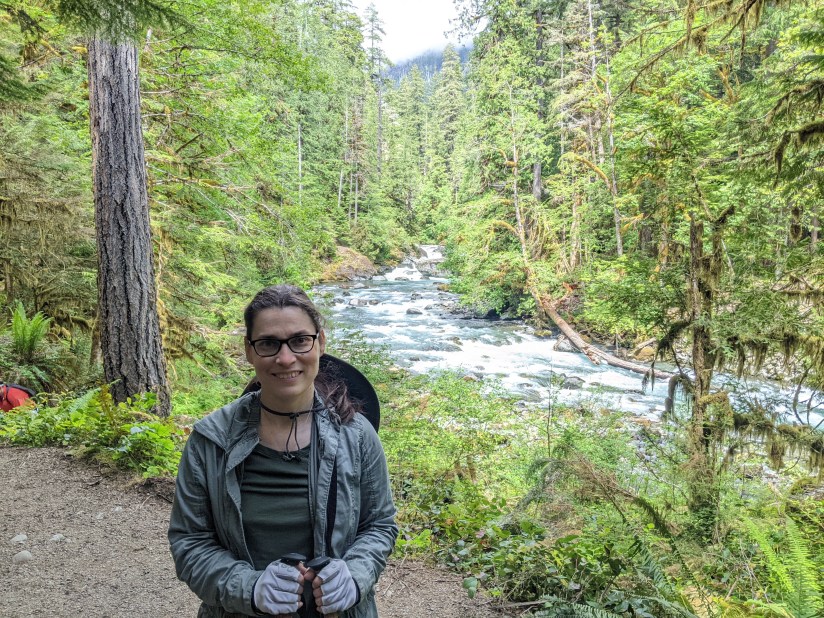


 What Happened to Your Legs?