
My mother tells me that I was eighteen months old when I realized I was different. I was playing on the floor with another toddler, and I stared after him as he stood up from the floor and walked across the room.
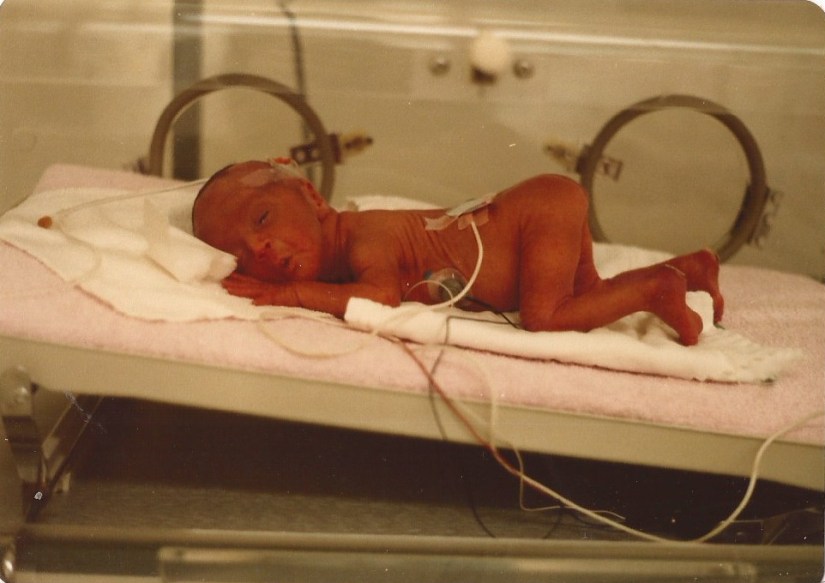
I have no story of great tragedy or great inspiration. I was born premature. I have a mild disability. My life as a kid was very privileged and very stable. My dad worked hard as a doctor, and my mom worked hard raising four kids and keeping the house running. We lived on five acres outside a city in Northern California. We did chores feeding our sheep and chickens and cats and dogs. I fought with my older brothers and looked up to my older sister. I had good friends. I did well in school. I wasn’t bullied, or even teased much. Cerebral palsy just affected the way I moved about in my environment. Cerebral palsy was simply my normal.

In the early 1980s, leg braces were still made out of metal, with leather cuffs. Doctors even tried snapping elastic tethers to the toes of my shoes and to a belt at my waist to attempt to keep my toes from turning in. It took me several years to realize that doctors try out lots of different things without knowing what the outcome will be. They guess and experiment when it comes to CP. They just do it with more education than the rest of us. The elastic tethers from waist to toes did not last long.
Looking through old photos, I see that I was either held up for the picture, holding on to something myself, or on the ground. Maybe you wouldn’t even notice unless you were looking for it, the evidence that my physical abilities were not at the same level as those of my non-disabled counterparts.

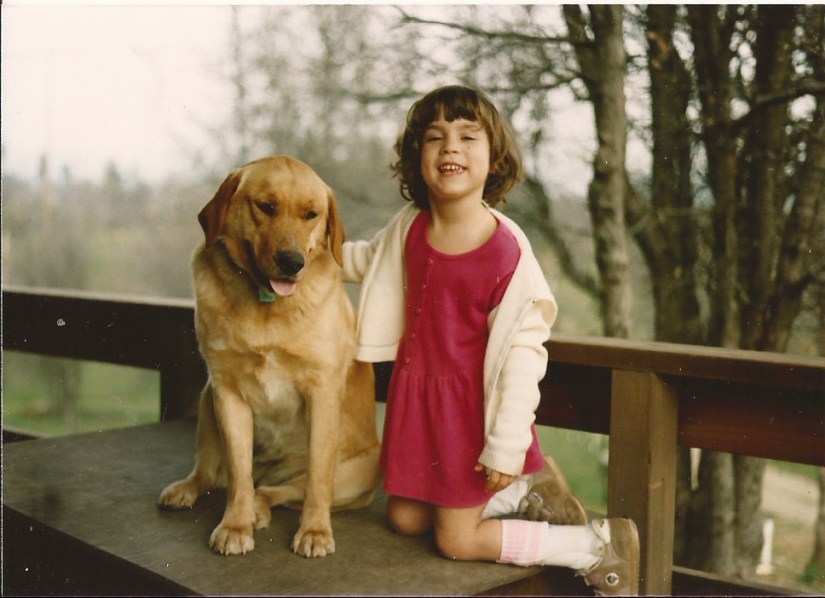
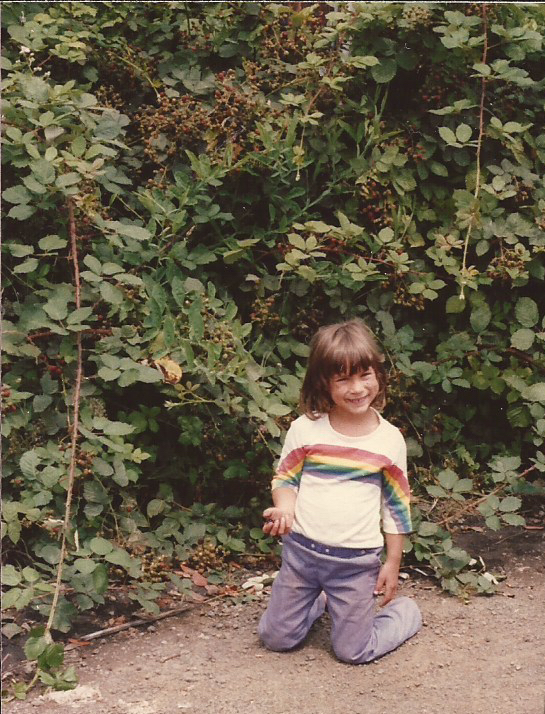
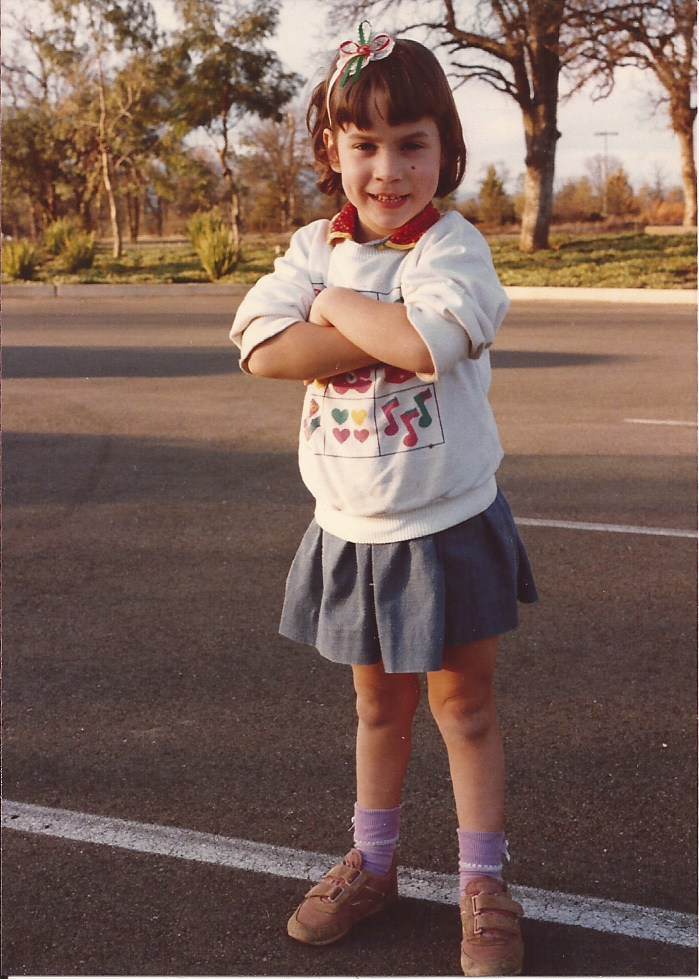
In fact, it was remarkable enough when I was freestanding, that that itself was worthy of documentation. I remember practicing this, being able to stand straight and still. There’s a photo of me at the age of six standing in our church parking lot (a smooth, flat surface). My mother wrote on the back of the photo, “The most stable person in the world.” Funny. It should have been, “Look, Mom, no hands!”
In my young childhood, I used a walker, and tried forearm crutches. I’ve had several different AFOs (ankle-foot orthotics) and experimented with a cane. I didn’t learn to tie shoelaces until I was old enough to be embarrassed at not knowing how, because all my shoes had Velcro closures to make it easier to wear them with orthotics.

I wasn’t teased much, and I wasn’t in pain, but I was different. I remember in preschool not being able to put my right leg in and shake it all about during the Hokey Pokey. Nor could I “turn myself about” fast enough to clap on “That’s what it’s all about!” I remember getting smooshed green peas stuck to my hand when I crawled up the two wooden steps between the lunchroom and the playroom. There was no handrail, let alone a ramp, in those days. I remember being stuck in the mush pot when we played Duck, Duck, Goose in kindergarten because I could never tag the person that I had to chase. There were lots of things I just plain couldn’t do (though you’re not supposed to admit that when you have a disability). But, I had good upper-body strength, and could hold my own in push-ups and pull-ups during PE. Besides, I liked reading better than anything else, anyway.


I went to regular physical therapy. My spastic hip and leg muscles turned my left leg in and up onto its toes. My right leg too, just not as severe. Lots of time and effort were spent trying to strengthen my outer hips and stretch out my inner thighs and hamstrings. I walked up and down the cool linoleum, up and down, while adults analyzed. Sometimes, embarrassingly, my shorts were tucked up into the elastic in the legs of my underwear, the better to see the mechanics of my hips and pelvis. In third grade, I listened as everyone talked about the surgery* that I would have. It would help me walk better. It would fix me? No, my mother said. She had to let me know as I cried, that even after the surgery, I would still have cerebral palsy.
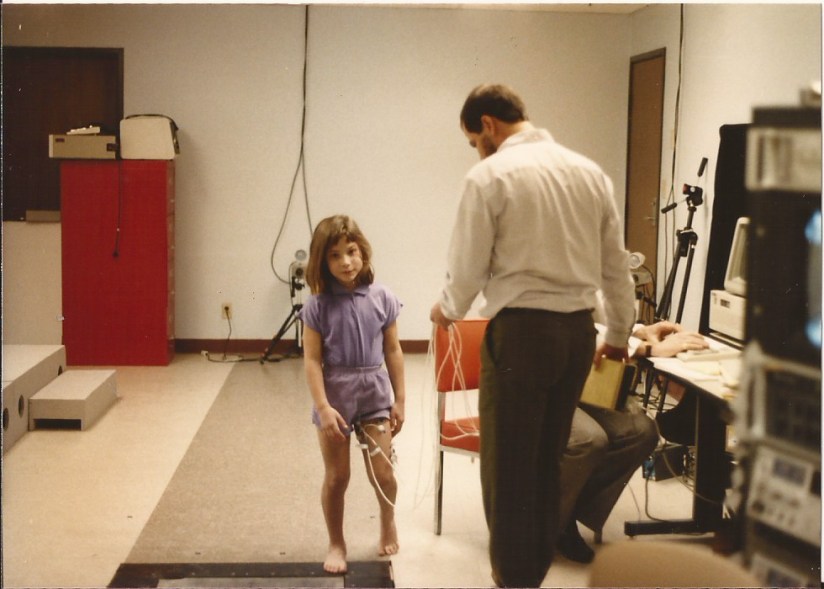


The surgery was very painful, with a long recovery. But it did help my heels come down and gait to be less crouched.
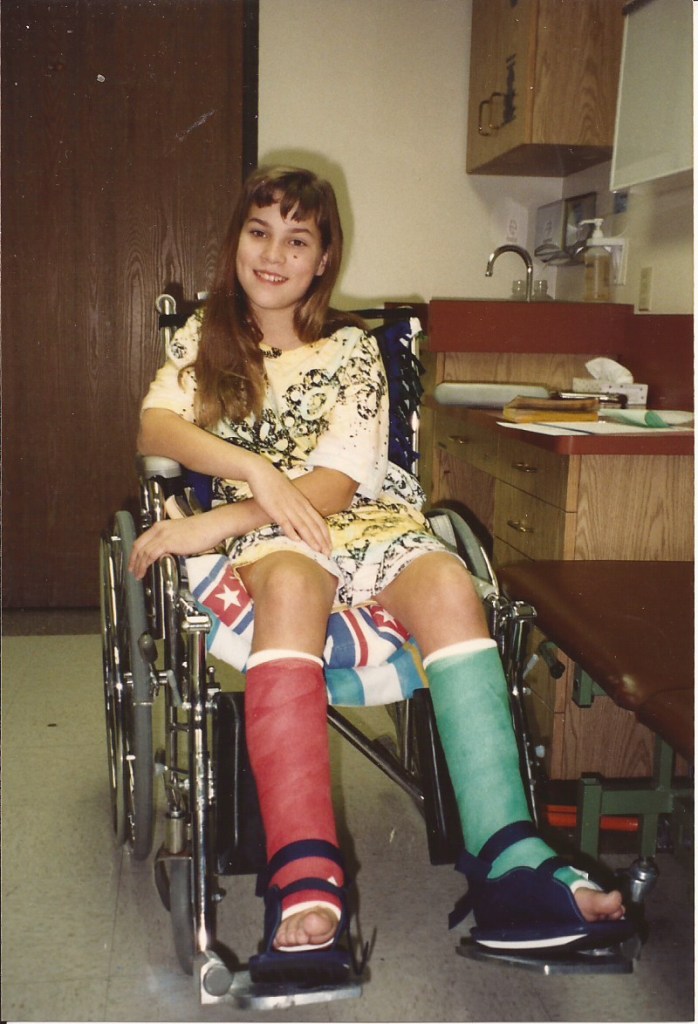
In sixth grade, I elected to have surgery number two**. My orthopedic surgeon was on the fence about whether the procedure was worth it, and left it up to us to decide.
This one was on both feet, which rolled to the inside. Although it wasn’t as major a procedure as the first, nor as painful, it was another long recovery, from wheelchair to walker, to walking on my own again.
Kids used to ask me if having CP hurt. I would say no. It didn’t hurt when I walked; it just looked different. I cannot tell you precisely when that changed. Sometimes I wonder if, ironically, it was my lack of physical activity as a kid that held at bay the pain that would come. Don’t get me wrong, over the years I had been given several at-home programs of stretching and exercises to do. We had a stationary bike for me. Dad just used a generous amount of duct tape to get my feet to stay in position on the pedals. Mom dutifully took me to the gym once or twice a week throughout high school, where we worked our way through the program set up by my physical therapist. No, it wasn’t at all embarrassing to be the youngest person in the gym, and the only one with a disability like CP. I hated it all. I resisted. I was a ball of adolescent sunshine.
It wasn’t until college, when I moved to a walkable town with a large university campus, that I really took myself places on foot. Eventually, I moved to a bigger city and walked forty minutes to work (a little over one mile). Anything within a mile radius was doable, and I loved being able to walk around downtown on my own. I learned the public transit system and felt independent, grown up, and fatigued. Somewhere around the age of twenty-five, my legs ached, my muscles were tired. I took naps. Was it thanks to all that I did do growing up that I was able to walk miles on my own? Or should I have been more active and fit throughout my life to be able to better handle this much increase in physical activity? Was it simply the inevitable wear and tear of CP on an adult body? Whatever the cause, I got used to it. So my legs were tired. Just part of life with CP. But it didn’t stop there.
As I matured, I realized the importance of maintaining physical fitness even when my parents weren’t there to make me. I got another stationary bike, a recumbent one this time, and fashioned my own system, with one side of Velcro on the bottom of my shoes, and the other side of the Velcro on the pedals. No more duct tape! But, I think it was this time with the recumbent bike that injured my SI joints, back in 2010, and they’ve never quite recovered. In 2014, my inner knees began to ache. No particular event set them off, they just…hurt. In 2016, it was my neck. This one really threw me. Hip and knee pain with spastic diplegia? Sure, that makes a certain amount of sense. But constant neck pain was too much to take. I knew my posture wasn’t great, and I knew I spent too much time in front of a laptop. But shouldn’t I be able to help this?
And so I have been trying to address my ongoing pain for most of my adult years. I’ll have a separate post about all the methods I’ve tried. What I’m cautiously hopeful about now, and what has inspired me to start this blog, is the ExoSym. The ExoSym is a hybrid prosthetic‐orthotic, originally designed for service members with injuries severe enough to consider amputation. The device increases mobility and decreases pain for these candidates. More recently, civilians with injuries and disabilities have used it. And if all the videos are to be believed, it’s a life-changing experience.
Later this month, I’m traveling to the Hanger Clinic in Gig Harbor, Washington, to be casted for and test, my own set of ExoSyms. Here’s to a new chapter in this journey.
* at eight years old: bilateral iliopsoas aponeurotic lengthenings; bilateral medial and lateral hamstring lengthenings; left grasilis lengthening; rectus femoris to sartorius transfers
** at eleven years old: bilateral calcaneal neck osteotomies with lengthening

 What Happened to Your Legs?